
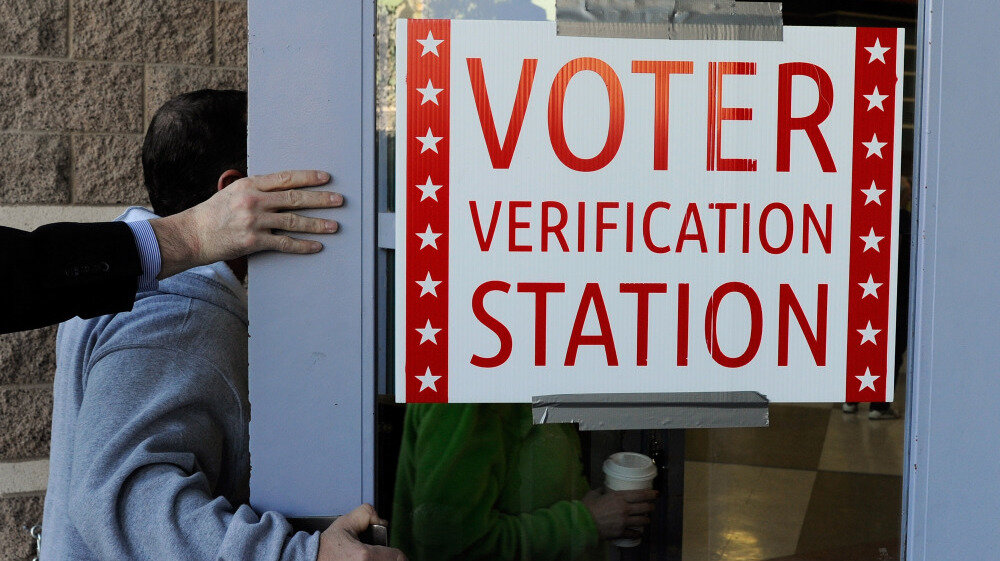


The U.S. attorney in Chicago says his office is putting in place a plan to protect voters from “intimidation or interference” during the midterm elections, which will be held this coming Tuesday, Nov. 3.
U.S. Attorney Andrew Boutros said that, amid concerns about the safety of voters and of the elections themselves, U.S. citizens can report any irregularities directly to his office, including cases of fraud or voter intimidation. “Voters must be able to cast their ballots without interference or intimidation, and their votes must be counted in free, fair and honest elections,” Boutros said in a statement. He also said his office has set up a special hotline, 312-469-6157, for reporting suspected unlawful election activity.
He added that assistant U.S. attorneys and other staff in the office will monitor the reports and “take appropriate action.” Boutros’ announcement comes as Democrats and independent election watchdog groups plan a broad presence at polling places. The effort stems from concerns that President Donald Trump could use the vast resources of the federal government to influence the course of the midterms, an election that could significantly hamper his ability to govern during the last two years of his presidency. They won’t be the only ones there.
The large-scale election protection effort led by left-leaning groups, which plans to deploy tens of thousands of observers, will encounter the largest election monitoring program in history run by the U.S. Department of Justice, as well as observers from groups sympathetic to the Republican Party. This could lead to a situation unlike anything seen before in modern elections.
Efforts by Democratic groups and nongovernmental organizations include training volunteers to keep watch near polling places and report any troubling incidents. The network includes established democracy watchdog groups such as Common Cause and the American Civil Liberties Union (ACLU), as well as throngs of volunteers mobilized by state-level Democratic Party structures, political leaders in the U.S. Congress, national activist groups and organizations whose goal is to protect democracy. That includes Illinois, where a coalition of voting rights organizations is preparing hundreds of trained people to observe polling places and report any suspected violations of voting rights.
The group, which includes the Chicago Lawyers’ Committee for Civil Rights, Chicago Votes, Common Cause Illinois, the Illinois Coalition for Immigrant and Refugee Rights, the League of Women Voters of Illinois and the League of Women Voters of Chicago, has announced that its volunteers will be at and near polling places. Their job will be to identify and report cases of voter intimidation, electioneering or attempts to disrupt the voting process. “We don’t want any voter to stay home on Election Day out of fear for their safety or out of fear that their right to vote will be challenged,” said Becky Simon, president of the League of Women Voters of Illinois. “The most important thing is that on Nov. 3, all eligible voters go to the polls and vote,” she stressed.
Jane Kleeb, vice chair of the Democratic National Committee (DNC), said the association of the party’s state committees has created a special cybersecurity unit, the first initiative of its kind, which includes former CIA and FBI officers. The team will monitor and report cases of online disinformation, including AI-generated “deepfake” material. At the same time, Democratic mayors, state attorneys general and secretaries of state are running simulation exercises that examine worst-case scenarios, such as U.S. Immigration and Customs Enforcement (ICE) officers suddenly appearing at polling places or attempts to seize ballots and election equipment. Although Trump continues to make baseless accusations of election fraud, administration and military officials say they do not plan to send immigration agents or soldiers to polling sites.
Officials in Chicago and Cook County have been urging residents for months to make a plan before heading to the polls. As a reminder, since Oct. 19, early voting in Chicago has been expanded to all 50 wards. City residents can vote early at any designated site, regardless of where they live. On Election Day, ballots can be cast at one of 50 early voting sites, at the main downtown Chicago election center (the so-called supersite) or at the polling place assigned to the voter’s ward. “We also know that election security is on everyone’s mind,” Marisel Hernandez, chair of the Chicago Board of Election Commissioners, said earlier this month. “We are prepared and are doing everything we can to keep you safe, no matter how you choose to vote,” she said.
BK
Source: Polski.FM
