
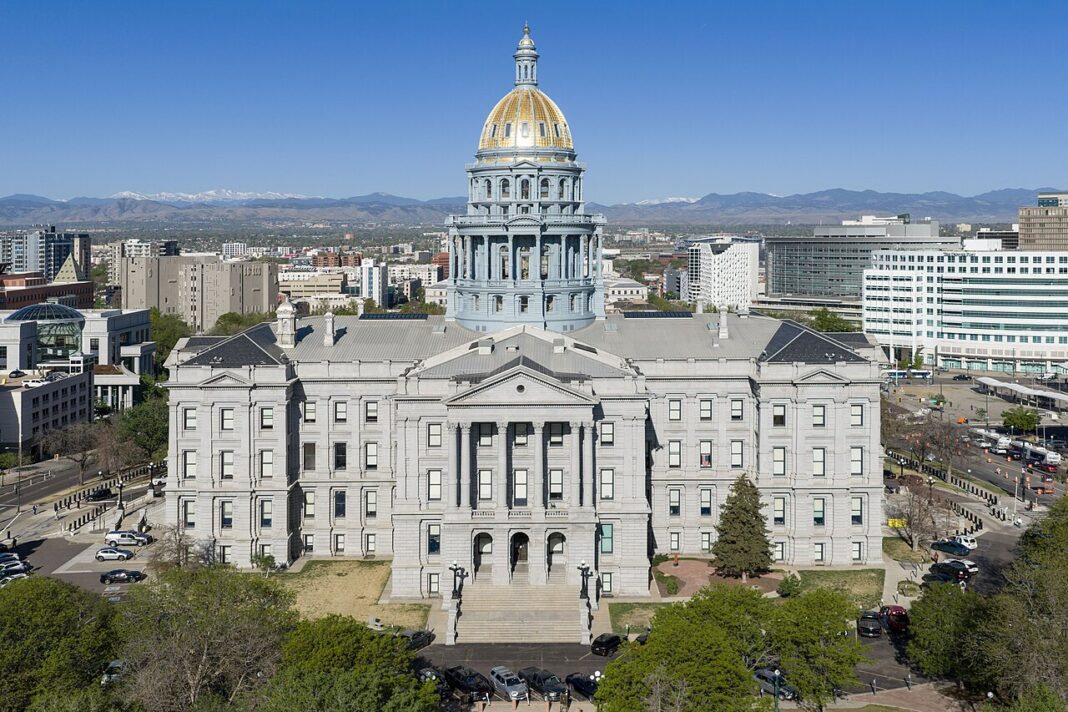


On Nov. 3, 2026, Colorado voters will decide on two competing income tax initiatives. If both win approval, a court may decide their fate.
Amendment 87 would allow progressive rates of up to 8.4%, while Proposition 136 would cap rates at 4.4%. According to the official Blue Book voter booklet, Amendment 87 would introduce six brackets ranging from 3.7% to 8.4% and would bring in about $2 billion in additional revenue in the first full year. The new revenue would be exempt from the TABOR limit (the state’s Taxpayer’s Bill of Rights) and would go to K-12 education, health care and care for young children.
If only one of the two passed, the effects would be clear. Proposition 136 alone would change nothing for taxpayers, because the rate is already 4.4%. Raising it requires voter approval under TABOR.
If both pass, a conflict arises. In general, according to legislative analysts, the measure that receives more votes takes precedence. If Amendment 87 gets more votes, it would take effect in full, and Proposition 136 would become moot. If Proposition 136 gets more votes, the rate changes in Amendment 87 would not take effect, but the repeal of the constitutional single-rate requirement would still apply.
Not everything is settled. The Blue Book says the outcome would be unclear, and the state legislature or a court would have to resolve the conflict. Under state law, the Colorado Supreme Court then determines which provisions conflict with each other.
The second pair is Propositions NN and 137, which compete for some of the same funds. Both measures would allow the state to keep and spend money that would otherwise be returned to taxpayers. NN raises the cap on the revenue the state may keep and allows up to $4.6 billion in additional spending, but it would limit TABOR refunds. Proposition 137 redirects an estimated $175 million from the sporting goods tax to conservation.
Among the other measures is Initiative 175. It would direct revenue from vehicle and fuel taxes to roads and the State Patrol, and it needs 55% of the vote to pass.
Source: Denver Post
KN
