


The detention of Westinghouse’s current president in Poland over irregularities in the construction of the Ostrołęka power plant does not affect negotiations on building a nuclear power plant, Energy Minister Miłosz Motyka said Wednesday.
“This is an action by an independent prosecutor’s office (…). But it will certainly have no impact on the negotiating process. We are in contact with the American side, so we see no risks here,” Motyka told reporters when asked about the consequences of the detention of Westinghouse’s president in Poland, Mirosław Kowalik, for negotiations on the nuclear plant contract.
Motyka stressed that Deputy Energy Minister Wojciech Wrochna, who oversees the process, is in contact with the American side.
According to earlier reports, negotiations on the contract to build the plant should be completed by the end of this year.
“We have been conducting the negotiation process for months. It is being conducted very efficiently, in Washington, in Warsaw and at various other levels. In our view, it is completely safe and independent of this situation. That’s the first point. Second, it is a process with so many components that individual names also have no direct impact on it,” Motyka said.
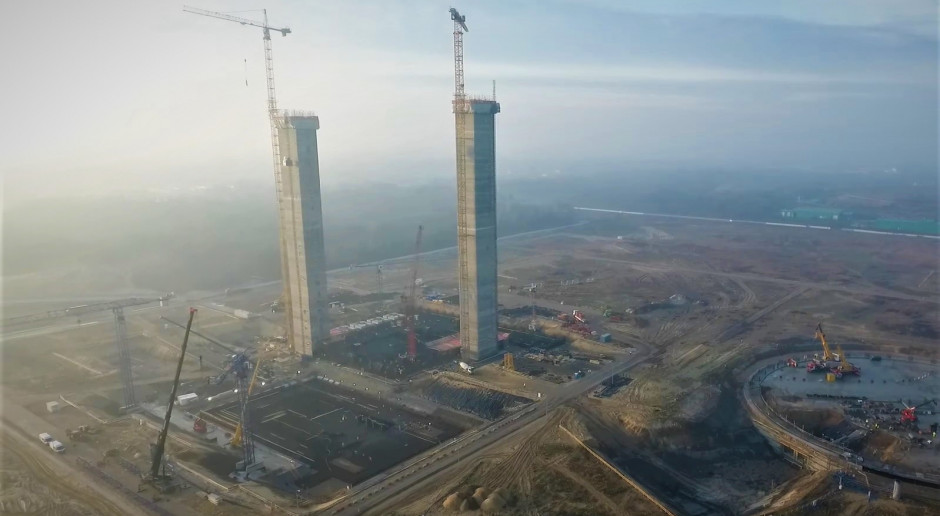
On Wednesday morning, Tomasz Siemoniak, the minister coordinating the special services, announced that agents of the Central Anticorruption Bureau (CBA) had detained 25 people in connection with the investment in a new unit at the Ostrołęka Power Plant. The case concerns causing damage through incompetence and failure to fulfill duties by members of management and supervisory boards. The investigation, covering 2018–2019, concerns actions to the detriment of the companies Elektrownia Ostrołęka, Enea and Energa. Mirosław Kowalik was president of Enea during that period.
Westinghouse, together with Bechtel, is part of the contractor consortium for Poland’s first nuclear power plant, which is to be built in the municipality of Choczewo in Pomerania. The investor is the company Polskie Elektrownie Jądrowe (Polish Nuclear Power Plants). The plant’s first reactor, built with Westinghouse’s AP1000 technology, is scheduled to begin operating in 2036, with subsequent ones in 2037 and 2038. (PAP)
KO Members of European Parliament: Ostrołęka Power Plant Is a “PiS Concrete Monument to Greed”
Dariusz Joński and Michał Szczerba, members of the European Parliament from the Civic Coalition (KO), said that Law and Justice (PiS) politicians, including Jarosław Kaczyński, Jacek Sasin and Beata Szydło, bear political responsibility for the Ostrołęka power plant scam. They added that it is a “PiS concrete monument to greed.”
Tomasz Siemoniak, the minister coordinating the special services, announced Wednesday that, on the orders of a prosecutor from the Regional Prosecutor’s Office in Białystok, Central Anticorruption Bureau agents had detained 25 people in the Elektrownia Ostrołęka case.
Szczerba told reporters in Brussels on Wednesday that he and Joński feel enormous satisfaction, because their parliamentary inspection, which began in January 2022, contributed to the detentions. He noted that more than PLN 1 billion was irretrievably lost as a result of the giant scam in Ostrołęka.
“Aside from these criminal accusations, related to acting to the detriment of specific companies, Elektrownia Ostrołęka, Energa and Enea, there is also political responsibility, borne by Mateusz Morawiecki, Jarosław Kaczyński, Krzysztof Tchórzewski, Jacek Sasin and Beata Szydło, who from the very beginning endorsed this process, piloted it and brought the project to absolute collapse,” Szczerba stressed.
“The power plant in Ostrołęka is a PiS concrete monument to greed,” Joński said. In his view, the PiS team knew perfectly well from the start that the project would not add up financially, but party leader Jarosław Kaczyński, when he was going after power in 2015, wanted to prove that PO had failed and that they would succeed.
The MEP argued that Poles have to pay in their electricity bills for something that was never built. “240 railcars of coal were supposed to arrive there every day, when everyone in Europe was already saying that investing in another coal-fired power plant was simply unprofitable. We didn’t even have such deposits in Poland anymore, and that coal was to be imported from Russia,” he noted.
“Along with all the embezzlement and mismanagement, there was also the enrichment of PiS families, PiS nepotism, which they created around this power plant,” Szczerba added. “Even though the project was halted and was being dismantled, money was still being drawn until the end at the company Elektrownia Ostrołęka. Money was taken for managing this empty site on which nothing was left,” he stressed.
According to Szczerba, “this is also an example of how (…) the services surround such activities and scandals with a protective umbrella.” The MEP recalled that from 2016 to 2022 the post of National Prosecutor was held by Bogdan Święczkowski, who, as the MEP put it, claims to be president of the Constitutional Tribunal but has in fact been removed from managing the institution and is not allowed into its headquarters.
Energa began work on the project for a new coal-fired unit at the Elektrownia Ostrołęka plant in 2009. In September 2012, the company halted it, unable to obtain financing from the market. Energa concluded that only the participation of a strategic partner would make construction possible. In autumn 2016, Enea bought half of the shares in the project. In spring 2018, a consortium of GE Power and Alstom won the tender to build a 1,000 MW hard coal unit for just over PLN 6 billion. The order to begin construction work was issued at the end of 2018, but in spring 2020 construction was suspended.
In June 2020, Enea and Energa decided to continue the investment, but after converting the technology to one using natural gas combustion to produce electricity. A three-party agreement was also signed with PKN Orlen, which has been Energa’s majority owner since the end of April 2020, defining the further direction of each party’s participation in the project.
In December 2020, Enea decided that it would not take part in building a gas-fired power plant. Also in December 2020, a new investment agreement was concluded between the project’s new sponsors: Energa, Orlen and PGNiG. In January 2021, a new special-purpose company, CCGT Ostrołęka Sp. z o.o., was established to build the gas-fired plant, with a combined 51% stake held by Energa and Orlen and a 49% stake held by PGNiG. In April 2021, the Office of Competition and Consumer Protection (UOKiK) approved the creation of CCGT Ostrołęka. In March 2021, demolition began of the previously built elements of the plant’s coal-fired unit.
From Brussels, Magdalena Cedro (PAP)
