
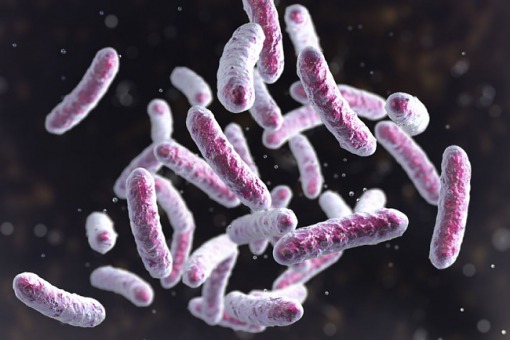


A bacterium so large it can be seen with the naked eye may live in the human gut, according to bioRxiv, a site that publishes papers before peer review.
A typical bacterium measures about 2 micrometers, or thousandths of a millimeter (0.002 mm). Epulopiscium is a genus of Gram-positive bacteria that live in symbiosis with fish and stand out for their unusually large size – many of them reach 0.2 to 0.7 mm in length. Until the discovery of Thiomargarita namibiensis (0.75 mm) in 1999, they were considered the largest known bacteria. Remarkably, some cells of these bacteria can produce offspring inside their own bodies, a process reminiscent of spore formation. Between one and twelve daughter cells form inside the mother cell. They grow inside the “mother” until the parent cell undergoes lysis, or bursts, and dies.
The name “Epulopiscium” comes from Latin and means “guest at a fish’s banquet” – because the bacteria were discovered in the intestines of marine fish from the surgeonfish family. They may help the fish digest their food. Although scientists have so far been unable to grow these bacteria under laboratory conditions, they have learned more about them through microscopic, phylogenetic and genomic analyses.
Because of their size, giant bacteria must compensate for a surface-area-to-volume ratio that is unfavorable compared with other bacteria. For that reason, their cell membrane forms numerous folds, thereby increasing the effective surface area.
Epulopiscium cells also exhibit extreme polyploidy – that is, a single individual may contain hundreds of thousands of copies of its genome. Such a high degree of polyploidy makes it possible to synthesize the products encoded by genes at many sites in the cell, so that biological molecules are produced exactly where they are needed.
An analysis of DNA sequences from 600,000 samples taken from animals and humans in 80 countries, conducted by Danny Ionescu of the Technical University of Berlin (Germany), suggests, however, that these bacteria may also inhabit the human digestive tract. Earlier studies of the human gut focused primarily on bacteria of more typical sizes, which is probably why the giant bacterium was overlooked.
It appears to live especially in the intestines of children in their first year of life. Among adults, its presence seems to be more common in people with ulcerative colitis, Crohn’s disease and colorectal cancer. In people with neurological diseases, on the other hand, the bacterium appears to be less common than in healthy people. According to the authors, the giant bacterium does not cause disease – it simply benefits from the changes in the microbiome that accompany some pathologies.
For now, Ionescu will try to find not only the giant bacterium’s DNA in a sample taken from a human, but also the bacterium itself under a microscope.
Paweł Wernicki (PAP)
