
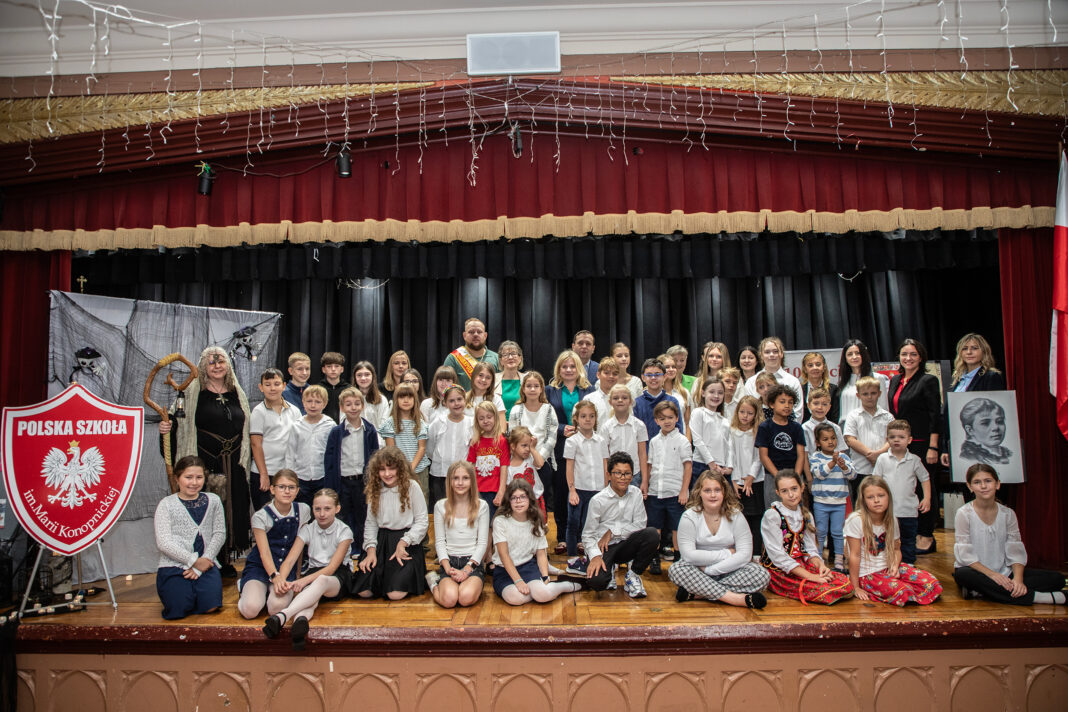


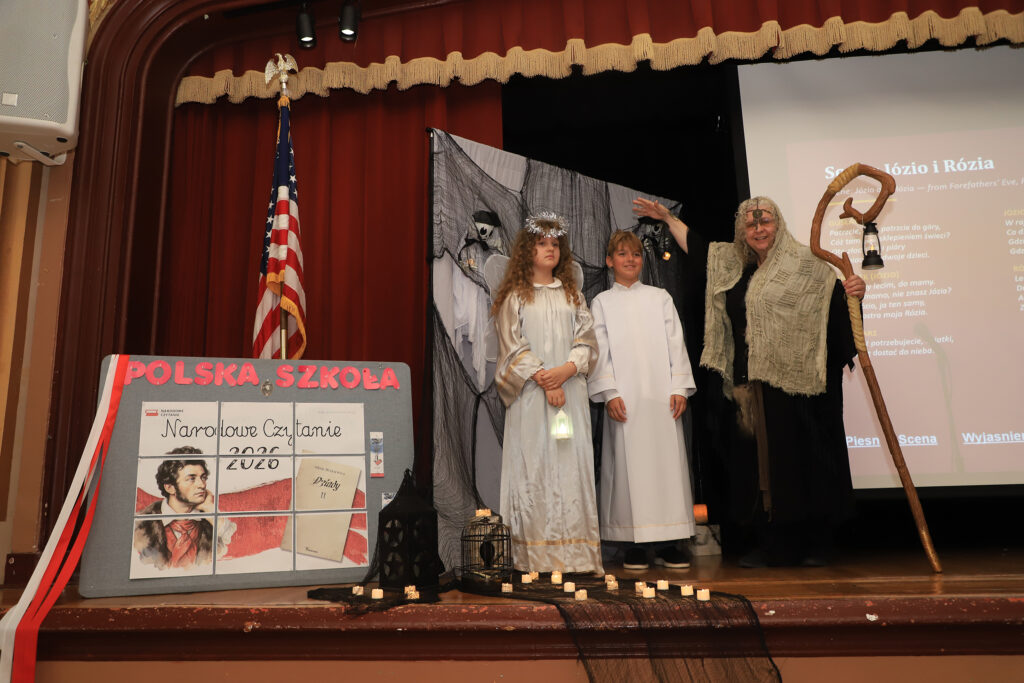
Traditionally, yet unconventionally, with a poetic and theatrical performance, we opened the 2026/2027 school year at the Maria Konopnicka Polish School in Greenpoint. As part of the National Reading, organized by the Chancellery of the President of Poland, students performed a scene from Part II of Adam Mickiewicz’s “Dziady” (“Forefathers’ Eve”).
***
Good morning, school! We are here,
though the wind rustles through the leaves,
though summer has not yet faded,
good morning, school desk!
With these words and other poems, female students warmly welcomed pupils, teachers and guests at the start of the new school year. They set the mood for the return to learning, reminding everyone that after the summer break, it was time for new challenges, new meetings and school adventures.
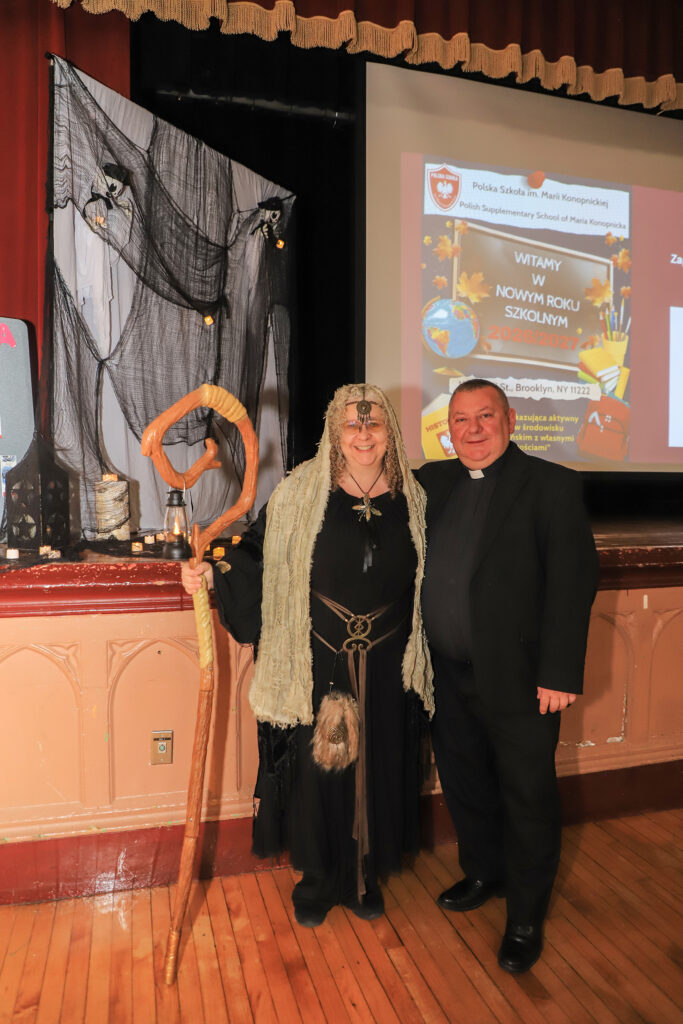
In the beginning was the word, in the form of a blessing and prayer led by Rev. Grzegorz Markulak, pastor of St. Stanislaus Kostka Parish in Greenpoint, who recently received the Silver Medal of Merit for the Republic of Poland from Polish President Karol Nawrocki.
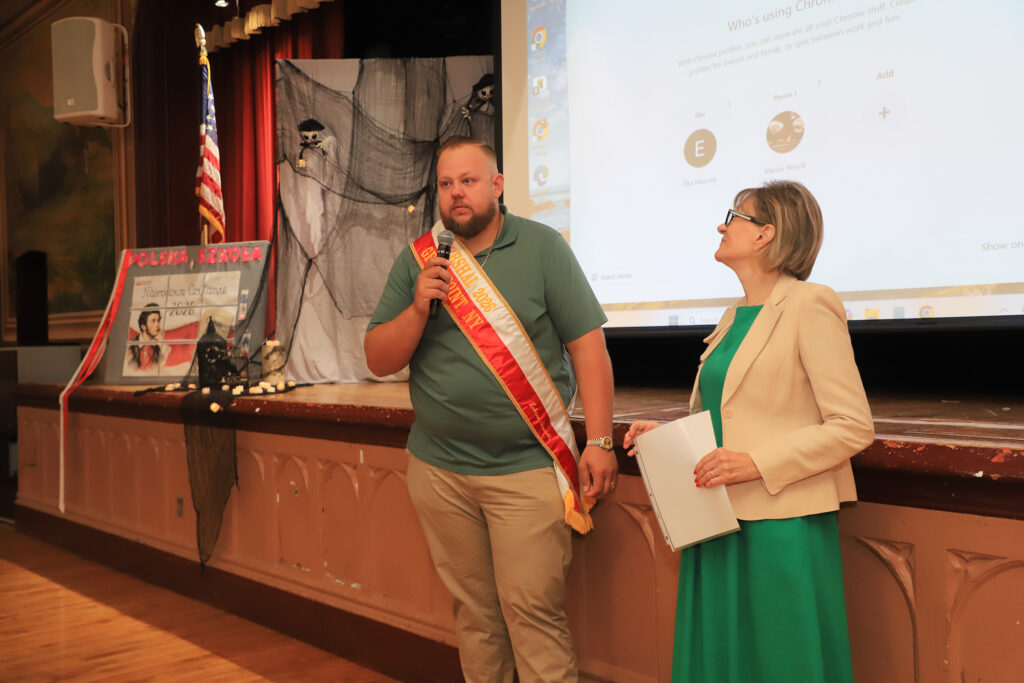
School Director Danuta Bronchard welcomed all parents, students and teachers, as well as distinguished guests. Among them were Dorota Łoboda, a member of the Sejm, Poland’s lower house of parliament, who sits on the Committee on Relations with Poles Abroad; Łukasz Skrodzki, marshal of the Pulaski Parade’s Greenpoint Division; Artur Dybanowski, director of the Polish & Slavic Center; and Grażyna Michalski of the school’s Board of Directors.
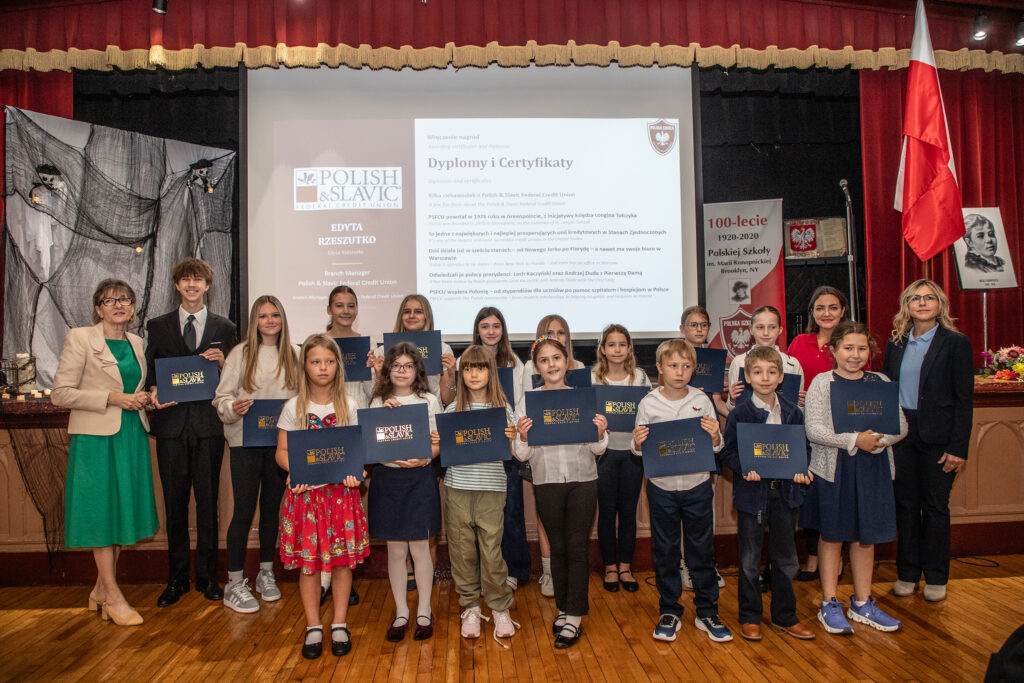
Next, students chosen by the Pedagogical Council received diplomas and certificates from the Polish & Slavic Federal Credit Union for good academic results and involvement in school life. Bank representatives presented them on behalf of Edyta Rzeszutko, manager of the McGuiness Blvd branch. Then the school bell rang, as it does every year, but this time it also called everyone to a performance, as in a theater.
The lights in the hall went down, and on stage the Guślarz (the Conjurer, played by Katarzyna Drucker), in a black sukmana (traditional long coat), with a staff and a lamp, began to call out: “Dark everywhere, silent everywhere. What will it be, what will it be?” Parents, children and invited guests repeated after him, and then a song rose in the style of a Slavic ritual of fire and shadow. The observance of the old folk custom of “dziady” had begun. The children watched in wonder and listened with excitement to see what would come next. Two little angels, “Józio” (Aleksander Golec) and Rózia (Izabela Skowrońska), appeared on stage asking for a mustard seed, because, as the Guślarz warned, “he who has never tasted bitterness will not taste sweetness in heaven.” The children were delighted and rewarded the performers with warm applause.
The current presidential couple’s choice of Adam Mickiewicz’s “Dziady” for the National Reading was no accident. The tradition of theater in Poland reaches back to the Middle Ages, when the first theatrical forms appeared in churches as mystery plays and liturgical dramas on religious themes. Since the founding of the National Theatre in 1765, theatrical art has also become an important element of Polish culture and national identity. Reading Adam Mickiewicz’s “Dziady” fits into this centuries-old tradition. Part II of the drama, inspired by a folk All Souls’ rite, opens before us a world of spirits, symbols and reflection on human fate, showing the remarkable interweaving of the visible and invisible worlds. Nation, Spirit and Romanticism are our national traits, and ghost stories teach that it is worth being a good person. As St. John Paul II said: “In the soul of a Pole there are two feelings: religious and patriotic. The feelings of love for the Homeland go hand in hand…” and “Dziady” is just such an example.
We thank everyone who helped prepare the school year’s opening ceremony, and in particular Ula Golec for the beautiful scenery, Marcin Wójcik for the presentations and Zosia Żeleska-Bobrowski for the excellent photos.
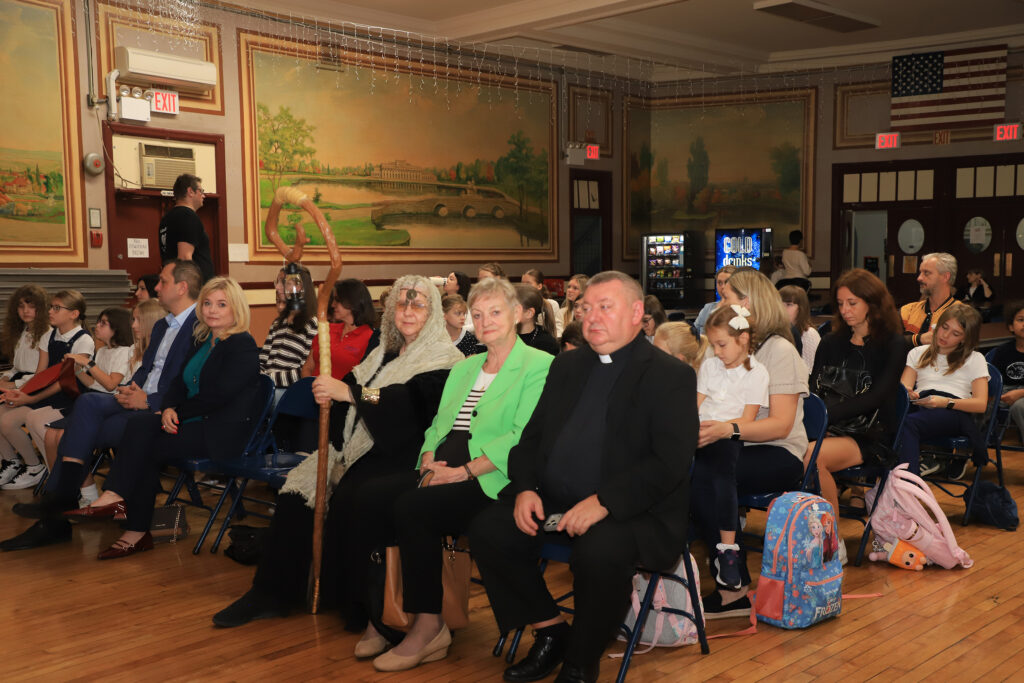
“We are glad that a representative of THEOS Theatre and Opera Society took part in the National Reading event,” the school director said, stressing the importance of literature, theater and culture in raising the young generation. She also invited all children to take part in the Polish Poetry Festival, “Song and Poetry, the Breath of Freedom of the Polish Nation,” which will take place on Nov. 6 at 6:30 p.m.
May this new school year be a time of discovering the beauty of the Polish language, developing talents and building community through art and education.
Author: Kasia Drucker
Photos: Zosia Żeleska-Bobrowski
Source: Nowy Dziennik