
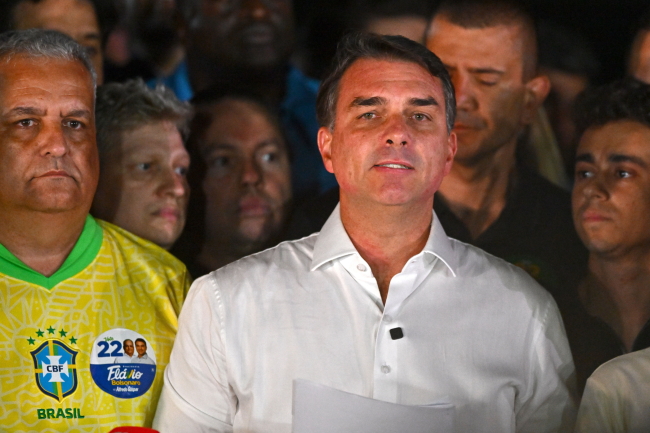


Political scientists will study this election in the future to understand how Lula managed to reverse the first-round results and defeat Flavio Bolsonaro despite the polls, Brazilian political scientist Ana Tereza Duarte told PAP after the presidential election results were announced.
“I’m in shock. I think that in the future, as political scientists, we will have to study this election,” said Duarte, who works at the Facultade Central do Recife university.
According to the Superior Electoral Court (TSE), Lula received about 51.8% of the valid votes and Bolsonaro about 48.2%.
Lula, 80, is the first politician in Brazil’s recent history to win a presidential election after finishing second in the first round. Bolsonaro received 47% of the vote in the first round and Lula 45%. Polls before the runoff also showed a slight lead for Bolsonaro.
Duarte stressed that Lula managed to mobilize, in a short time, many voters who had not cast ballots in the first round. She noted that the share of voters who stay home is usually higher in the runoff, and this time the opposite happened.
According to the political scientist, Lula’s success resulted from a combination of several factors. “I think the street rallies and the campaigning on social media were surprisingly effective. That combined with Lula’s personality, since he is a charismatic leader,” she said.
In her view, Bolsonaro’s refusal to concede defeat was predictable. She recalled that in 2022, supporters of former president Jair Bolsonaro, Flavio’s father, challenged the results of the election in which he lost to Lula by a narrower margin.
She did not rule out unrest in the country, like that after the 2022 election, when Bolsonaro supporters dissatisfied with the result stormed government buildings in Brasília.
“Only time will tell. Anything is possible. We have to watch how they (politicians from Bolsonaro’s camp) and their supporters behave,” she said. (PAP)
