
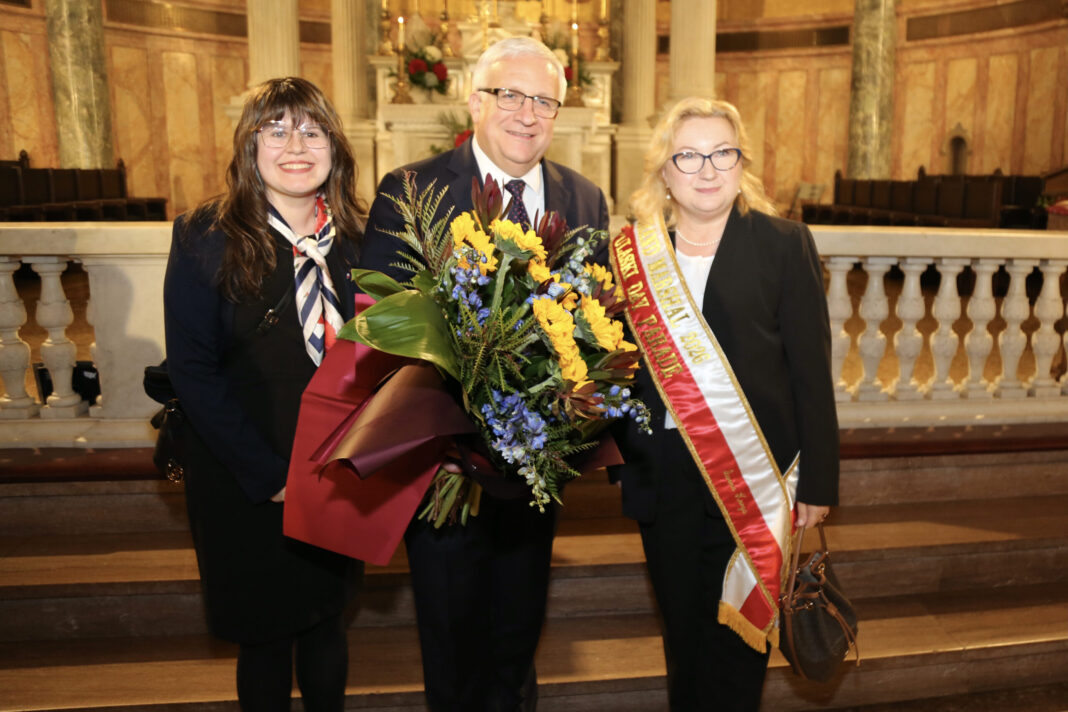


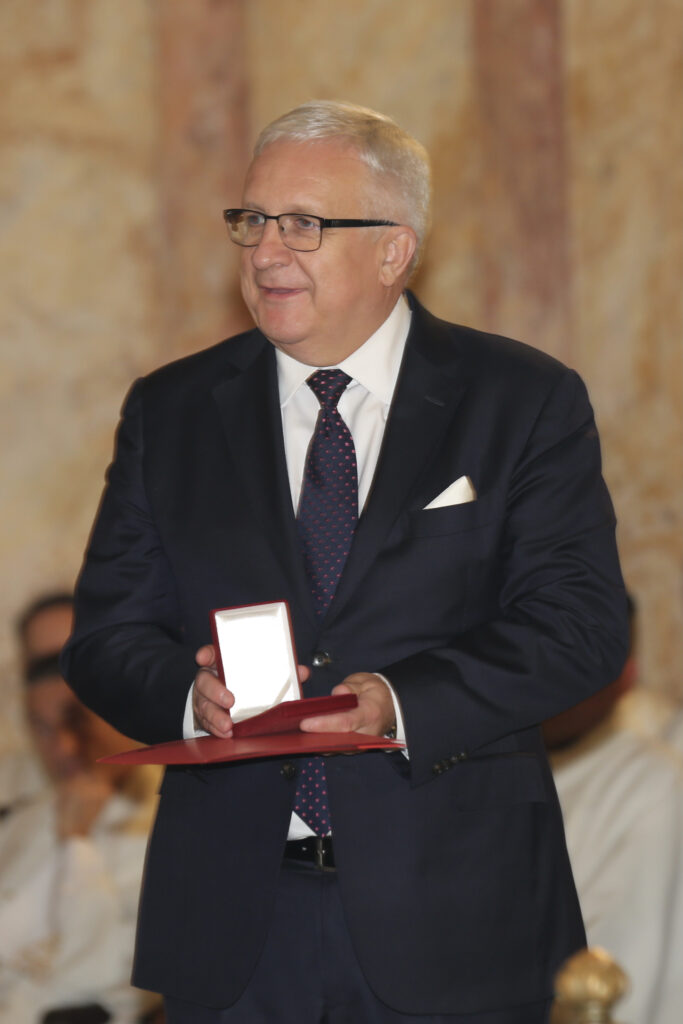
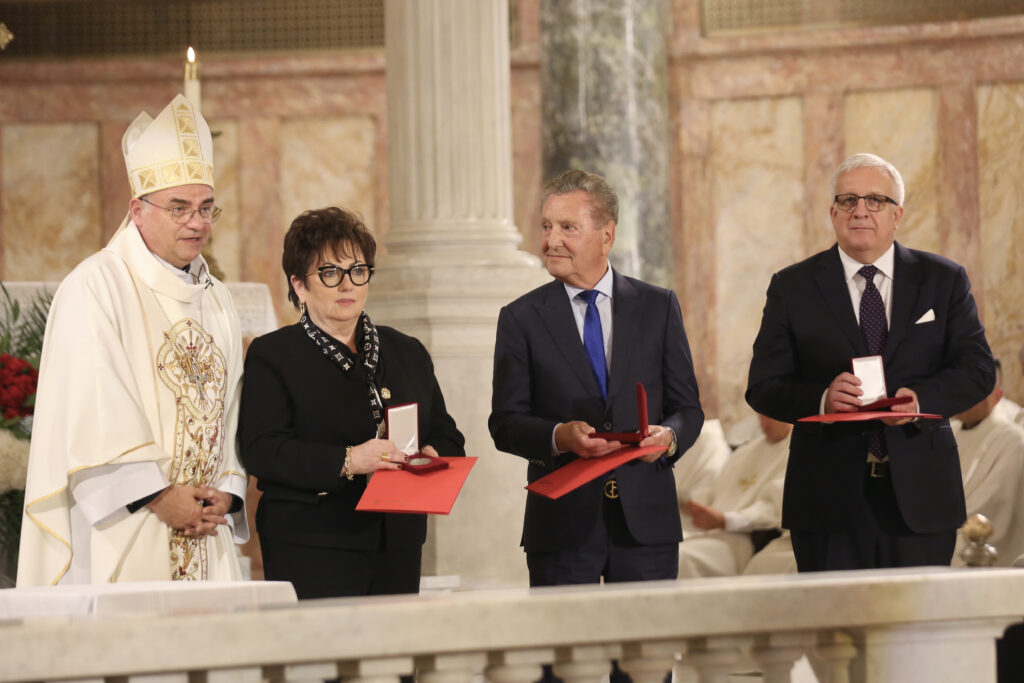
The “Pro Polonia et Ecclesia” medal, awarded by the Polish Bishops’ Conference at the request of the Polish Apostolate of the Diocese of Brooklyn, recognizes Bogdan Chmielewski’s many years of work on behalf of the Church and Polonia in the United States. In an interview with Nowy Dziennik, however, the president of the Polish & Slavic Federal Credit Union says he accepts the honor as recognition of the work of a much wider circle of people. In the credit union’s 50th anniversary year, we talk about its social mission, its future and its relationship with the younger generation.
***
The medal was awarded to you personally, but do you also see it as an honor for the entire credit union?
I treat every award I receive as president of the Polish & Slavic Federal Credit Union as an award for a much broader group of people. Above all, for my colleagues. My ideas and what I want to do at the credit union would make no sense without the commitment of my coworkers, as well as the members of the board of directors and the supervisory committee. That is why I also see this medal as an honor for many people, not just an individual decoration.
You are receiving the medal in the credit union’s 50th anniversary year. Were people who helped create it from the beginning also among those honored?
Yes, among those decorated was Michał Pająk, one of the first founders of the Polish & Slavic Federal Credit Union, fifty years ago. It is a very pleasant coincidence that we are receiving this honor in our jubilee year.
The justification for the medal highlighted support for Polish parishes and for religious, educational and cultural initiatives. What place does this work have in the credit union’s mission?
Besides its banking mission, the credit union also has a social mission. We always stress that we try, as far as we are able, to support Polonia organizations, Polish parishes and schools. We support what is Polish in the United States. In my view, Polishness is also tied to Catholicism, because faith has always been an inseparable part of it.
I also want to mention my work on the Board of the John Paul II Foundation in the Vatican. It is an extremely honorable role. We try to continue the work of the Holy Father and to commemorate what he did during his pontificate. In a sense, I also see this medal as recognition of my work on that board.
For decades, the credit union has grown organically, without taking over other institutions. Can that model last in the face of new technology and consolidation in the credit union market?
I am convinced that the credit union will survive in its current form not only for the next ten years, but for the next fifty, and perhaps longer. We keep up with technology and banking trends. The constantly growing number of our members is evidence of that. If we did not respond to their needs, that number would be shrinking or staying the same.
The financial market is very dynamic. You have to keep your eyes and ears open for technology, new solutions and investment products. Over the first fifty years, we proved that we can adapt quickly to changing trends. We have been doing so in recent years as well. Ten years, despite appearances, is a short horizon. I am convinced that in the coming decades we will also be able to meet our members’ expectations, so that they are satisfied with our services and products.
Polonia itself is changing, too. Will a young person born in the United States and used to banking on a phone find an attractive offer at the credit union?
We are not only able to offer it to them, we are already doing so. Practically all of our institution’s services can be used through banking apps or online banking. This is not a promise for the future. Such solutions have been working here for years. We are already on our third mobile banking platform, because each time we want to offer the most modern solutions available.
Of course, there may always be an institution that offers something better in some area. But I believe we are fully competitive. The young people who join us confirm that. There are several thousand of them every year. We are talking about people who are eighteen, twenty or twenty-five years old.
We greatly respect our older members and adapt to their needs, but the credit union is also for the young. I believe our technology is at a high level and is not inferior to the solutions of competing local banks, credit unions, or even some large banks.
This year the credit union awarded scholarships to 602 young people. What happens to those relationships afterward? Do scholarship recipients stay connected to the institution that helped them at the start of their journey?
We have an offer for young people: at the appropriate stage we propose a debit card, later a credit card, and then, depending on their needs, for example an auto loan. A lot depends on the scholarship recipients themselves, though. They move away, continue their studies and take jobs in different parts of the United States.
We are pleased that a significant share of those who received our scholarships continue to use the credit union’s services. They remember who gave them support, often their first scholarship for college. Their loyalty to our institution is very great.
And does staying in touch require commitment from both sides?
Of course, it takes two sides to stay in touch. But I am not saying this as a complaint, because I understand the situation of these young people perfectly. You can’t cheat geography, and young Poles today are scattered across the whole United States. Above all, I am glad that despite these distances they remain loyal members of our institution.
Interviewed by Kazimierz Szosler
Photos: Wojtek Maślanka
Source: Nowy Dziennik