



Americans vote Tuesday in elections that will decide the makeup of the U.S. Congress and the governments of most states. Indicators so far suggest record turnout and a Democratic win, which could upend the president’s plans for the second half of his term.
Voters will elect all 435 members of the House of Representatives and 35 of the 100 senators. In 36 states they will also choose governors and state legislatures, and in many places they will vote on dozens of local referendums.
Election Day is Tuesday, but in most of the country voting, both by mail and in person, has been under way for weeks. By Sunday, more than 54 million Americans had voted that way, significantly more than in the last midterm elections. Before Election Day that time, 46 million people cast ballots, out of 112 million in total.
Residents of states on the East Coast will be the first to vote Tuesday, with polling places opening at 6 a.m. (noon in Poland). The last polls to close will be those in Hawaii and Alaska, at 6 a.m. Wednesday Polish time.
The main stake in the election is the new balance of power in Congress. The Republican Party currently holds majorities in both chambers of Congress (219-214 in the lower house, 53-47 in the upper house), but according to polls Democrats are favored to take control of both.
While the opposition’s takeover of the House has long been expected, at the start of the campaign such an outcome in the Senate seemed almost impossible because of the electoral map: most of the 33 Senate races are taking place in “red” states, which traditionally vote for Republican candidates. But President Donald Trump’s plunging approval ratings have put a number of seats once considered safe for Republicans at risk.
The races in seven states, where polls show narrow margins between candidates, will be key to the future balance of power in the Senate: Alaska, Iowa, Kansas, Maine, Michigan, Ohio and Texas. Except for Michigan, all of those seats are currently held by Republicans, and in all of those states except Maine, the right has long held a decisive advantage. In addition, Democrats are strong favorites to take a Republican-held seat in North Carolina. Polls also give them a chance in other traditional conservative strongholds, Nebraska and South Carolina.
The contests in Texas and Michigan in particular have attracted the most media attention and donor money.
In Texas, James Talarico has a chance to win the Senate race as the first Democrat in the state since 1988. He is facing Texas Attorney General Ken Paxton, who is backed by Trump. Talarico is a former theology student and state legislator, while Paxton has a record of numerous corruption and personal scandals. Democrats have been trying for years to win conservative Texas, which is undergoing demographic change, but over the past several decades the party has not won a single statewide election there. Polls give Talarico a slight lead.
But as Stephanie Grasmick, an online campaign specialist who works with Democrats, told PAP, experience with faulty polling calls for restraint.
“I remember how the Democratic Party was sure it would win in Texas in 2014. And in 2018. And in 2022. It didn’t win once, so in the end you lose hope,” she said. Even a relatively small polling error could completely change the expected balance of power in Congress.
The second most closely watched Senate contest is in Michigan, where Abdul El-Sayed, a candidate from the left wing of the Democratic Party, is competing for the seat against Mike Rogers, a former congressman and representative of the Republican establishment. Controversy in that campaign has centered mainly on El-Sayed’s Islamic faith — he is the son of Egyptian immigrants — and his sharp criticism of Israel. Trump has called him a jihadist (even though El-Sayed condemns terrorism), and Vice President J.D. Vance suggested he is not a real American (although he was born in Michigan and is a U.S. citizen).
Democratic Rep. Haley Stevens, whom El-Sayed defeated in the party primary, endorsed Rogers in the final stretch of the campaign, to the surprise of her aides and party politicians. The backdrop to that decision was the controversy over El-Sayed’s views on Israel.
Controversy also surrounds the race in Alaska, where former Democratic Rep. Mary Peltola has a chance of taking the seat from Republican Sen. Dan Sullivan. But the candidacy of another Dan Sullivan, a retired teacher previously little known, who is running as an independent, has come to the fore in that campaign. According to The New York Times, Sullivan (listed on the ballot as Daniel J. Sullivan Jr.) was recruited by Democratic activists to run in order to confuse voters. Trump unsuccessfully tried to get a court to block certification of a possible Peltola win, and said that, as a result of the Democrats’ ruse, the election could not be considered fair.
Alongside the contests for seats in Congress, 36 of the 50 U.S. states are holding gubernatorial elections. According to the Cook Political Report, Democrats are favored in 20 of them, and at least three more are within their reach. Such an outcome would put the party in power in most states.
Although the Democratic Party still does not enjoy a good reputation, it is being helped by the president’s even greater unpopularity and by the mood of an electorate disappointed by unfulfilled promises to lower the cost of living and fuel prices and not to start new wars. In all surveys, respondents consistently name the cost of living and inflation as the most important issue for them. Next come health care, immigration, artificial intelligence and data centers built to develop artificial intelligence.
According to a Harris poll for The Guardian published Saturday, corruption and the enrichment of those in power are also among the top problems voters name as most important. On all of these issues, voters say they have greater trust in the opposition.
Although support for Trump is at a historic low (the polling average calculated by The New York Times is 37%) and his name does not appear on the ballot, the president has been traveling the country for weeks, asking voters to “pretend” that his name is on it. He is counting on his involvement in the campaign to prompt his voters, who relatively less often vote in midterm elections than Democrats do, to turn out in greater numbers.
At several dozen campaign rallies, held mainly in areas considered Republican strongholds, Trump promised to pay $5,000 to every adult American if Republicans win. He also made other benefits and payments contingent on an election victory. As The New York Times noted, his campaign speeches were even more chaotic and vulgar than in previous campaigns; to the consternation of commentators, in almost every appearance Trump also praised the physique, with an emphasis on the buttocks, of Ohio Sen. Jon Husted and other politicians.
Although Trump is not on the ballot, the election will matter greatly for what the second half of his presidency looks like. If he loses control of Congress, his ability to carry out his agenda will be limited. Democrats have also announced numerous investigations into corruption alleged against Trump and his circle. The president does not hide that he expects another impeachment.
As former U.S. Ambassador to Poland Daniel Fried told PAP, presidents whose parties lost midterm elections, which is the rule, have focused on foreign policy, an area in which they have greater powers and a chance to make their mark in history.
“Trump may feel free, or he may want to ‘leave his mark.’ So he could do a great deal,” the former diplomat said, but added that if Republicans suffer a severe defeat, “Trump’s political position will be seen as weakened, which will hasten the twilight of his power.” He also noted that Democrats, together with traditional Republicans, are preparing to limit the president’s room to maneuver on a possible thaw with Russia.
From Washington, Oskar Górzyński (PAP)
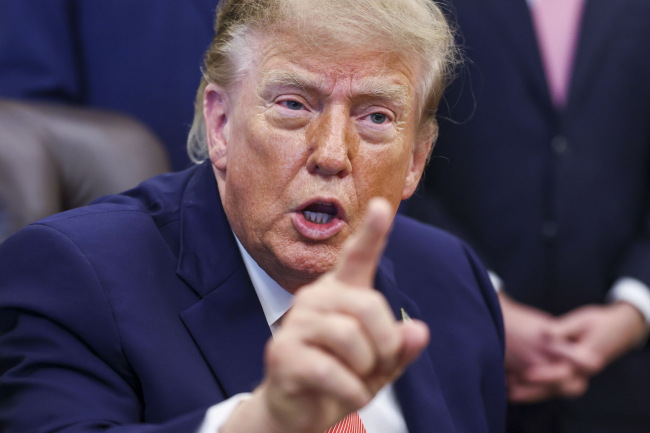
Provider: PAP/EPA.
Trump Scaled Back Fight Against Disinformation Despite Foreign Influence Operations
Although Russia, China and Iran are running influence operations in the U.S., Donald Trump’s administration has scaled back efforts to combat disinformation, James Lindsay of the Council on Foreign Relations (CFR) think tank told PAP.
The expert at the American think tank expects a “real flood” of false and misleading information in the American public sphere ahead of the U.S. congressional elections scheduled for Nov. 3. Both political parties and their supporters are doing everything they can to tip the scales in their favor, he stressed in the interview with PAP.
Lindsay said the information environment in the United States, as in other democracies, has never been more polluted with disinformation and with unintentionally misleading content (misinformation).
Both phenomena are the responsibility of Americans themselves as well as outside actors, the expert noted. He stressed that in the U.S. case it is “clearly visible” that for several election cycles Russia, China and Iran have been trying to spread false information.
Russian activity in this area consists mainly of exploiting divisions that already exist in the United States.
“The idea is to turn everyone against each other and stoke widespread discontent. They pick a particular group — for example by skin color, religion or place of residence — and then publish material that exploits the existing divisions and deepens them,” Lindsay explained.
Russia’s goal, then, is essentially “to throw sand in the gears of democracy by getting Americans to be hostile to one another.”
Chinese operations, on the other hand, are largely aimed at candidates who are especially critical of Beijing.
Lindsay also pointed to the need to distinguish between foreign influence operations, which consist of spreading disinformation, and actual interference in the voting process.
“For example, President (Donald) Trump has just announced that he supports (Prime Minister) Benjamin Netanyahu in Israel. That is not disinformation. But I can imagine that Israeli voters who do not support Netanyahu might see it as interference in the election,” the expert stressed.
As he noted, “it is clear that Russia, China and Iran are running influence operations.” “That means they are trying to put certain content into the public sphere, believing that it will somehow affect whether people go to vote or whom they vote for. That is something entirely different from disrupting elections by preventing people from voting, or interfering with the counting of votes or changing the results of elections,” he continued.
“We have clear evidence that Russia, China and Iran are conducting influence operations. But we have no evidence that Russians, Chinese, Iranians or anyone else has managed to interfere in elections by manipulating the vote count,” the expert observed.
Lindsay noted that in recent years U.S. authorities have taken steps to limit or stop foreign influence operations. “Special centers were created within the FBI, and a special institution dealing with election security was also established. Law enforcement worked closely with the largest technology companies to identify so-called troll farms and bot farms,” he listed.
However, the Trump administration has ended some of these efforts or curtailed their scope; these are initiatives meant to counter what is described as hostile foreign interference, Lindsay added.
“The question is: how significant will the Trump administration’s decisions turn out to be?” the interviewee wondered. He stressed that it is extremely difficult to determine to what extent disinformation changes people’s decisions about whether to vote or affects their choice of candidate.
The expert noted that one of the reasons the second Trump administration withdrew from some initiatives in this area was the argument that they restrict citizens’ right to free speech.
He expressed the conviction that voters must be guided by a principle of limited trust. “They should think critically and ask themselves whether what they see or hear is true,” the expert said.
Lindsay also stressed that spreading misleading content is nothing new in politics. But “the phenomenon has crossed a line beyond which, I think, most people would see it as not only dishonest but also hypocritical,” he stressed.
“But it is hard to say definitively where that line lies, and attempts to draw it provoke a great deal of controversy,” the PAP interviewee concluded.
From Washington, Natalia Dziurdzińska (PAP)
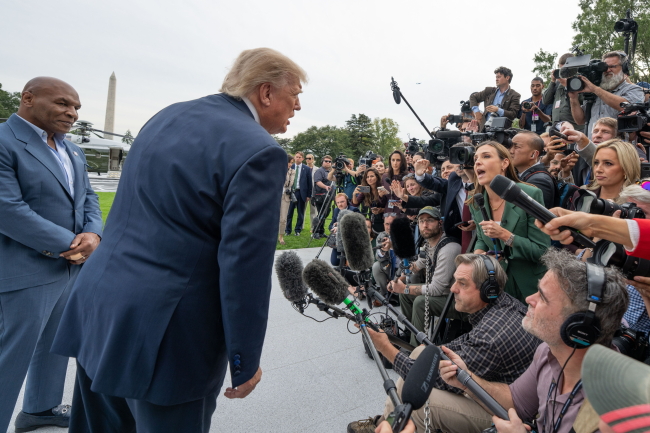
Provider: PAP/EPA.
Expert: Trump’s Campaign Involvement Likely Isn’t Helping Republicans
U.S. President Donald Trump’s involvement in the campaign ahead of the congressional elections is more likely not helping Republicans, William Galston, a former adviser to President Bill Clinton and an expert at the Brookings Institution, told PAP.
In his view, Democratic supporters are far more determined to vote, while Republicans unhappy with Trump will simply not go to the polls.
In the Nov. 3 elections, U.S. citizens will decide all 435 seats in the House of Representatives and 35 seats in the 100-member Senate.
Observers’ attention is focused especially on the elections for the upper chamber of Congress. The Senate races in North Carolina, New Hampshire, Maine, Ohio, Michigan and Minnesota are drawing enormous interest. “There are a great many close contests. Their results will decide who controls the Senate,” Galston stressed.
Trump’s party, the Republican Party, currently has the advantage in both chambers of Congress. In the Senate, Republicans hold 53 seats and Democrats 47. “So for the opposition party, the Democratic Party, to take control of the Senate, it would have to win four additional seats,” the PAP interviewee noted.
Analysts from both political parties generally agree that Democrats will achieve at least a narrow victory, enough to win a majority in the House of Representatives.
In the expert’s opinion, Republicans realize that “the policies pursued by Trump have complicated their political situation and make it harder for them to defend the seats they hold, let alone win new ones.”
“The war with Iran is very unpopular. Tariffs also enjoy very little support. In both cases the reason is the same: they raise prices at a time when Americans already believe prices are too high,” Galston stressed.
He added that the president’s immigration policy is also causing considerable discontent, because many people think he has gone too far. “People wanted the southern border to be controlled — and that was achieved. They also wanted immigrants who are criminals to be removed from the country. But the administration went much further, which, I think, surprised and worried many people who got more than what they voted for,” the PAP interviewee explained.
Trump has gotten involved in the campaign, appealing to supporters to imagine that by voting for Republican candidates they are in fact voting for him.
Galston does not think this will help Republicans. The expert noted that it pleases Democrats, however, who see tying Republicans to an unpopular president as the best strategy for defeating them.
“I wouldn’t say that many Republicans are turning away from the president, but they are certainly not campaigning together with him. Many have also given a subtle and discreet signal that they do not want the president to come to their states and campaign for them,” the former Clinton adviser continued.
During a debate on Thursday, Republican Sen. Susan Collins of Maine, who is fighting to win her sixth Senate race, suggested that Trump’s presence in her state would not be helpful.
Galston acknowledged that Democrats are far more motivated to vote. “I follow these data very closely and in real time. The gap is large and constantly growing. I think turnout among Democrats will be very high,” he added.
“I think Republicans who don’t support Trump’s first two years in office but can’t imagine voting for a Democrat will simply stay home. They won’t go vote,” the Brookings Institution expert said.
If Democrats win, Trump’s position will be weakened. “His administration will have to face investigations into abuses and misconduct, which it largely managed to avoid during the period when Republicans held full control of Congress,” he stressed.
Galston noted that the U.S. Constitution limits the president’s power in domestic policy, where he must cooperate with Congress to some degree, but gives him far greater freedom of action in foreign policy.
“It is possible that a Democratic-controlled Congress will put more pressure on the president, for example by demanding increased aid for Ukraine, and more generally by demanding that the NATO alliance, which has been seriously strained under Trump’s presidency, be maintained,” the PAP interviewee predicts.
“Ultimately, though, presidents can oppose Congress on foreign policy issues without suffering serious consequences. So a great deal will depend on how much energy Trump wants to devote to a dispute with Congress over foreign policy,” added the author of numerous political publications.
Galston said it is not a given that the issues deciding the outcome of the midterm elections will be the same ones at the center of the presidential campaign in two years.
“What we do know is that it will be an election in which the sitting president will not be a candidate. That means a race for the presidential nomination will begin in both political parties,” he noted.
“If you are the vice president of the United States and the president is unpopular, you have to decide how much to distance yourself from him. Kamala Harris faced that challenge in 2024. If in 2028 J.D. Vance, the current vice president, becomes the Republican Party’s candidate — which is certainly possible, and even fairly likely — he will have to find a way to distinguish himself from President Trump without distancing himself from him entirely. Breaking with Trump would kill his chances,” the expert said.
Asked what we can expect in the final weeks of the campaign, the expert replied: “Well, in American politics there is a term, ‘October surprise.’ Such an unexpected turn of events is always possible. But at this stage I find it hard to imagine an event serious enough to fundamentally change the course of the campaign.”
“We are already at an advanced stage. Millions of Americans are voting early. Most voters have already made their decision. Of course, if, for example, there were another massive terrorist attack on U.S. territory, it could change something. The same would be true if Iran attacked an American destroyer or aircraft carrier and an important U.S. Navy ship were sunk. That could create pressure on the president to escalate the conflict again,” he listed.
“But those examples of events are not very likely. That is precisely why, if they happened, they would be a huge surprise,” the interviewee concluded.
From Washington, Natalia Dziurdzińska (PAP)
Expert on Elections: Tough for Trump Because People Are Unhappy With Cost of Living
November’s congressional elections will be difficult for U.S. President Donald Trump and the Republican Party because Americans are unhappy about the cost of living, John Fortier of the American Enterprise Institute (AEI) told PAP.
Elections for Congress, which consists of the House of Representatives and the Senate, will be held Tuesday, Nov. 3. Republicans currently hold the majority in both chambers. Polls indicate, however, that the president’s party may lose its majority in the House of Representatives, and some forecasters also predict that Democrats will take the Senate.
“After these elections the president will probably lose the majority in at least one chamber of Congress and will not have full control of the government. That is a fairly typical situation, but it will mean a change. If Democrats take the House of Representatives, and some think perhaps the Senate as well, it will be much harder for the president to pursue his legislative priorities,” Fortier stressed.
As he noted, Trump does not conduct his policy solely through the legislative process, but can reach for executive orders.
“The president does not need Congress’s consent on many foreign policy issues, so the president’s position on foreign affairs will not necessarily change as a result of Congress making one decision or another,” the PAP interviewee added.
“On funding and similar areas, however, there may be room for compromise between the administration and Congress, and some changes may come about that way. But overall, I think that as a result of these elections, changes in foreign policy will probably be smaller than changes in other areas,” the AEI analyst predicts.
Winning a majority in even one chamber of Congress means Democrats will control its agenda, its committees and the investigations conducted under its auspices, the expert at the conservative Washington think tank noted.
If Democrats took control of the Senate, Republicans would also have more difficulty confirming people to administration posts. The Senate has the power to confirm nominations of federal judges, Supreme Court nominees and Cabinet members.
“I believe midterm elections (in the middle of the president’s term — PAP) are almost always a kind of referendum on the president. Over the past 150 years — with three exceptions — the president’s party has lost seats in the House of Representatives in every midterm election,” Fortier said.
According to him, this happens partly because the party in power usually experiences rifts.
“Members of the party in opposition, in this case Democrats, on the other hand, are united. There may be some differences among them, but they are uniting around the fact that they do not support Donald Trump,” the AEI analyst stressed.
Americans’ concerns about the economic situation are making things harder for the president and Republicans ahead of the elections, the expert acknowledged. This applies especially to inflation and the cost of living.
An important issue during the campaign is the impact of the war with Iran on rising oil prices, Fortier stressed.
“Of course, the price of gasoline is only one element of perceived inflation, but it is its most visible manifestation. People drive cars regularly, they see prices at gas stations. And they begin to imagine an alternative scenario: if there hadn’t been a war, maybe prices would be lower…” the expert said.
According to him, Democrats will not gain many additional seats in the House, but their number will be enough to take control of it. Partly because of changes to the boundaries of electoral districts, the competition in many places is truly fierce, Fortier noted.
The expert expects a stormy process of passing the budget after the elections. “There may be many impasses, and it looks like there could even be a federal government shutdown for some time,” he added.
Fortier also addressed the question of a potential impeachment of the president.
“We have entered an era in which impeachment has become a fairly common occurrence. I just want to clarify that when I talk about impeachment, I mean the technical term. It is a procedure initiated by the House of Representatives. Then there is a second stage, which is a trial in the Senate. Removing a president from office would require two-thirds of the votes in the Senate,” Fortier said. For that reason, the expert does not expect anyone to be removed from office.
In congressional elections in the middle of a presidential term, the entire House of Representatives and slightly more than one-third of the Senate — 35 of 100 senators — are chosen. Members of the House of Representatives are elected to two-year terms, so all 435 seats in that chamber are up for election every two years. Senators serve six-year terms, which begin at different times.
From Washington, Natalia Dziurdzińska (PAP)
