
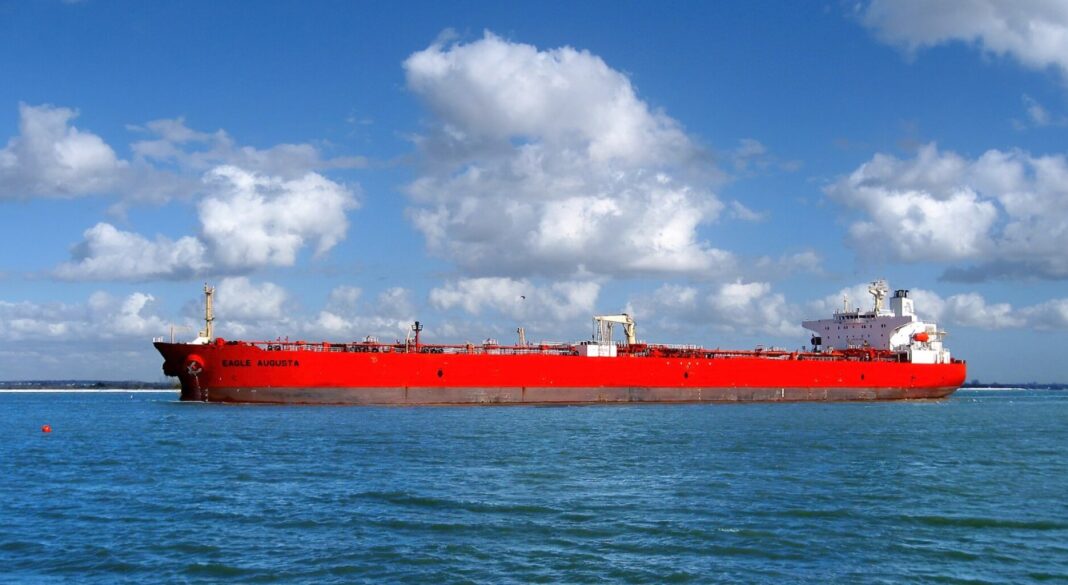


Two of three shipments of Russian diesel that were to reach the U.S. under a deal struck by Donald Trump and Vladimir Putin have changed course, the Financial Times reported. According to the newspaper, this may point to difficulties in carrying out the controversial plan to import Russian fuel.
According to the Financial Times, the Russian tanker Talisman, which is under U.S., U.K. and EU sanctions, and the Leruo, owned by a Hong Kong shipping company and under U.K., EU and Canadian sanctions, no longer list the U.S. Atlantic coast as their destination. The Leruo has set a course for Brazil. The Talisman has headed for the Mediterranean and is awaiting further instructions on where to unload.
The third vessel carrying Russian diesel, the Agioi Fanendes, a tanker owned by a Greek shipping company, is still heading toward the United States. However, its final port of destination has not yet been confirmed either.
The FT also reported that the sanctioned tanker Beast, owned by a Seychelles-based shipping company, loaded fuel at the Russian port of Primorsk on Oct. 27 and set a course for the U.S. The vessel is broadcasting the signal “Atlantic,” which points to the U.S. Atlantic coast as its likely destination.
The newspaper noted that it was unable to obtain comment from the owners of any of the sanctioned tankers.
The agreement, reached ahead of the November congressional elections, was meant, according to the Trump administration, to help lower fuel prices in the U.S. and strengthen support for Republicans. However, in Tuesday’s elections, Democrats regained control of both the House of Representatives and the Senate.
The deal drew criticism from Democrats and some Republicans, who questioned its legality. New Jersey Gov. Mikie Sherrill appealed this week to port operators not to admit tankers carrying Russian diesel fuel.
“Two of the three shipments of Russian diesel headed to the U.S. have already been redirected elsewhere,” Kpler analyst Matt Smith told the FT. He assessed that the third vessel may also ultimately fail to reach the United States because of uncertainty over regulations and sanctions.
Jacob Meldgaard, CEO of the shipping company TORM, also quoted by the newspaper, said the course of the operation so far shows that bringing Russia back into the global economy remains difficult even with the support of the U.S. administration.
The Financial Times pointed out that U.S. diesel inventories have fallen below 100 million barrels for the first time in more than two decades. According to the newspaper, diesel supplies have been constrained by, among other things, the loss of some global refining capacity because of the conflicts in Iran and Ukraine. Since the start of the war with Iran, diesel contract prices have risen by more than 60%, and the price of fuel at U.S. gas stations has reached $6.27 per gallon (about 3.79 liters). (PAP)
