
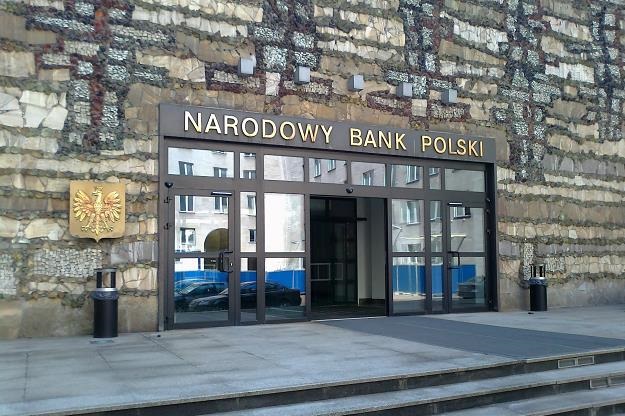


The decision to halt payment orders on the bank accounts of the Constitutional Tribunal is completely apolitical, National Bank of Poland (NBP) board member Paweł Szałamacha stressed on Tuesday. He added that the burden is on the Tribunal to provide unambiguous documents showing who represents it.
On Tuesday, the NBP board presented its position on the central bank’s suspension of payments from the Constitutional Tribunal’s accounts.
– At present, the National Bank of Poland has no basis for properly determining whether instructions to carry out payment transactions on behalf of the Constitutional Tribunal would be submitted by authorized persons. That is because authorizations were filed with mutually canceling content regarding the individuals who are to represent the Tribunal, NBP board member Paweł Szałamacha said.
He added that “the NBP acts on the basis of the law” and that it is obliged to exercise “particular care regarding the security of the funds it holds.”
– In view of the existing circumstances, the NBP has suspended the ability to carry out payment orders on the Constitutional Tribunal’s bank accounts. And that applies regardless of who would issue such orders, Szałamacha said.
– (…) This decision is completely apolitical. It is technical and implementational in nature, and it follows directly from the content of conflicting documents filed with the NBP. It is the Tribunal’s responsibility to provide unambiguous documents on who may dispose of the account, the NBP board representative stressed.
In his remarks, Szałamacha noted that the central bank is independent and is not a party to political disputes. He also said the NBP is not authorized to resolve disputes over the constitutional system.
Although only Paweł Szałamacha spoke, he was joined by central bank Governor Adam Glapiński, deputy governors Marta Kightley and Przemysław Litwiniuk, and board members Marta Gajęcka, Ludwik Kotecki, Artur Soboń and Rafał Sura.
The central bank announced the suspension of payment orders concerning the Tribunal’s accounts on Monday. In its statement, it said that on Nov. 2, 2026, Constitutional Tribunal President Bogdan Święczkowski filed a declaration with the NBP on the Tribunal’s representation (naming authorized persons) in its dealings with the NBP in connection with the performance of the bank account agreement. At the same time, on Nov. 6, 2026, documents were submitted to the NBP indicating the persons authorized to dispose of the funds in the Constitutional Tribunal’s bank accounts held at the NBP.
“A situation has therefore arisen in which mutually canceling sets of documents confirming authority to dispose of the funds held in the Tribunal’s accounts have been filed with the NBP,” the NBP said in its statement.
On Oct. 30, representatives of the group chosen by the current term of the Sejm, Poland’s lower house of parliament, to serve as Tribunal judges announced that Anna Korwin-Piotrowska, as the longest-serving judge, had become the acting head of the Constitutional Tribunal and had issued an order suspending Tribunal President Bogdan Święczkowski and Vice President Bartłomiej Sochański from their duties.
Święczkowski called this a usurpation. President Nawrocki also said at the time, among other things, that “the constitutional order of the Republic of Poland had been violated and a constitutional organ of the state had been seized by force.”
Prime Minister Donald Tusk, in turn, stated, among other things, that the Sejm of the current term had elected new Tribunal judges, but the president did not administer the oath to some of them, President Święczkowski prevented them from taking up their work, and when after many weeks of waiting they decided to take up their duties, “they were attacked.”
On Nov. 10, the Supreme Court overturned the order for the immediate suspension of Bogdan Święczkowski and Bartłomiej Sochański. Judge Anna Korwin-Piotrowska then stated that Supreme Court rulings have no bearing on the suspensions, which are reviewed “only by the Tribunal’s disciplinary court.” (PAP)
