


The U.S. Department of the Interior has released a review of the response to the Dragon Bravo Fire on the Grand Canyon’s North Rim. According to the document, the key causes of the problems were not environmental.
The review’s authors acknowledge that drought and extreme fire behavior played a role. But they point to systemic weaknesses in the National Park Service involving authority and qualifications, which made it harder to make decisions at critical moments. The review was ordered by the deputy secretary of the interior.
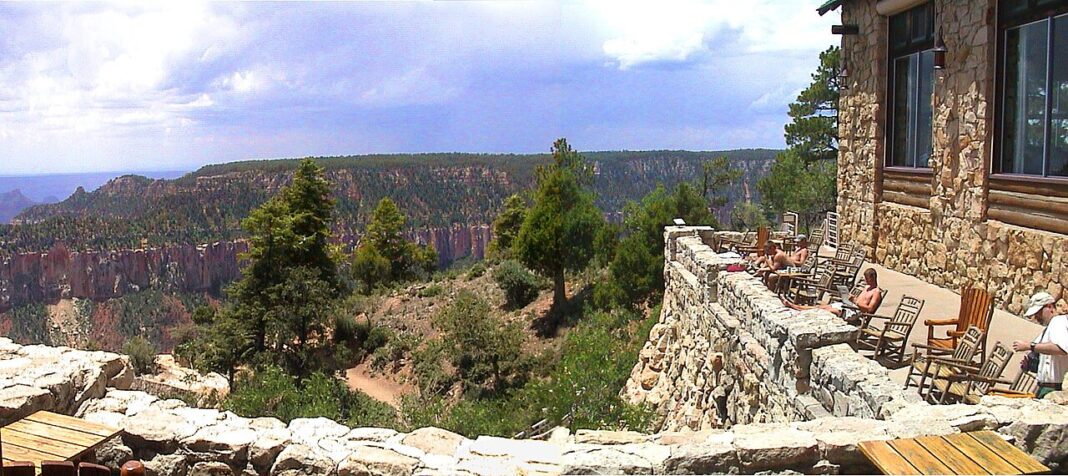
The fire was started by lightning in July 2025. The park service allowed it to burn for several days, after which it spread rapidly. The fire led to evacuations and the destruction of Grand Canyon Lodge, historic cabins, employee housing and other important infrastructure. Firefighting costs exceeded $141 million over three months.
Two days after the fire started, the park superintendent chose a “confine and contain” strategy. It relies on natural or man-made barriers to keep a fire within a designated area. The fire, however, crossed a road that crews had designated as a control line. The review also points to communication breakdowns that delayed the use of fire retardant by several days. The decision to use it was made when several structures, including the lodge, were already lost.
In the authors’ view, inconsistent messages to the public about how the response was being handled may have caused confusion and undermined trust. The National Park Service initially defended its actions. It said that a sudden, extreme shift in wind far exceeded forecasts.
The recommendations include clearer lines of accountability, more frequent reviews of firefighting strategy and better coordination among agencies. Incident commanders are also to regularly reassess weather conditions, fire behavior and the availability of resources. The report concludes that many of the problems were foreseeable and avoidable, and that they extend beyond a single park or a single agency.
Source: AZFamily
KN
