German Press Predicts Abu Dhabi Talks Will End in Failure
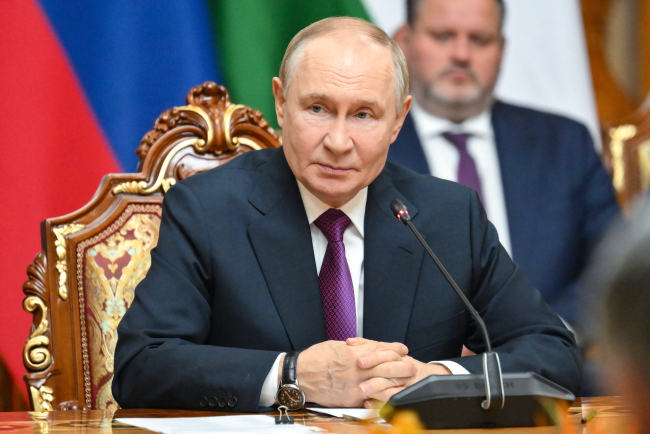
The German press believes the trilateral negotiations between Ukraine, Russia and the United States in Abu Dhabi are doomed to fail because of Vladimir Putin’s uncompromising stance and U.S. mistakes. Commentators are calling the talks a “theater of the absurd.”
“Trump is making a mistake in his thinking,” Christoph von Marschall writes Wednesday in Tagesspiegel. “Putin is pursuing Ukraine’s capitulation, not peace,” the commentator stressed. In his view, the trilateral talks in Abu Dhabi are a “theater of the absurd” and a “grim farce.”
The main reason no agreement has been reached so far is Putin. “His goal is neither peace nor a compromise based on the current situation on the front. Putin demands Ukraine’s capitulation and subjugation,” Marschall explains.
The commentator points out that despite enormous losses and a lack of progress on the front, Putin is not backing away from his maximalist demands. In his view, the Russian president can afford to do so only thanks to his “direct contact” with Donald Trump. “The U.S. president cares about neither international law nor Ukraine. He is tempted by energy deals in Russia and in Ukraine, which are being offered to him by a shrewd manipulator, Putin,” the Tagesspiegel journalist writes.
Ukraine, the victim of the aggression, and the Europeans must put a brave face on a bad situation, because they need American weapons, American satellites and intelligence information.
Marschall points to the dilemma facing Europe. Europeans want the war in Ukraine to end, but they realize that a peace on unfavorable terms would encourage Putin to rebuild the former sphere of influence, including three former Soviet republics: Estonia, Latvia and Lithuania, the Tagesspiegel commentator warns in his conclusion.
According to Frankfurter Allgemeine Zeitung, a compromise on Putin’s part is a precondition for an agreement, and none appears to be in the offing.
Commentator Nikolas Busse writes that the minimal common denominator uniting all sides taking part in the Abu Dhabi negotiations is “growing war fatigue.” “The costs of the war and Russia’s losses are large, while its territorial gains are minimal. Ukraine is under heavy pressure from Russian air attacks and faces a difficult winter. In Europe, voters’ political support for backing Ukraine is declining, and the question of financing it is becoming more and more pressing. The American government has long wanted to end the war because it stands in the way of a global power’s strategic reorientation,” Busse says, describing the current situation.
“All of this is not enough to end the war, however,” the commentator said. The conflict of interests remains: Russia wants to take control of Ukraine and, in the longer term, all of Eastern Europe. Ukraine wants security and to join the West. Europeans want to, and must, deter Russia. Americans want to limit their involvement in Europe.
From the start, all sides have stuck to maximalist demands and uncompromising positions. Before the Abu Dhabi talks, America, Ukraine and the Europeans issued a statement listing their desired goals: a security guarantee for Ukraine, respect for territorial integrity and sovereignty, and a strong NATO. None of these points corresponds to Putin’s goals, Busse noted.
One should wish the brave Ukrainian people peace, but for that to happen, Russia above all would have to take a step toward compromise.
“The Abu Dhabi talks will end in failure,” Handelsblatt predicts. Trump dreams of a “big, beautiful deal” for all of Europe. All the participants are pretending to be compliant and assuring everyone that a quick peace is important to them. “The reality looks entirely different: the war will continue with unchanged brutality, and Russia’s and Ukraine’s ideas of how to end it are very far apart,” writes Carsten Volkery.
The commentator calls Putin’s demands regarding Donbas and NATO’s withdrawal from its eastern flank an “impertinence” that no European can accept. “If the talks in Abu Dhabi are to make any sense, Kushner and Witkoff should join the Europeans in showing Putin where his limits are,” Volkery writes.
“Unfortunately, that is not to be expected. The U.S. negotiators prefer to let themselves be beguiled by Putin’s promises of lucrative oil deals. That is why no progress should be expected from the talks,” the Handelsblatt commentator concludes. (PAP)