
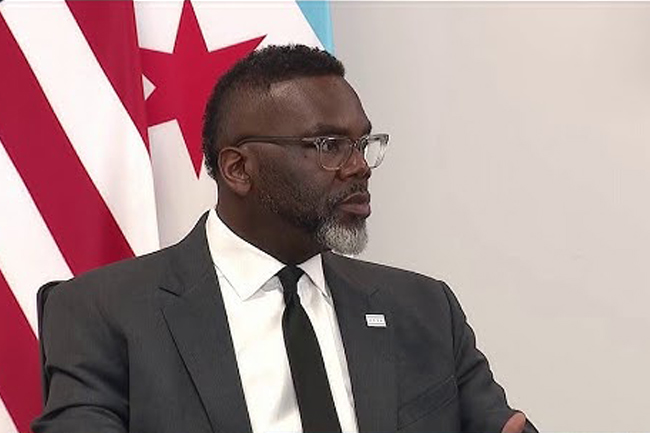


A majority of Chicago aldermen told Mayor Brandon Johnson on Tuesday that they will not support more than $300 million in new or increased taxes. The mayor included those amounts in his draft budget for 2027.
At the same time, the aldermen expressed concern about the city’s estimated $882 million deficit. A group of 28 aldermen sent Johnson a letter stating that they will not support his plan to reinstate a business headquarters tax, which he unsuccessfully pushed to have passed last year, or his proposed 33% increase in the city’s personal property lease tax. The mayor’s office estimated that the two taxes would bring in about $335 million a year for Chicago’s coffers.
“We will not vote for a budget that includes a jobs tax, an increase in the personal property lease transaction tax, or new spending,” said the letter from the 28 aldermen, who called themselves the “Coalition for Fiscal Responsibility.” “This version of your budget has no chance of being carried out. This budget would stifle economic growth just when Chicago needs it most,” the aldermen noted.
Brandon Johnson needs 26 votes to push through his draft budget, and because 28 aldermen have already voiced opposition, he will have to either make concessions to his opponents on the City Council or persuade them to change their minds. The latter seems unlikely, given that the same coalition passed its own draft budget this year despite the mayor’s opposition. In his budget address last month, Johnson proposed what he called a “fair tax on employers,” often also described as a “head tax,” even though the majority of the City Council had warned him in advance that any such proposal had no chance of passing.
The mayor proposes that businesses with 125 or more full-time employees pay $25 a month for each employee. Businesses whose employees work in areas of Chicago officially designated as socioeconomically disadvantaged would qualify for a so-called “SEED credit,” which would cover the cost of the tax for each employee in those areas. Johnson’s office estimates that the tax would bring in $101 million a year. The mayor also plans to raise the personal property lease tax from 15% to 20%. The tax applies to businesses and individuals who lease property, use cloud services, digital software and more. Under the mayor’s plan, the tax rate on car leases would remain at 15%, while the tax on leases of film production equipment would be lowered to 11%. The mayor’s office estimates that the changes to the personal property lease tax would bring in $234 million.
In opposing these two tax plans in Johnson’s budget, the aldermen pointed out that the personal property lease tax was already raised from 11% to 15% in the 2026 budget and was supposed to be frozen at that level for two years. “We gave the people of Chicago our word on this rate. If we break it just a year later, why would any Chicagoan believe the next commitment made by this City Council?” the aldermen wrote. They also proposed that Johnson’s administration step up efforts to recover billions of dollars owed to the city.
Under the budget plan adopted this year by the mayor’s opponents, the aldermen approved a proposal to raise $89.6 million by selling part of the debt owed to the city, including unpaid tickets, utility bills, ambulance transport fees and other receivables. Johnson, however, called the plan “morally bankrupt” and has since claimed that his administration has been unable to find any private firms willing to buy the debt. Calling again on Johnson to take over part of the debt owed to the city, the aldermen said they agree that the city should provide relief to people struggling financially, but argued that this would still leave a substantial amount of debt the city could collect, “enough to nearly fill the one-time gap in this budget without a single new tax.”
Although the same coalition drew up a budget plan last year and passed it despite Johnson’s opposition, this time it suggested that the mayor should revise his budget plan and present a proposal that the aldermen can approve without resorting to the taxes they oppose. The City Council has until the end of the year to pass the 2027 budget. Last year, Johnson’s opponents on the City Council passed the draft budget on December 20. The next two full City Council meetings are scheduled for December 8 and 9, though it is unclear whether the final version of the budget will be ready for a vote by then.
BK
Source: Polski.FM
