
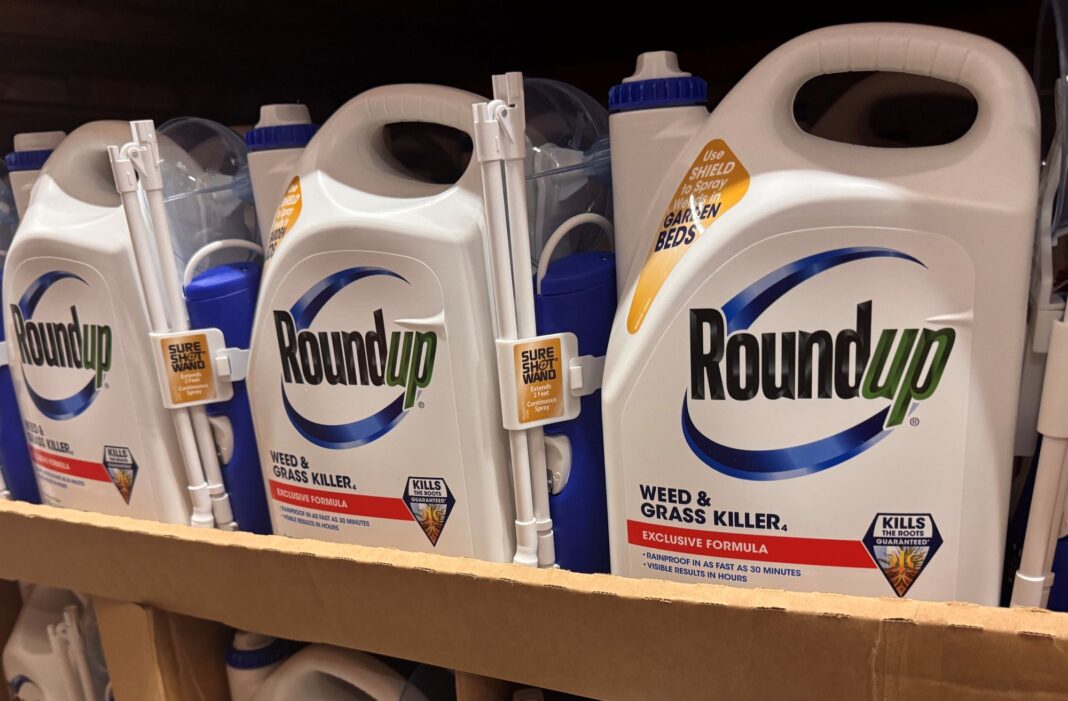


Bayer won a trial Thursday in St. Louis, Missouri, brought by three women who claimed that the Roundup weed killer they used contributed to their cancer.
Reuters notes that Thursday’s verdict is a test of the outlook for further lawsuits against the maker of Roundup, following the U.S. Supreme Court’s June ruling in Bayer’s favor, which limited the scope of claims tied to warnings on herbicide labels.
A St. Louis jury ruled unanimously in favor of Monsanto, which is owned by Bayer, in the first case heard since that decision. Since acquiring Monsanto in 2018, the company has struggled with costly disputes over Roundup that have consumed billions of dollars and affected its share price. The company is also awaiting a decision on a proposed $7.25 billion settlement.
Bill Dodero, Bayer’s chief litigation counsel in the U.S., said the verdict shows how difficult it can now be for plaintiffs to win similar cases. In his view, the Supreme Court’s ruling in the Durnell case creates significant obstacles both to showing that claims have merit and to presenting the evidence needed to prove them.
The plaintiffs, Theresa Aretino, Cynthia Fernandez and Betty Larkin, sued Monsanto in St. Louis in 2020. They claimed they had regularly used Roundup and later developed non-Hodgkin lymphoma. Their attorneys argued that the product was defectively designed, posed an unreasonable risk to users, and that the company was negligent in putting it on the market. Fernandez died before the trial began. The three women are not covered by Bayer’s proposed settlement.
Bayer rejects the allegations, pointing out that many years of studies have shown glyphosate, Roundup’s active ingredient, to be safe and that there is no evidence it causes cancer. The company still faces about 65,000 lawsuits in federal and state courts.
Before this year’s Supreme Court ruling, most lawsuits were based on the claim that Roundup’s label did not warn of the risk of cancer. In June, the court held that federal law requires the use of labels approved by the U.S. Environmental Protection Agency (EPA). The agency does not require such a warning.
The EPA has previously assessed that glyphosate is probably not carcinogenic, but it is conducting a new review of its safety. The International Agency for Research on Cancer (IARC), for its part, concluded in 2015 that the substance is “probably carcinogenic” to humans. Bayer disputes that assessment, saying it is based on flawed methodology.
From New York, Andrzej Dobrowolski (PAP)
