
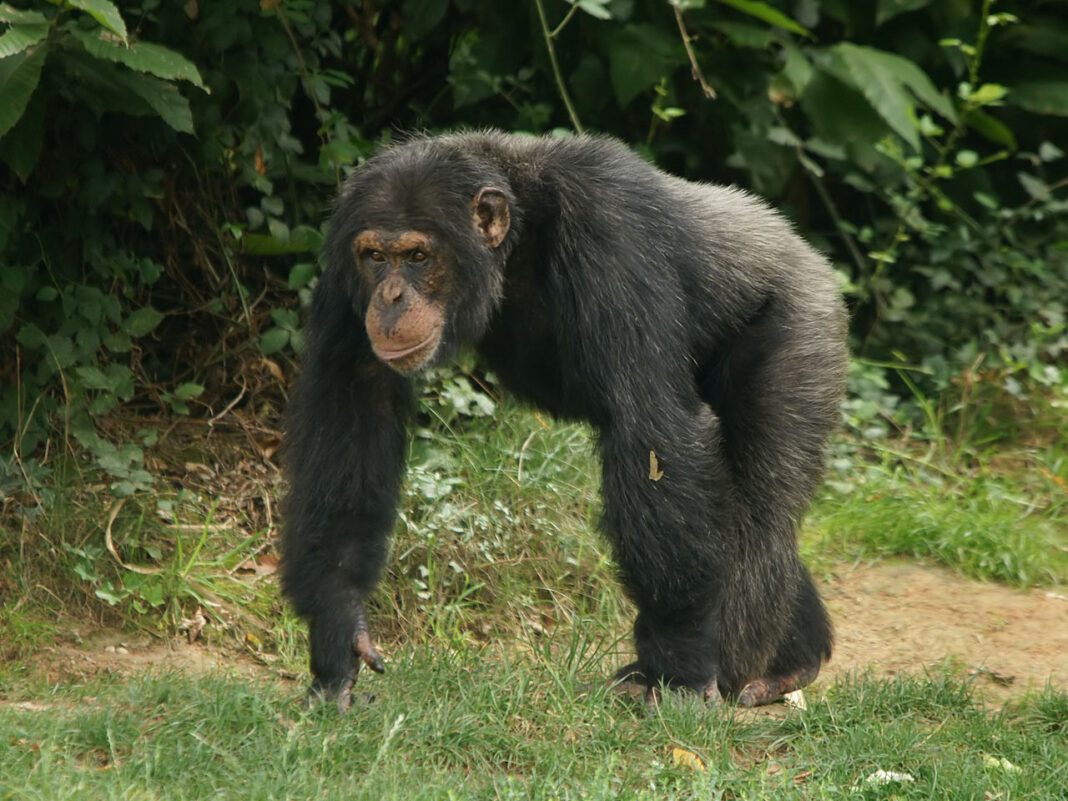


Both people in management positions and chimpanzees of high social rank are more willing to take risks. According to scientists, this suggests a link between leadership and risk-taking that may have deep evolutionary roots.
Researchers from the Max Planck Institute for Human Development in Berlin, the Technical University of Dresden and the University of Portsmouth have described the relationship between risk-taking and social standing in humans and chimpanzees in the journal “The Leadership Quarterly.”
The team first analyzed data on more than 40,000 participants in the German Socio-Economic Panel (SOEP), comparing respondents’ self-reported general willingness to take risks with their job positions and income levels.
The results showed that people in managerial roles reported, on average, a greater willingness to take risks than people who did not hold such positions. No differences were found between men and women.
Higher income was also associated with a greater willingness to take risks.
The researchers also analyzed data on 86 chimpanzees living in care facilities in Uganda and Kenya.
Caretakers who had looked after the animals for many years rated each individual’s willingness to take risks.
Those ratings were then compared with the chimpanzees’ social rank within their groups.
The observations showed that chimpanzees higher in the hierarchy were rated as more willing to take risks than individuals of lower status.
“The results suggest that the link between leadership and risk-taking may have deep evolutionary roots. The similarity between humans and chimpanzees in high-ranking positions when it comes to willingness to take risks indicates that this trait may have developed in both species as an adaptive strategy, helping them cope with competition in social hierarchies or with the challenges of an uncertain and often hostile environment,” says Dr. Lou Marie Haux of the Center for Adaptive Rationality at the Max Planck Institute for Human Development, the study’s lead author.
The relationships the researchers found were stronger in chimpanzees than in humans.
In the scientists’ view, this may indicate that modern human societies have developed other paths to leadership positions, such as education, professional qualifications or institutional mechanisms. In human communities, such factors reduce the need for people aspiring to those positions to take significant risks.
In chimpanzee groups, on the other hand, where social rank is a matter of direct competition, a willingness to take risks may be a greater advantage in moving up the group’s hierarchy.
“Our results point to a correlation, not a cause-and-effect relationship. We cannot be sure whether people who are more willing to take risks are more likely to become managers, or whether holding a leadership role makes people more willing to take risks,” Dr. Haux stresses.
However, data from the long-term SOEP study favor the first explanation, according to which a greater willingness to take risks is often evident before a person takes on a leadership position.
The scientists note that future longitudinal and experimental studies could help better explain the complex relationships among risk-taking, social status and leadership. They could also shed more light on the evolutionary origins of those relationships.
The researchers already plan to check whether similar relationships exist in other great apes, including bonobos.
Marek Matacz (PAP)
