
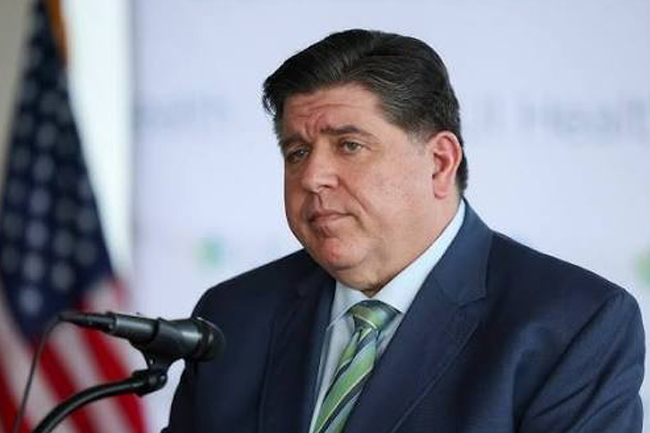


Illinois has some financial breathing room this year, according to a report from the Governor’s Office of Management and Budget. But serious challenges loom as changes in federal policy take effect.
The reason is President Donald Trump’s “One Big Beautiful Bill Act.” In fiscal year 2027, which ends June 30 of next year, Illinois should post a surplus of more than $900 million. Gov. JB Pritzker, however, intends to put a substantial portion of that money toward other purposes, because in the coming fiscal year the state must contend with a projected deficit of nearly $2.4 billion.
Funding difficulties are expected to become more frequent in the second half of 2027, as federal policy changes introduced by the Trump administration take effect, including changes to support under Medicaid and food assistance programs. On Friday, the GOMB (Governor’s Office of Management and Budget) released its annual economic and fiscal policy report, which includes a five-year forecast of Illinois spending and revenue.
The document offers an annual preliminary look at the direction of state finances, though long-term forecasting is inherently very difficult. By the time lawmakers begin work on the budget for a given year, the actual deficits typically turn out to be much lower than those projected in the initial estimates in the GOMB report.
The governor’s office is now entering a crucial stage in preparing the budget proposal that Pritzker will present to lawmakers in February. The report is therefore an important benchmark, showing the current condition of Illinois’ finances and the issues that must be taken into account in next year’s budget. The GOMB analysis is based on S&P Global’s September forecast, which predicts a tight labor market and slow growth in gross domestic product, at just over 2%. “While a recession is not within the forecasted parameters, conditions exist for one,” the GOMB report states. “Alternatively, if the war in Iran is ultimately brought to an end, energy prices may fall as global supplies of oil and other commodities begin to flow unimpeded, easing inflationary pressure, which could improve the economic outlook,” the report continues.
The projected surplus of $927 million this year, driven by strong corporate income tax and sales tax revenue, offers some flexibility. Pritzker wants to use the money to prepare for a number of federal changes to health care and food assistance programs; to pay for disaster relief that the federal government has refused to cover; to prepare the state employee health insurance plan for changes expected to affect the health care sector; and to replenish a special reserve fund created by lawmakers last year, which will allow the governor to immediately fill budget gaps in emergencies when federal funds are lost.
In all, Pritzker has proposed an additional spending plan of $728 million, which would leave the state with a $199 million surplus at the end of the fiscal year. Costs resulting from changes to federal health care policy under the “One Big Beautiful Bill Act” will begin to weigh on the Illinois budget in fiscal year 2028 (FY28). According to current GOMB estimates, next year’s revenue will total about $58 billion, an increase of about $1 billion over the current year, mainly thanks to higher personal income tax receipts, while spending is expected to reach about $60.3 billion. That is higher than this year’s spending of about $56 billion, because the plan assumes that Illinois will take over funding for about $1.4 billion in spending that the federal government currently covers. That leaves the state with a $2.4 billion deficit that lawmakers will have to close in order to pass a balanced budget, as the state constitution requires.
The federal law, effective July 1, 2027, the same day fiscal year 2028 begins, requires so-called managed care organizations to be taxed at the same rate regardless of whether they are covered by Medicaid. These tax changes will create a $1.3 billion deficit in the Illinois budget next year if the state maintains current tax and funding levels for those organizations. The federal law will also soon require states to gradually lower the tax on hospital services from the current maximum rate of 6% to a maximum of 3.5% by fiscal year 2032. According to GOMB, the change will affect the state beginning in fiscal year 2029. The federal government covers part of this tax revenue, which means that a falling tax rate will result in less federal support for Medicaid in Illinois. Federal Medicaid support will fall by about $2.8 billion by fiscal year 2032, when the tax changes take full effect, unless they are repealed, as Pritzker and Democrats have demanded.
Illinois is also expected to begin paying a larger share of benefits under the Supplemental Nutrition Assistance Program (SNAP) in fiscal year 2029. That could cost Illinois more than $400 million a year. In recent years, Pritzker has limited new spending beyond statutorily required increases in areas such as pensions and education funding. Rather than impose across-the-board tax increases, both he and lawmakers have opted for targeted tax increases to cover new costs.
With Trump in the White House and the effective date of the “One Big Beautiful Bill Act” provisions approaching, the Pritzker administration has warned that launching new, costly initiatives is not possible. That warning still stands. “The value of canceled or curtailed grants to Illinois entities reaches into the hundreds of millions of dollars, and further potential cuts are currently the subject of litigation,” the report states. “GOMB anticipates that the state will have very limited ability to replace lost federal funds for specialized state grants. Nor are there resources to offset the loss of grants awarded directly to local governments and community organizations.” Many organizations, however, are lobbying lawmakers to demand new funding.
On Wednesday, representatives of the Illinois Federation of Teachers (IFT) will travel to Springfield to urge state officials to increase funding for public schools, beyond the annual $350 million increase provided under the Evidence-Based Funding (EBF) formula.
BK
Source: Polski.FM
