
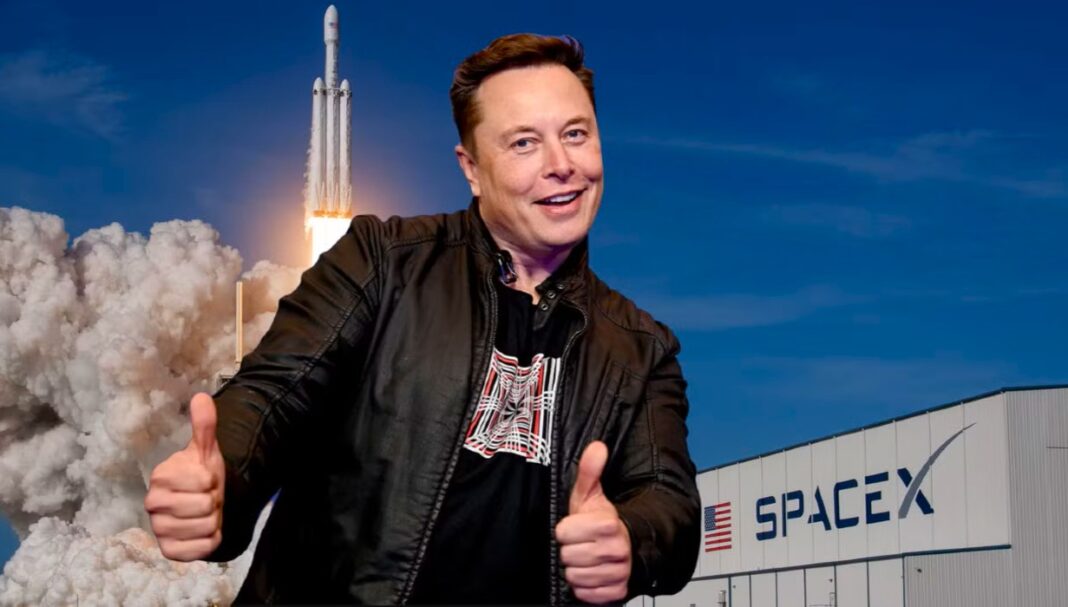


Elon Musk most likely ordered the curbing of Starlink’s operations in Ukraine. Americans have not given him the right to make national security decisions. It is time to take Starlink away from him, because a private individual should not shape U.S. foreign policy, says Nobel laureate in economics Paul Krugman.
The Wall Street Journal reported Tuesday that Musk personally ordered limits on Starshield, the military version of the Starlink system, and that he discussed the matter with Donald Trump. Perhaps the president “whispered to him in a mob style” that Ukrainian leader Volodymyr Zelensky is a problem and that “someone should do something about it,” Krugman wrote Thursday on his Substack.
That does not change the fact, he cautions, that “no private individual should conduct national security policy, or even have the ability to.”
After all, slowing down Starlink is an intervention in a foreign armed conflict that “helped Russia, our enemy, and hurt Ukraine,” the author notes.
Musk and Trump now openly support Vladimir Putin, even though most of the American public opposes this. Meanwhile, the multibillionaire’s decision to slow down Starshield could cause the deaths of thousands of people in Ukraine. What’s more, it will only embolden Putin, Krugman concludes.
America is a market economy and respects private property, but the fact that Musk owns Starlink does not give him the right to act against the U.S. national interest. “Capitalism is not an excuse for treason,” the author stresses.
Decisions on foreign policy and national security rest with democratically elected leaders, not with companies and businessmen. The federal government has the right to take control of a company if it does not act in the interest of the state. That was the case during World War II, Krugman recalls.
The government intervened then in conflicts between company management and labor unions to keep private contractors’ deliveries to the military from being blocked. When the management of Montgomery Ward rejected an agreement with the union that the government had negotiated, the administration of President Franklin D. Roosevelt seized the company, and the National Guard literally carried its chief, Sewell Avery, out of his office.
The federal government’s principle was clear, the author notes: it did not intend to take long-term control of companies, but their chiefs also had no right to undermine the country’s defense policy.
When real-time communication in war is as important as missiles and artillery, Starlink is of crucial importance to U.S. security. And the decision about who gets full access to the system is as important as the decision about whom the United States chooses to sell its most advanced weapons, the Nobel laureate says.
Musk, who leans toward authoritarian rule and conspiracy theories and at the same time does not respect American values, should not control Starlink, just as private individuals should not decide America’s defense policy, Krugman concludes. (PAP)
