
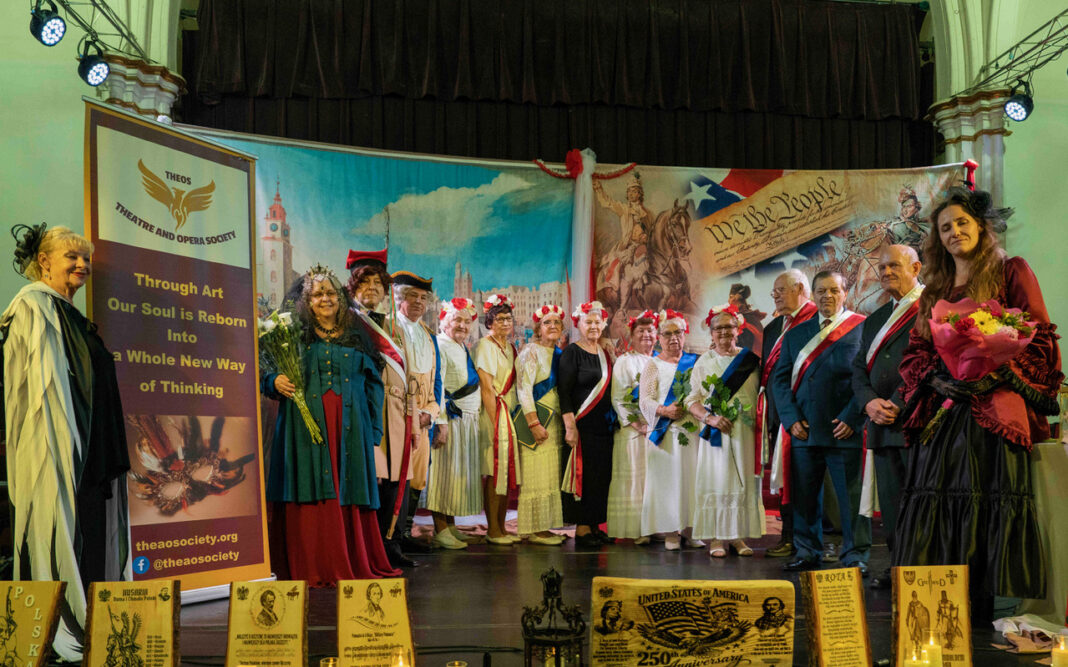


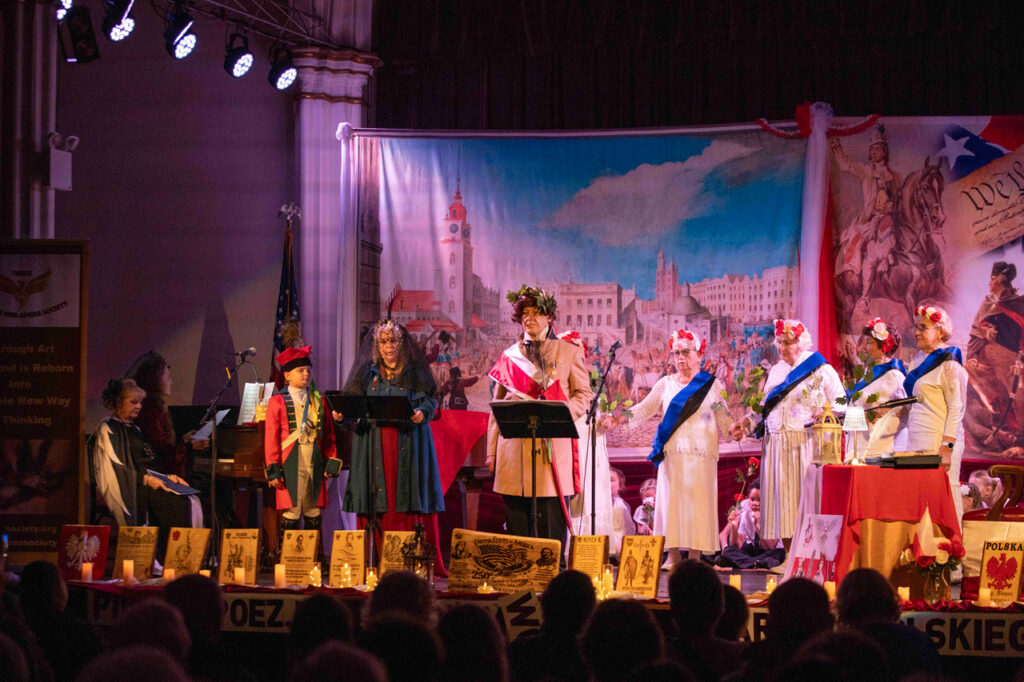
Telling Polish history through song and poetry, highlighting the verse that accompanied Poles in their fight for independence, and presenting it in November, when we celebrate National Independence Day, holds special meaning for Poles living in the U.S. It would be hard to imagine a more elevated, freedom-minded title for the performance, which took place Nov. 6 at 6:30 p.m. at the Polish & Slavic Center in Greenpoint. THEOS Theater presented it as part of the Polish Poetry Festival, under the title “Song and Poetry: The Breath of Freedom of the Polish Nation.”
***
Interview with THEOS director Katarzyna Drucker – who is also the play’s director and set designer.
***
It’s hard to imagine a more elevated, freedom-minded title for a performance. What was the greatest motivation for presenting these historical threads?
There were several reasons. Poetry and song (I am an actress and a soprano) are biologically bound together, and they are a part of my soul. For many years I have been the conductor of the Krakus Choir, and I work with seniors in Brooklyn as well as with students of Polish supplementary schools. This work allows for almost generation-spanning collaboration, which is an exceptional pillar sustaining the bond in our community. But the most important motive was finding, in archives, certain historical facts that are not widely known and that have been left out of school textbooks.
This year we focused above all on presenting the life of Tadeusz Kościuszko on the occasion of the 280th anniversary of his birth, as well as his contribution to America’s winning its independence (on the 250th anniversary of that independence). He was a modest figure, but at the same time colorful and exceptional, and his military genius surpassed that of any general of his time, even George Washington. Exactly as in Alojzy Feliński’s little-known poem “To Kościuszko”:
Kościuszko! Your modesty cares not for praise,
Brave in battle, in peace your mind is magnificent,
Great through reason, virtue and valiant deeds,
No one had a greater claim than you to fame.
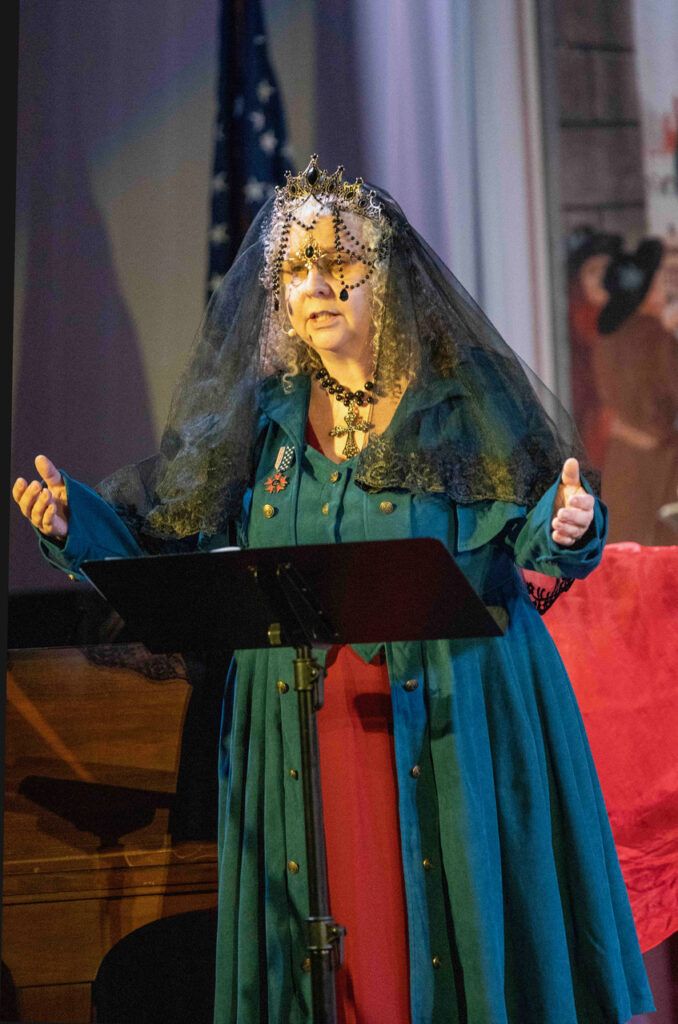
You invited an exceptionally talented presenter, Dr. Luiza Raab-Pontecorvo, to collaborate, and offered her the role of Izabela Czartoryska. Why did you choose her for the stage?
While searching for historical materials, Luiza and I discovered an incredible historical gem. And I decided that this very event had to be in our performance. The only mentions of it are in “Słowo Podlasia” and in a biography of Kościuszko written by Monika M. Gardner and published in 1920.
Princess Czartoryska was a great supporter of Tadeusz Kościuszko, and on Oct. 28, 1792, in Sieniawa, she held an intimate reception for his name day, without publicity, because of the threat of arrest by Empress Catherine. Her notes have survived to this day, with the suspicion that it was the princess who “plotted” the Kościuszko Uprising. At the gathering, the women of the family and her circle (including Izabela Czartoryska) appeared in white gowns with black-and-blue sashes, and wove into their hair blue ribbons from the Virtuti Militari order, which officers sent to their wives and fiancées after the Russians banned wearing the decoration. The ladies wove Kościuszko a wreath/crown of oak twigs and leaves. The oak had been planted about 100 years earlier by King Jan III Sobieski, the hero of the 1683 Relief of Vienna. It was presented by the princess’s daughters, Anna Maria and Zofia.
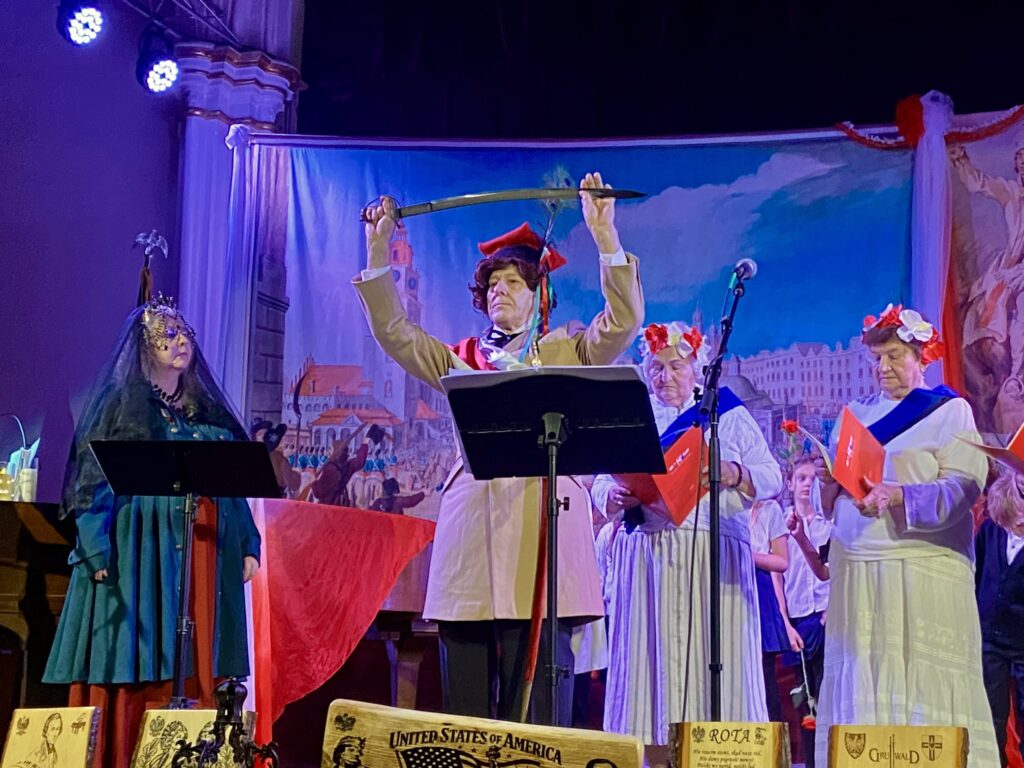
In our performance, the women of the Krakus Choir re-created that moment. They danced with the Motherland to the strains of Ogiński’s Polonaise, played by Dr. Luiza Raab-Pontecorvo, our guest of honor, and choir member Halina Jaworska presented Kościuszko with the wreath.
This thread from Kościuszko’s life really isn’t published in any textbook, is it?
It isn’t, and it was a complete surprise even to me. There was no poem to use, so I wrote one myself. Princess Izabela Czartoryska, too, is a figure hidden in the shadow of history. After the Russians destroyed Puławy, it was she who created, in 1801, the first museum on Polish lands, with the motto “The Past to the Future.” She collected national keepsakes, but also true treasures, which later formed the beginnings of the Princes Czartoryski Museum in Kraków (including “Lady with an Ermine”). THEOS decided to once again carry the torch of enlightenment and bring these stories out of dusty shelves into the light of day.
You mentioned many poetic gems.
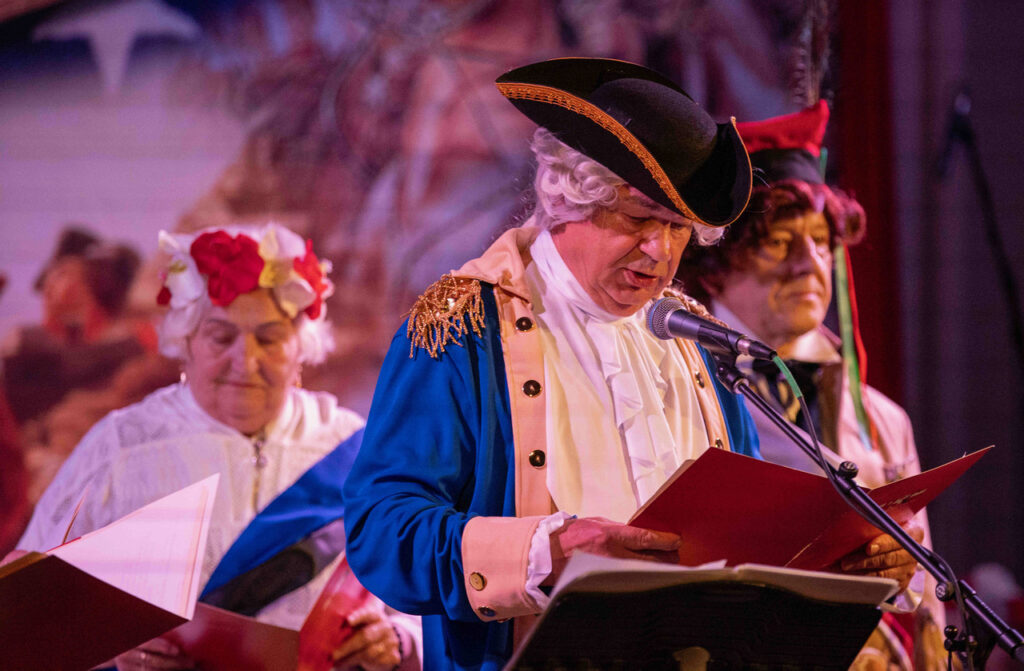
Yes. Thanks to a beautiful, though little-known, poem by Anna Piliszewska, we witnessed his birth, with the Motherland (Katarzyna Drucker), the Son of the Nation (Andrew Michoń) and Poetry (Anna Kucay). A poem by our senior Wanda Wójcik, “Tadeusz Kościuszko, Hero of Two Nations,” showed us his stay in America and his meeting with George Washington (Leszek Wiśniewski). We heard Kościuszko’s patriotic call to serve the Homeland and leave America behind in Wiktor Czajewski’s poem “For Country, For Freedom, For Honor, For Glory.” Another poetic surprise for me was a poem by Kazimierz Przerwa-Tetmajer, who wonderfully described Kościuszko’s “Oath” (Tadeusz Nowak) on the Kraków Main Square. In our production it took place with the Krakus Choir and children, accompanied by Ola Watras.
What role did the children play?
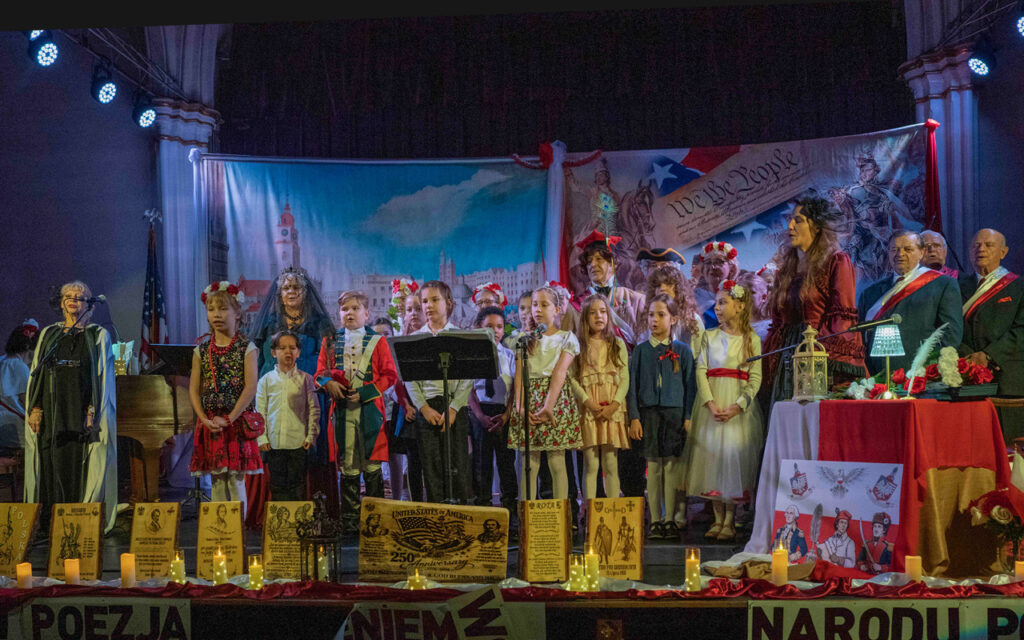
In the festival portion, students from Polish schools performed. They presented selected poems (10 poems) from the little book “Abecadło Wolnych Dzieci” (“The ABCs of Free Children”) by Artur Oppman (OR-OT). Each poem corresponded to a letter of the alphabet and referred to events, battles and historical figures important to Poland and to America.
Why this author in particular?
He is not only a somewhat forgotten poet of the Young Poland period who wrote moving, spirit-stirring patriotic poems about Poland for children and adults, but also a distinguished officer of the Polish Army. And here’s something to note: he is the author of the classic Warsaw Legends (including those of the Basilisk, the Mermaid and the Golden Duck).
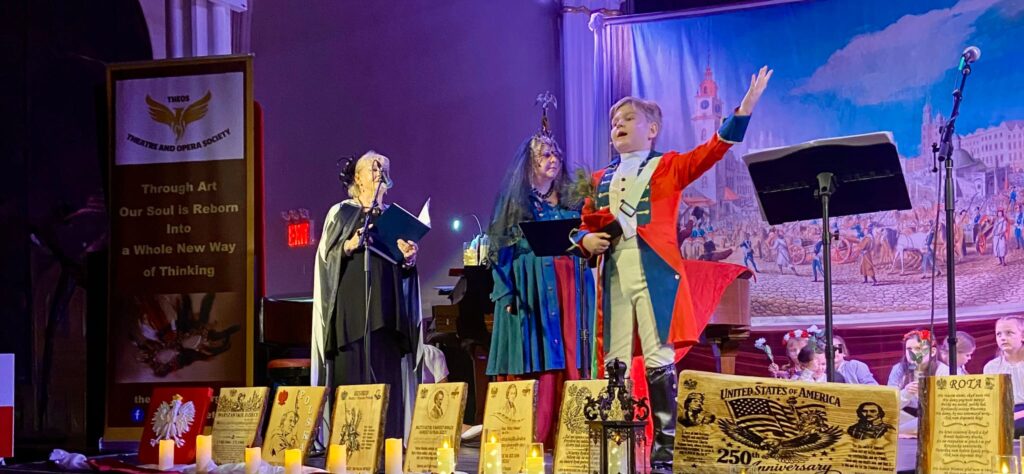
The children behaved very professionally for their age and presented themselves very charmingly.
Yes. The students recited the poems with great passion. This year our youngest participants were 6-year-old Milan Alberts from the Maria Konopnicka School and Michal Misiuta from the Consular School, who stole the audience’s hearts with their performance, and their Polish was truly at a high level for such a young age. Milan doesn’t read Polish yet. It was a record number of children in the history of the festival.
I’ll take this opportunity to send thanks: special thanks to the administration and teachers of the Maria Skłodowska-Curie Polish School at the Consulate General of Poland in New York, the Maria Konopnicka Polish School, the Father Augustyn Kordecki Polish School, and also the PSS at St. Cyril and Methodius Parish.
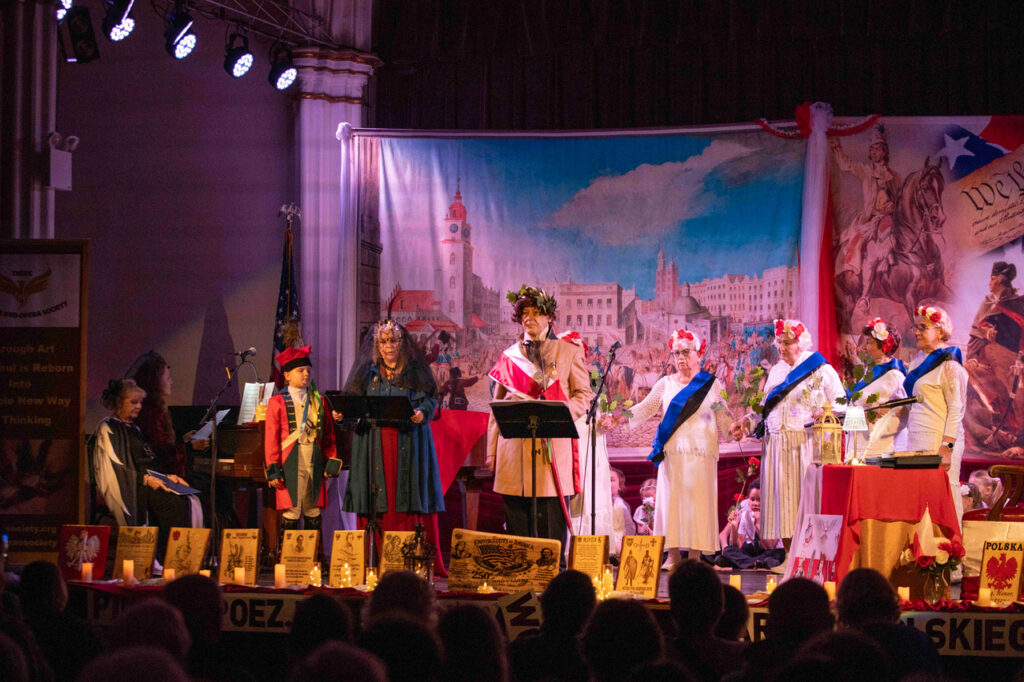
And thank you for a wonderful, historic performance!
I am very pleased that the Poetry Festival generated such interest. The hall of the Polish & Slavic Center was filled to the brim, and the audience didn’t hide tears of emotion and rewarded us with thunderous applause. Tadeusz Nowak played Tadeusz Kościuszko so well that absolute silence fell during his oath on the square. The Son of the Nation, Andrew Michoń, whom we all know and who has been developing his acting talents under THEOS’s wing for years, gave a bravura performance singing “God Bless America” and received a storm of applause for his acting. Anna Kucaj, with emotion and a dramatic voice, gave wings to our national spirit. And I, Mother Motherland, held all the children on stage and in the audience to my heart, singing to them “Holy Love of the Beloved Homeland,” calling on Kościuszko to fight for my freedom and independence, and weeping bitter tears at his bedside as he died, far from me, in Switzerland.
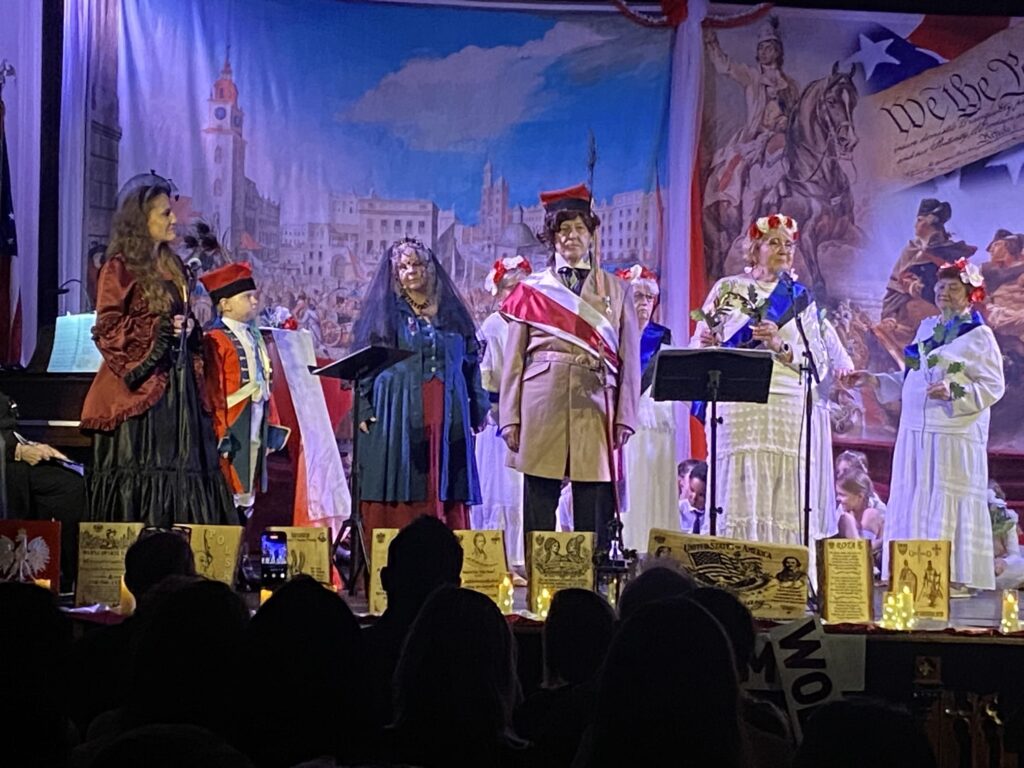
The set design was impressive.
I designed everything myself. It was a collage of paintings of Kościuszko and Pułaski by Juliusz Kossak and Stanisław Batowski, Malczewski’s “Melancholia” as a tribute to the insurgents, and a portrait of George Washington painted by Emanuel Leutze, as well as a replica of Michał Stachowicz’s painting depicting the Kraków Main Square. The whole was crowned by an exhibition of artwork created by our seniors from the “Krakus” art group under the direction of Agnieszka Nowińska, and by patriotic woodwork from Craft Mind Designs, made by Bart Pontecorvo and designed by our guest, Dr. Luiza Raab-Pontecorvo.
Were there any awards?
Every child, artist and choir received commemorative diplomas for promoting art and the Polish language, and the schools received a letter of congratulations and an ornament with the image of Kościuszko and Princess Czartoryska, inscribed “THEOS Polish Poetry Festival 2026. The Past to the Future,” made and designed by CraftMinds Design.
***
The program was co-funded by the Institute for the Development of the Polish Language with state budget funds provided through the Freedom and Democracy Foundation, under the task “Mini-grants – a concept supporting the strategic directions of the Institute for the Development of the Polish Language’s activities for 2025-2030.” The performance was held under the patronage of Consul General of the Republic of Poland in New York Mateusz Sakowicz.
Deputy Consul Krzysztof Płaski, whose son Aruś made his festival debut, attended the event. The consul warmly thanked the performers for such a beautiful and moving show and for bringing generations together and fostering Polish culture and history. Agnieszka Granatowska, executive director of the Polish & Slavic Center, who was also at the performance, expressed her admiration and gratitude to Katarzyna Drucker for creating the show and presented a beautiful bouquet of flowers from the Center.
Interview by Elżbieta Popławska
Photos: Elżbieta Popławska and Wojciech Kubik
Source: Nowy Dziennik
