
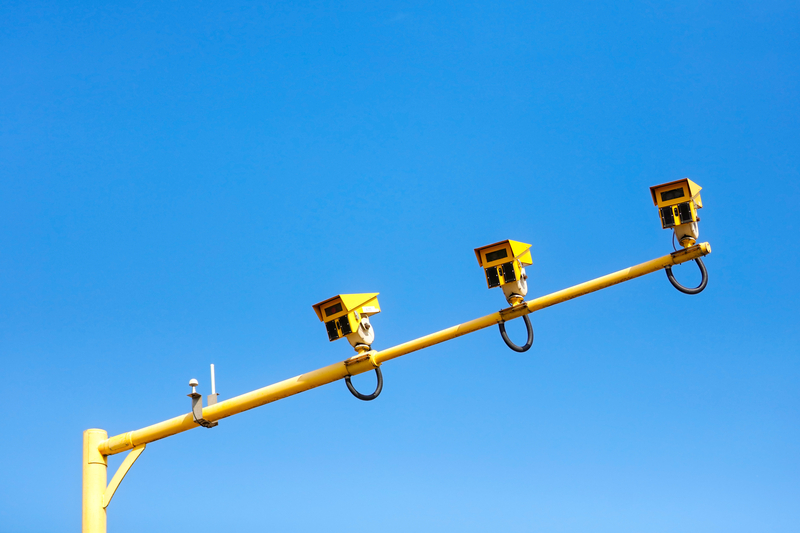


New York politicians are considering new rules to limit the use of automatic license plate readers. The technology, which allows police to identify vehicles and reconstruct their earlier routes, is increasingly common across the United States. Officers argue that it helps solve serious crimes, including kidnappings and car thefts. Civil rights organizations warn, however, that collecting huge amounts of information about drivers’ movements could lead to mass surveillance. One proposal under consideration would limit data retention to just 48 hours.
The dispute was the subject of a public hearing of the New York State Assembly held Monday in Albany. Lawmakers examined how automatic license plate recognition systems, known by the acronym ALPR, operate. The devices photograph passing cars, read their license plate numbers and record where and when they appeared. The data can then be used to search for vehicles linked to crimes.
One of the largest providers of the technology is the American company Flock Safety. Its cameras are used by numerous police departments and other institutions across the country. Information from the devices goes into databases that authorized agencies can access. This allows investigators to check whether a vehicle they are looking for was previously seen in a particular area, even if that area was outside their own jurisdiction.
It is precisely the long-term storage of such information that draws the strongest opposition from civil liberties groups. Daniel Schwarz, senior privacy and technology strategist at the New York Civil Liberties Union, argued that collecting data on all drivers in case it someday proves useful is characteristic of “mass surveillance systems.”
According to Schwarz, the longer vehicle location data is stored, the greater the risk that it will be misused. The organization is calling for data not tied to a specific investigation to be deleted after 48 hours at the latest. Such a solution would limit the ability to reconstruct the movement history of people who are not suspected of any crime.
Law enforcement representatives strongly oppose such a short retention period. Raymond Tierney, the Suffolk County district attorney and president of the New York State District Attorneys Association, said that license plate readers are a key tool for detecting, solving and preventing crime.
Tierney gave the example of a witness who sees a car of a particular make and model fleeing a crime scene. Camera records allow officers to analyze which vehicles matching the description passed through the area during a given time, and then use that information to advance the investigation. Without access to earlier recordings, identifying the car could be much more difficult.
The office of New York State Attorney General Letitia James took a more moderate position. Tyler Nims, who heads the unit that investigates abuses in law enforcement, supported setting statutory limits on data retention. He did not, however, specify a number of days. In his assessment, appropriately set limits could be one of the most effective ways to reduce the risk of unauthorized use of the information.
Editor: JŁ
Source: Nowy Dziennik
