Kremlin Seizes Oligarchs’ Assets as War Costs Mount, WSJ Reports
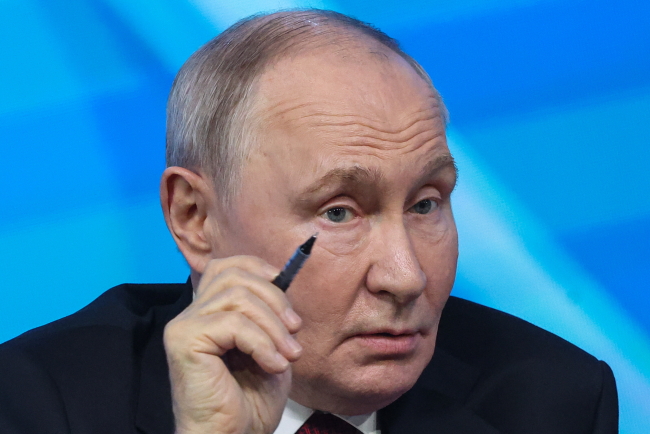
The rising cost of the war against Ukraine is pushing Russian authorities to nationalize the assets not only of foreign companies but increasingly of homegrown oligarchs, including loyalists of Russian President Vladimir Putin’s regime, The Wall Street Journal reported on Sunday.
The American daily describes the case of Vadim Moskovich, a former member of the Federation Council, the upper house of Russia’s parliament, and the owner of Rusagro, one of the country’s largest agricultural holdings. Despite his long-standing loyalty to Putin, Moskovich went on trial in July on charges of fraud and bribery, and his $7 billion fortune was confiscated.
As the WSJ writes, even those considered loyal to the Kremlin are now finding that their businesses are no longer safe, as the Kremlin looks for new ways to cover the growing costs of the war. “The pie is shrinking, so the groups closest to the Kremlin are trying to swallow what is left,” Andrei Yakovlev, a Russian economist and lecturer at the Free University of Berlin, told the paper.
The newspaper cites data from the Moscow-based economic agency AK&M, according to which confiscations of private assets alone accounted for 40% of the value of all mergers and acquisitions in Russia this year. That is up from more than 20% in 2025 and 7% in 2024.
Other Kremlin-loyal oligarchs who have lost their assets in recent months include Konstantin Strukov, a deputy from the ruling United Russia party and, until recently, the owner of Yuzhuralzoloto, one of the country’s largest gold mining companies, and Viktor Momotov, a former Supreme Court judge, whose nearly 100 properties were confiscated.
Assets can be seized in a variety of ways, but Russian economists say that in many cases the seizures rest on fabricated or invented charges. The seized assets can then be handed over to the state, which profits from selling them. Although property seized by Russia’s Prosecutor General’s Office should in theory be sold at open auction to the highest bidder, more than 90% of it goes to state corporations or longtime friends of Putin, Arnold Khachaturov, head of the independent Center for Data and Research on Russia (CEDAR), told the WSJ.
One example is the Russian unit of the packaging maker Aptar, which reported revenue of more than $20 million last year. By decree of Putin, the company was handed over to a firm headed by a nephew of Ramzan Kadyrov, the warlord who runs Chechnya.
The WSJ stresses that nationalizations could accelerate after Putin signed a new decree in August allowing the state to temporarily take control of key infrastructure – including refineries, telecommunications networks, and industrial and logistics facilities – if their owners fail to protect them from Ukrainian drones. Russian government data show that no company has yet been taken over under the new order, but it could be applied to at least 167 facilities owned by private businesses. (PAP)