
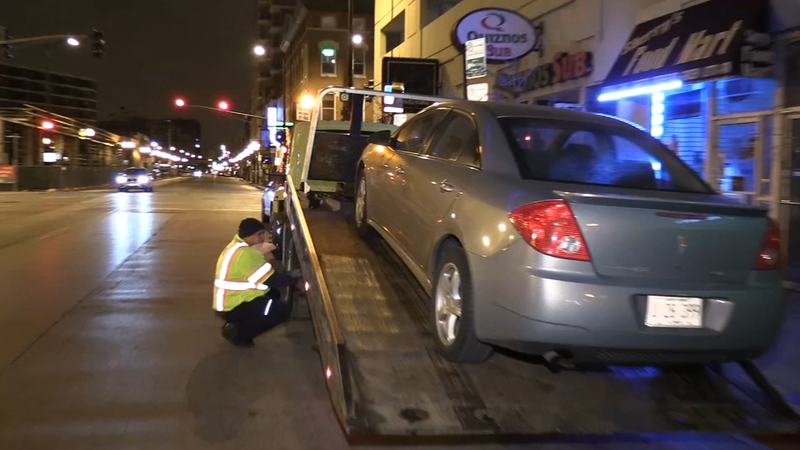


The U.S. Supreme Court on Monday declined to hear a lawsuit challenging Chicago rules that allow the city to seize vehicles belonging to people with unpaid parking tickets. The decision came even though justices expressed serious reservations about the policy.
Justice Sonia Sotomayor, joined by Justice Neil Gorsuch, wrote that the city’s vehicle impoundment policy may violate the Takings Clause of the Fifth Amendment to the U.S. Constitution. However, the justices concluded that the issue needs broader discussion in the lower courts before the country’s highest court takes it up.
Under Chicago’s rules, city authorities can boot, tow and ultimately even sell any vehicle belonging to a person with at least two unpaid parking tickets (overdue by more than a year), even if the car was not the one used to commit the violation.
“Chicago’s vehicle impoundment system is extensive and generates substantial revenue. According to one estimate, it brings the city $264 million in traffic ticket revenue,” Sotomayor wrote in Monday’s order.
Two Chicago drivers filed a class-action lawsuit against the city, seeking a ruling that the city’s vehicle impoundment policy violates the Constitution. So far, however, the lower courts and appellate courts have ruled against them.
Ryan O’Donnell was unable to pay $524 in fines from three parking tickets. In 2021, his car was booted and then towed. The city sold the car for scrap for $273.
In the case of Michael Goree, his Chevrolet was booted and towed in 2018 because a co-signer on the car loan had accumulated unpaid tickets tied to another vehicle. The car was ultimately handed over to a mortgage creditor, which sold the vehicle without paying Goree any compensation for its loss.
O’Donnell and Goree filed a class-action lawsuit against Chicago, arguing that the city’s vehicle impoundment rules violate the Takings Clause of the Fifth Amendment to the U.S. Constitution, which prohibits the government from taking private property without just compensation. Attorneys for the city argued that Chicago’s impoundment rules are not subject to the Takings Clause because they serve a punitive function and are used to enforce parking regulations.
In September 2024, a federal judge in Chicago dismissed the lawsuit. In December 2025, the U.S. Court of Appeals for the Seventh Circuit (based in Chicago) ruled that “immobilizing, towing, impounding and, if necessary, disposing of vehicles” under the city’s rules is “an exercise of the city’s authority to enforce traffic regulations, and therefore does not constitute a taking.”
On Monday, a majority of the Supreme Court justices declined to hear an appeal of that ruling. Justices Sotomayor and Gorsuch, however, expressed doubts about whether the city’s impoundment rules comply with the Constitution.
Sotomayor suggested that the Seventh Circuit’s ruling may have been wrong, noting that provisions of the city code “strongly suggest that the purpose of impoundment under Chicago’s system is to collect a debt, not to enforce public safety regulations.”
Sotomayor pointed in particular to the fact that the city’s rules allow a car to be seized even when it is not connected to any parking violation, which happens when the owner has unpaid parking tickets tied to another vehicle.
The justice noted, however, that lower courts are still examining whether the powers of city authorities (police powers) are exempt from the Takings Clause. “These questions therefore need further development in the lower courts’ case law before the Supreme Court decides to intervene,” she wrote.
Sotomayor called on lower courts hearing other challenges to municipal impoundment rules to “carefully and precisely identify the circumstances in which the state’s exercise of its police powers is considered exempt from the requirement to pay just compensation, and explain the source of that exemption.”
Source: Polski.FM
