Telegraph: Poland’s Restraint on Article 4 Exposes NATO Weakness
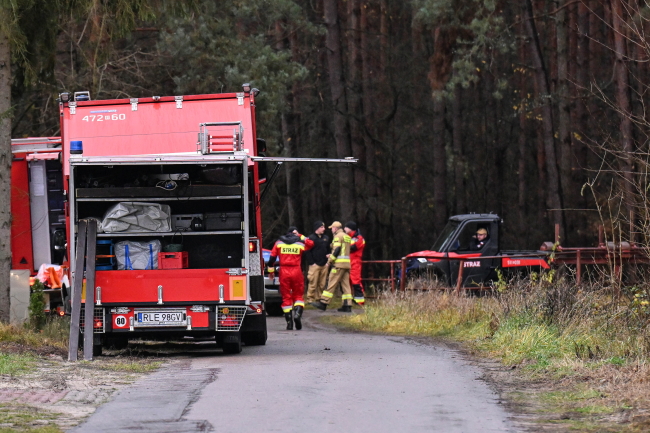
Poland’s failure to say “I call” in response to Putin’s bluff shows how fragile NATO is, according to Daily Telegraph foreign affairs analyst Adrian Blomfield, writing about Friday’s violation of Polish airspace by Russian missiles.
He argues that the decision not to invoke Article 4 of the NATO treaty is evidence of divisions within the alliance and will encourage Moscow to stage further, even bolder provocations.
“What is striking is that Poland did not choose to invoke Article 4 of the NATO treaty, which allows member states to call allies together for formal consultations if they conclude that their security is under threat,” Blomfield writes, noting that Poland did so last year, when Russian drones violated its airspace.
In the author’s view, the caution is in a sense unsurprising, because calling consultations could expose divisions within the alliance, and U.S. President Donald Trump would likely refuse to cooperate.
The author stresses that even before Friday’s events, Trump had downplayed earlier violations of Polish airspace, calling them a mistake.
He recalls that at Thursday’s summit in Shenzhen, China, the U.S. president “cooed fondly” that he was meeting a friend. Finally, he cites reports that on Thursday the American leader joined participants in a meeting of the so-called coalition of the willing in Berlin and sharply criticized financial and military aid for Ukraine.
Blomfield notes that some experts warn that “by forgoing Article 4, Poland and its allies risk emboldening Russia to keep escalating hybrid actions against Europe.”
Keir Giles, an expert at the Chatham House think tank quoted in the article, compares Russian provocations to a doctor testing a patient’s knee-jerk reflex – the automatic reaction, the “kick” right after a sensitive spot is struck. According to him, Russia “hits it with a hammer and watches to see whether the leg jumps. It may already be surprised at how weakly the European knee is reacting. And that is why it is hitting it harder and harder.”
According to Blomfield, the likely result of Europe’s indecision will be an intensification and broadening of Russian operations, but that is not all: it may also undermine NATO’s credibility. “Poland’s reluctance to invoke Article 4 may be read in Moscow as further proof that the alliance is starting to lose its cohesion, which would weaken its credibility as a deterrent,” the journalist warns.
The author also writes of a “worrying possibility,” citing media reports that Russia may be considering a proposal from Donald Trump’s son-in-law that Ukraine become a member of the alliance, or else receive guarantees similar to those in Article 5.
“Perhaps Putin believes that NATO, and the broader Western concept of collective self-defense, are already so hollow that Ukraine’s membership in the alliance or equivalent security guarantees pose no serious threat to Moscow,” Adrian Blomfield wonders, ending his article with the words of Ukrainian President Volodymyr Zelensky: “When Putin has no problem with Article 5, we will have more questions than answers.”
From London, Adam Dąbrowski (PAP)