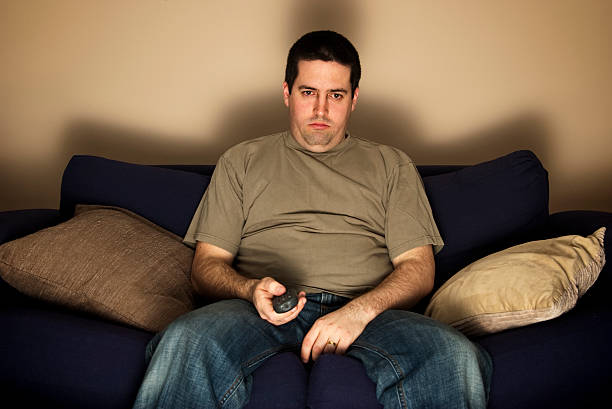


Polish men live 7–8 years less than women, die by suicide more often and use preventive care less often. “A man is supposed to be strong, support his family and not show weakness. When he stops coping, he often doesn’t know where to look for help,” Artur Białoszewski of the Regional Medical Chamber (OIL) in Warsaw told PAP.
PAP: Polish men live on average seven to eight years less than women. Is that how biology made us, or are men working toward an earlier death themselves?
Artur Białoszewski, epidemiologist and director of the Center for Strategy and Analysis at the Regional Medical Chamber in Warsaw: Both. The difference in life expectancy between women and men exists practically all over the world. In part it stems from biology, including the effect of testosterone on the circulatory system and the tendency to take risks.
In Poland, the excess mortality among young men is especially significant. They die in accidents, from injuries, by suicide. When a 30-year-old dies, we potentially lose several decades of his life. On top of that come cardiovascular diseases and cancers.
PAP: And yet a man in Western Europe has a better chance of living to old age than a Pole.
A.B.: The difference between women’s and men’s life expectancy exists everywhere, but it is not everywhere as large as it is here. Living conditions, access to health care, prevention and health awareness all matter.
Even in Poland, not all men have the same chances. Between a man with a primary or lower secondary education and a man with a university degree, the difference in remaining life expectancy at age 30 in 2020–2022 was nearly 13 years.
PAP: Nearly 13 years’ difference depending on education? It sounds as if a college diploma were a policy for a longer life.
A.B.: Education is linked to greater health awareness, but also to economic situation, working conditions and access to health services.
Interestingly, in Poland the situation is particularly unfavorable for men living in small towns, not necessarily in villages. Young, often better-educated people leave small towns. The people who remain are more exposed to various risk factors. Add to that poorer access to doctors, limited job opportunities and a sense of having no prospects.
PAP: Every day in Poland, a dozen or so people take their own lives. The vast majority are men. If that many people died every day in one type of accident, we would have a national alarm. Why do we so easily move on to business as usual when it comes to suicides?
A.B.: We have to understand that health has three interconnected dimensions: physical, mental and social.
We may meet a man who looks healthy, works, smiles, says everything is fine, and later we learn that he took his own life.
The social roles assigned to men can be an enormous burden. A man is supposed to be strong and resourceful, to support his family, solve problems and not show weakness. When he starts to struggle, he often doesn’t know where to look for help, or believes he shouldn’t ask for it.
I don’t accept that. If I see that one of my colleagues suddenly changes, I ask him what happened and how I can help. Not in front of others, but one-on-one.
PAP: A man loses his job, falls into debt, can’t support his family or even himself. He is ashamed to admit failure. And what does he hear? That he should go see a psychologist. But will a psychologist pay off his loan?
A.B.: That’s exactly the point. Psychological and psychiatric help is extremely important, but if a person goes home from the office and still has no means to pay off his debts, his fundamental problem remains unsolved.
In many Western countries, consumer bankruptcy is treated as a stage of life from which one can emerge and start over. In Poland it is much harder. A person who has fallen into a debt spiral may end up in a situation from which he sees no way out. Instead of helping him get back on his feet, the regulations may entrap him even further.
That is why modern epidemiology does not limit itself to studying symptoms, but looks for the causes of the causes. If a mental health crisis stems from an economic situation, we must ask why the person found himself in that situation and whether the system makes it harder for him to get out of it. Simply referring him to a psychologist is not enough if we don’t change the conditions that drove him to despair.
PAP: And many men, instead of going to a psychiatrist, go to the store for alcohol.
A.B.: It is a legal and easily available substance, mistakenly treated as an antidepressant, although of course it is not any kind of treatment. Alcohol can quickly suppress difficult emotions, but in the longer term it worsens both mental and physical health.
Men still drink significantly more alcohol than women, although among younger generations these differences are shrinking. Alcohol leads to addiction and disease, and it destroys family and professional relationships.
PAP: But shouldn’t the state first of all take care of psychiatry? We spend money on various forms of assistance whose effectiveness we can’t always assess, and people need treatment.
A.B.: We should support solutions based on scientific evidence. Money should go to psychiatrists, mental health centers and specialists using verified methods of assistance.
At the same time, we must limit the availability of alcohol. Sales restrictions and tax policy are among the tools with proven effectiveness. Preventing problems and treating people who are already ill must not be mutually exclusive.
PAP: Women have a gynecologist, mammography, invitations to screenings. And a man? He is supposed to remember on his own that he should get checked, and on top of that find the right doctor? Does the system neglect men’s health?
A.B.: Women have contact with a gynecologist from adolescence. There is a well-established path of taking care of their health. Men don’t have a similar, widely recognized model of care.
Of course there are urologists, andrologists and doctors of other specialties, but we haven’t developed a habit of regular contact with a doctor who deals with men’s health.
Many men see a doctor only when something starts to hurt. Meanwhile, some serious diseases develop for a long time without symptoms.
PAP: And sometimes there is a symptom, but the man doesn’t connect it with a serious disease. For example, erection problems.
A.B.: Erection problems need not be solely a matter of sexual performance. They can be one of the first symptoms of cardiovascular disease, including coronary artery disease. The blood vessels of the penis are relatively thin, so disorders in their functioning can show up earlier.
Cancer prevention is also important, including HPV vaccinations. They are not only for girls and women – they also protect men against infections that can lead to cancer.
PAP: I regularly get text messages reminding me about a mammogram. Why can’t a man get a message saying it is time to take an interest in his health?
A.B.: Those are exactly the kinds of solutions we would like to develop. We have the Internet Patient Account, the mojeIKP app and an extensive digital health care infrastructure.
We can imagine a situation in which a man reaching a certain age receives information about available screenings. Not a poster at a bus stop saying “Take care of your health,” but a specific message that takes into account his age and risk factors.
PAP: The “Profilaktyka 40 PLUS” (“Prevention 40 PLUS”) program was meant to encourage Poles to get screened. Did it work?
A.B.: The data we cite show that about 21 percent of eligible men took advantage of the screenings, while among women the share exceeded 25 percent. That shows how much remains to be done.
There is now the “Moje Zdrowie” (“My Health”) program, which allows a comprehensive assessment of health status and the preparation of an individual health plan, but even the best program will not bring results if people don’t know it exists.
PAP: But it’s hard to urge screening on a man who has to travel a hundred kilometers (about 62 miles) to see a specialist. Mammobuses go out to villages. Where are the similar mobile prevention units for men?
A.B.: We can’t demand that a man get regular checkups while at the same time putting him in a situation where he has to travel many kilometers and spend several hours in a queue.
We need easier access to diagnostics, including in smaller towns. If a person encounters obstacles at every step, his motivation to take care of his health weakens.
PAP: Or maybe we start worrying about men too late? What problems do those who haven’t yet turned 30 face?
A.B.: Mental health is an increasingly serious challenge. Young men come in with anxiety disorders, depression, sleep problems and chronic stress. Professional burnout also appears, even among people who have only just started working.
The modern lifestyle matters, including excessive screen use. On the other hand, young people are increasingly able to say that they need help.
The problem of obesity and lack of exercise is also growing. In surveys of schoolchildren, only one in five Polish boys aged 15–16 reported an hour of physical activity every day.
PAP: We have introduced health education in schools. Is that enough to keep the next generation of men from repeating the mistakes of their fathers?
A.B.: It is an important step, but the effects won’t appear immediately. The Regional Medical Chamber in Warsaw took part in work on the core curriculum for health education, submitting comments from the medical community.
It is a process spread over years. What matters most is that children understand that we shouldn’t start thinking about health only when we fall ill.
PAP: On Wednesday the Regional Medical Chamber is organizing a conference called “Zdrowie po męsku” (“Health the Male Way”). Conferences, campaigns, appeals – we’ve seen it all before. What do you want to change so that it doesn’t end with yet another discussion about how men should get screened?
A.B.: We aren’t interested in a one-time campaign after which we declare success because a certain percentage of men had tests done. What counts is a lasting trend: that year after year more and more men consciously take care of their health.
We need education, vaccinations, early detection of disease and better access to treatment. Responsibility doesn’t rest solely on the individual. The state should create conditions conducive to health and ensure access to services.
But I appeal not only to the state and politicians. We live in constant rush, we deal with daily duties and often lose sight of what is truly important.
I would like us to be able to look at another person with care. Not only as a husband, wife, father or grandfather, but as a person who has needs, worries and sometimes also fear.
Let’s build relationships in which we aren’t afraid to talk about health, including mental health, and to admit that we are afraid of something. Because only then can we truly help each other.
Interview by Mira Suchodolska (PAP)