

Alessandro Masullo spent nearly 12 years searching for a proof of the generalized Riemann hypothesis. He planned another year of work on his text when Anthropic announced a result obtained with the help of its Claude model. The mathematician’s draft went online, but within hours readers using AI raised objections.
Masullo began looking for a proof of the generalized Riemann hypothesis in the first year of his doctoral studies at Stanford University. His former adviser, Brian Conrad, had been reading the working manuscript and passing along comments for months. They planned to keep working on the text together. Before announcing the result, they intended to have more specialists read the manuscript.
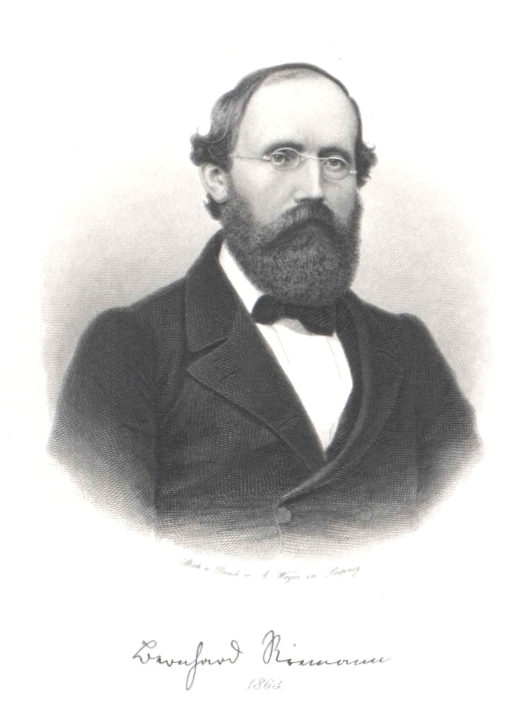
The problem they took on dates to 1859, when Bernhard Riemann linked the distribution of prime numbers to a function called zeta. If his hypothesis turned out to be true, it would make it possible to determine the accuracy of a formula that estimates how many prime numbers lie below a given limit.
In the language of mathematics, the question concerns the points at which the zeta function takes the value zero. According to the hypothesis, apart from one well-known group, all of those points lie on a single line. Masullo tried to show a similar property for an entire family of related functions.
But before Masullo finished his text, another mathematician announced a result on the same problem. On Friday, Nov. 20, Levent Alpöge of Anthropic wrote in a note on his website that, with the help of the Claude model, he had obtained a proof of the classical Riemann hypothesis and its generalization for Dirichlet functions.
He released the reasoning in Lean, a language in which a computer can check each step of a proof. According to a report by Andrew Sutherland of MIT, two independently written programs accepted the formalization. Masullo’s work had a broader aim, because it concerned the family of Hecke functions, which also includes Dirichlet functions, but another year of work was no longer an option.
So a few hours after Alpöge’s announcement, Masullo’s 940-page draft, “The Music of the Primes,” appeared online. Brian Conrad told The Washington Post that the report of a result obtained with AI had put them in a difficult position. Under normal circumstances, the author would have had time to fix errors and strengthen the argument before making the work public. “If we say nothing, the belief will take hold that human creativity requires using AI,” he explained.
Ravi Vakil shared the manuscript on the blog “Math 216,” which is tied to his lectures on algebraic geometry. Vakil is a professor of mathematics at Stanford and president of the American Mathematical Society. He had known Masullo since his doctoral studies. He evaluated his doctoral dissertation and helped arrange Masullo’s planned return to Stanford so that he could finish the work with Conrad.
Vakil stressed that Masullo had worked without AI. “Now it is best to share the current draft,” he wrote, asking other mathematicians to check the argument.
Sharing work before peer review is common in mathematics. The arXiv archive, among other things, serves that purpose. In this case, the text appeared as an attachment to a blog post, without journal review. In the manuscript, Masullo addressed mathematicians discouraged by the pace and tone of the debate with the words: “We’re still here. We’re alive. We’re not going anywhere.”
After about eight hours, Vakil updated the post. Several people had reported problems in the proposed proof, which were spotted with the help of various AI models. Vakil did not give details of the comments. “I am not commenting on the correctness of the proof strategy,” he cautioned. The reported problems still need to be clarified.
The manuscript itself says what remains to be done. In it, Masullo presents a formula in which the location of the zeros of the function under study is tied to arithmetic data. From that connection, he wants to draw a conclusion about where the zeros can lie.
In the introduction, he sketches how to get there. On page 522 of the manuscript, however, he left a note to formulate and prove the main theorems on the location of the zeros. Only a full write-up of that step will make it possible to check whether the method leads to the conclusion announced in the work.
Source: PAP