
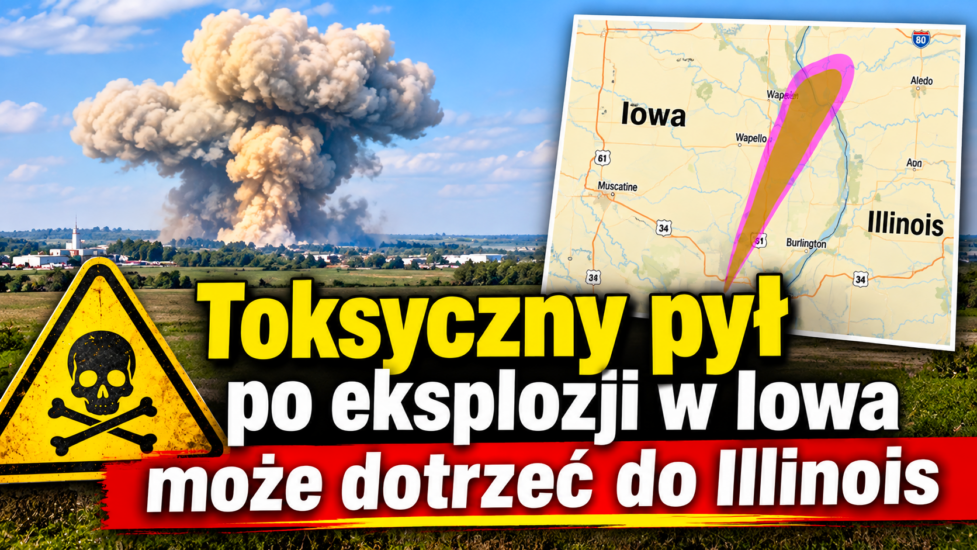

A planned explosion of hazardous materials at a military facility in Iowa could spread toxic lead dust into Illinois. State health officials are warning residents of the possible danger and urging caution, especially in areas that may lie in the path of the drifting dust.
The detonation is scheduled for Friday at about 12:00 p.m. at the Iowa Army Ammunition Plant in Middletown, Iowa. The military plans to destroy degraded lead azide, a hazardous substance whose detonation can release lead-containing dust into the atmosphere.
According to preliminary pollution-dispersion models, the dust may reach Mercer County, Illinois. The Illinois Environmental Protection Agency is analyzing the data it has received and checking whether other communities could also be affected. The military is to update maps showing the potential impact area before the planned explosion.
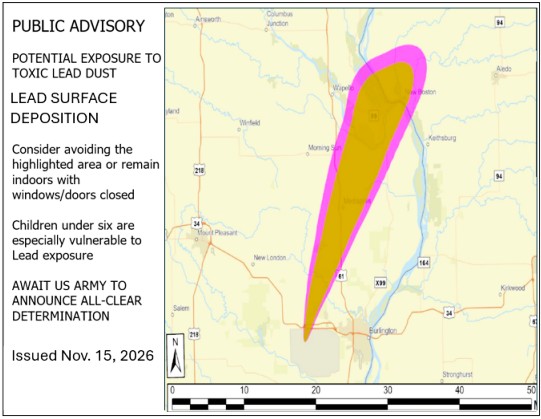

Warning for Illinois Residents: Lead Is Dangerous Even in Small Amounts
The Illinois Department of Public Health reminds the public that there is no safe level of lead in the human body. The metal can cause serious health problems, especially when it enters the body through inhalation of contaminated air or ingestion of dust.
The greatest risk is to children up to age 6, who are especially vulnerable to the harmful effects of lead.
In areas that may be affected by contamination, officials recommend staying indoors and keeping windows closed for 24 to 48 hours after the detonation. It is also advisable to limit contact with outdoor surfaces where dust may settle.
What Should Residents Do if the Dust Reaches Their Area?
State officials recommend several basic precautions:
- stay indoors and keep windows closed for 24–48 hours after the explosion;
- wash hands thoroughly before eating and drinking;
- take off shoes before entering the home to avoid tracking in contaminants;
- if dust is visible on outdoor surfaces, wash it off with soap and water;
- use an air purifier if one is available.
Heating systems may stay on as long as they recirculate air inside the building. For systems that draw in outside air, officials recommend temporarily closing the intake and switching to internal circulation, if the system allows it.
People driving through a potentially contaminated area should set their car’s air conditioning or heating to recirculate. After driving through, it is recommended to wash the vehicle and, if necessary, replace the cabin air filter.
Illinois Demands Testing After the Explosion
Illinois officials stress that military activities must not come at the expense of residents’ health or environmental safety.
Illinois EPA Director James Jennings called for additional testing of air, soil and settled dust in areas of Illinois that may be affected by the explosion after the detonation. He also called for the results of those measurements to be made public.
The Illinois EPA says it will monitor data from the air-quality monitoring network in the northern part of the state and will independently analyze federal dust-dispersion models. State monitoring is meant to supplement the work of the federal Environmental Protection Agency (EPA).
People who suspect they may have been exposed to lead, particularly parents concerned about their children’s health, should contact a doctor and consider having a blood lead test.
The situation remains under monitoring, and Illinois residents should follow updated announcements from officials, especially before and immediately after Friday’s detonation.
Editors
