
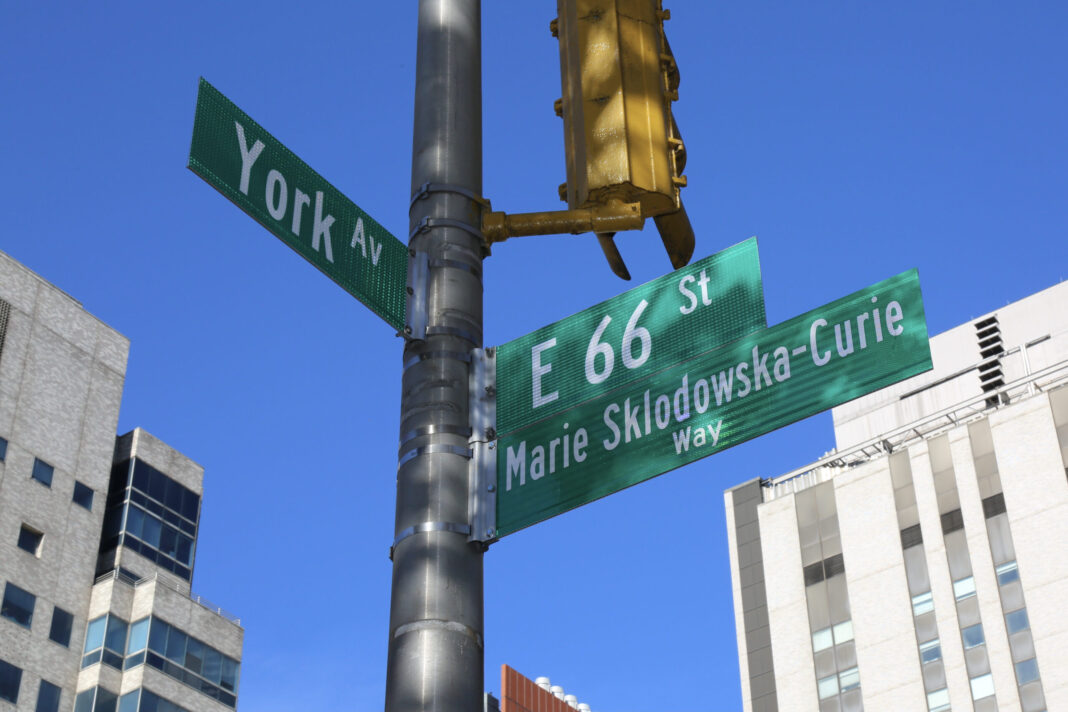


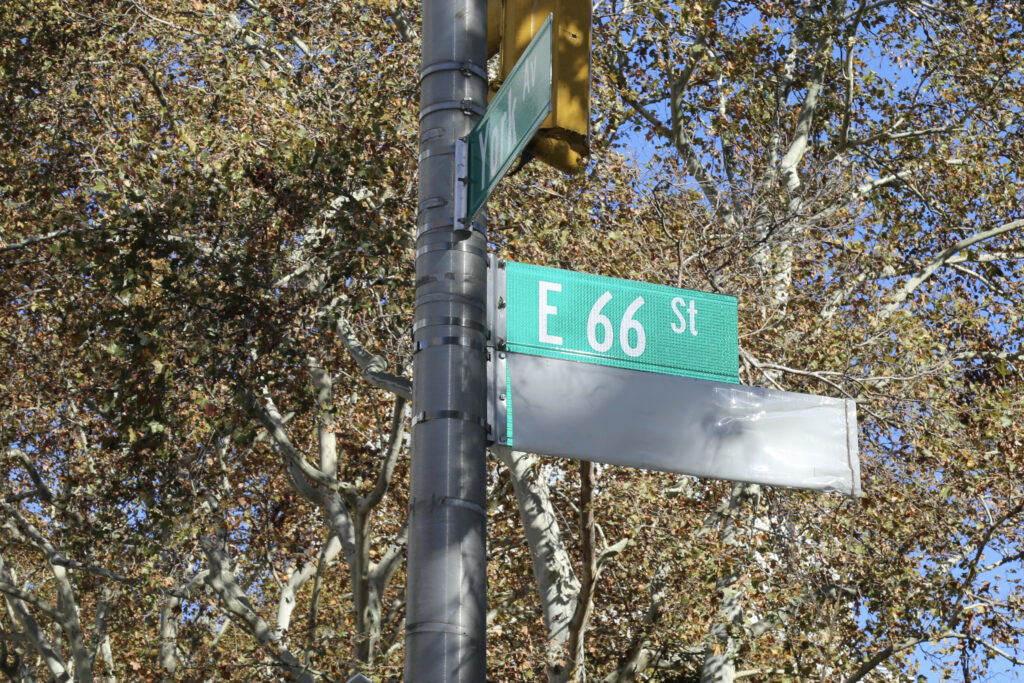
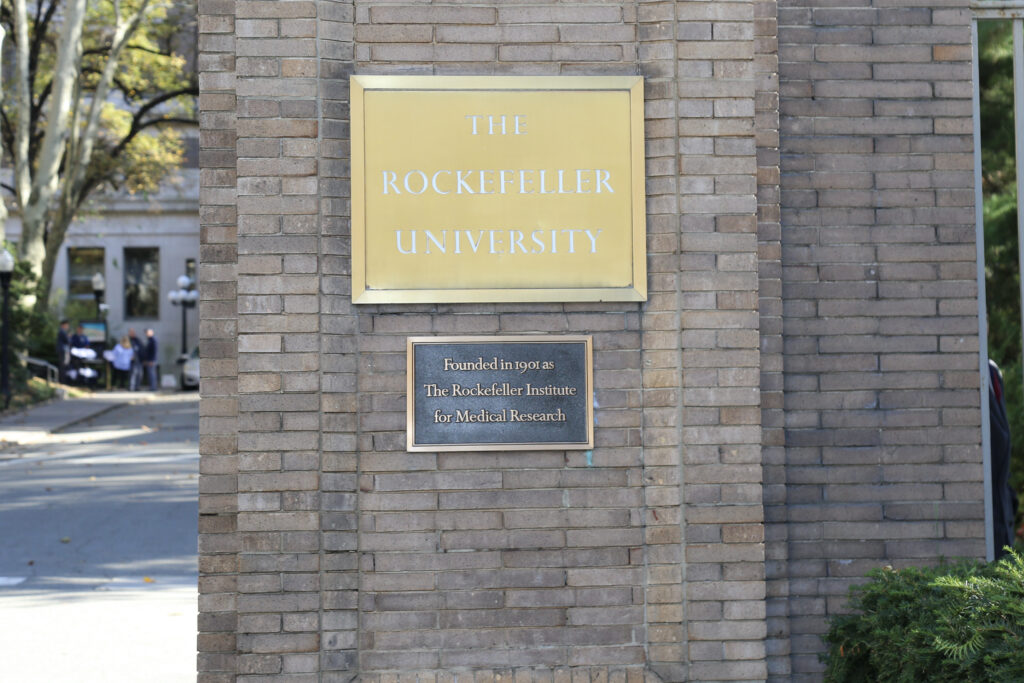
Marie Sklodowska-Curie Way is the latest Manhattan tribute to the Polish two-time Nobel laureate, joining a pedestal with a commemorative plaque in City Hall Park. The name now marks one corner of the intersection of York Avenue and 66th Street, near the entrance gate to Rockefeller University.
***
“For me it is deeply moving that we were able to return our distinguished compatriot, Maria Skłodowska, to the city of New York. The world knows her mainly by her husband’s surname, Curie, but we know she was Polish, and that the first part, her maiden name, must be recalled to the world. That is exactly what we did today, inscribing her permanently into the space of New York City,” Consul General Mateusz Sakowicz told Nowy Dziennik. “I believe this will be an excellent way to popularize science, her person and the history of our country. I think she is a very inspiring figure for children, for young people and really for everyone, to be brave and ambitious, to break down barriers and to change the world,” the diplomat added. Thanks to the efforts of the Consulate General of Poland, authorities of the Big Apple honored the Polish two-time Nobel laureate by restoring a street bearing her name to Manhattan, although there have been several attempts in the past.
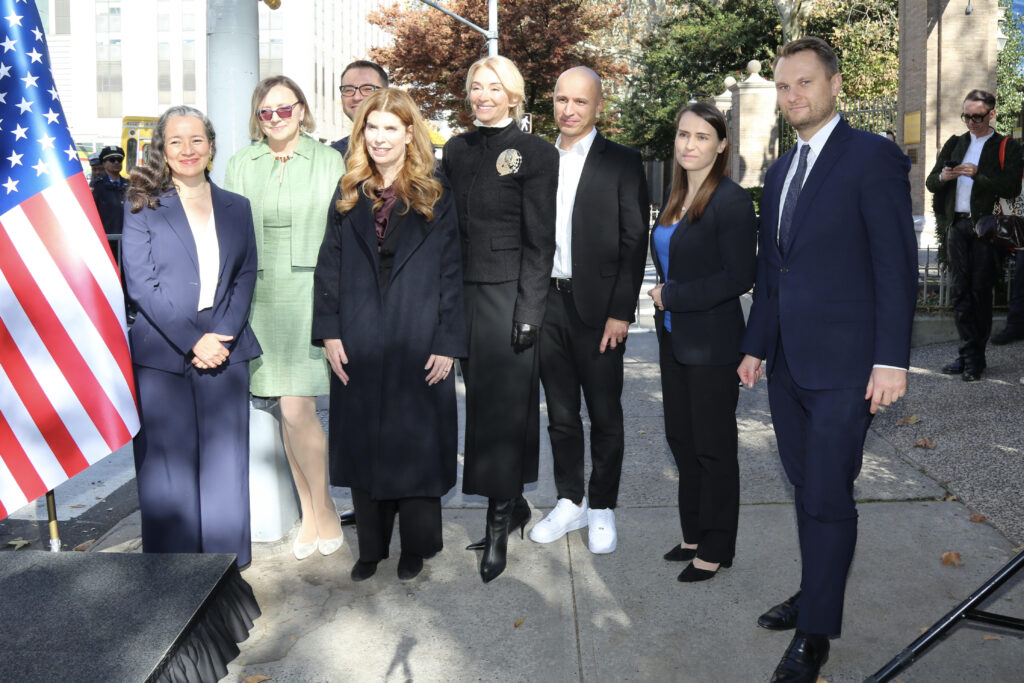
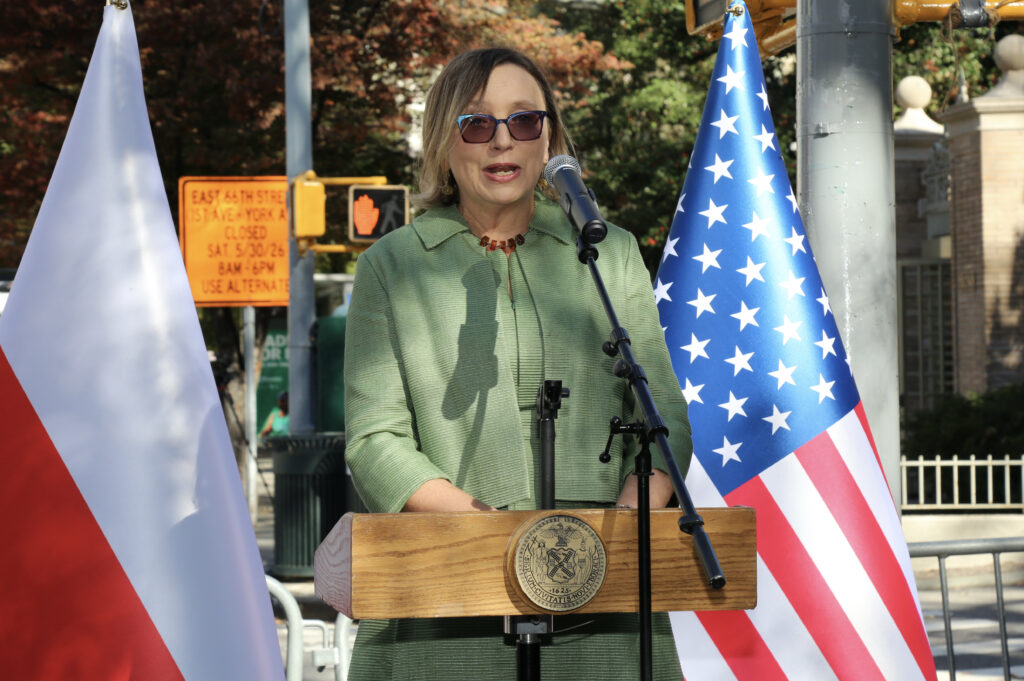
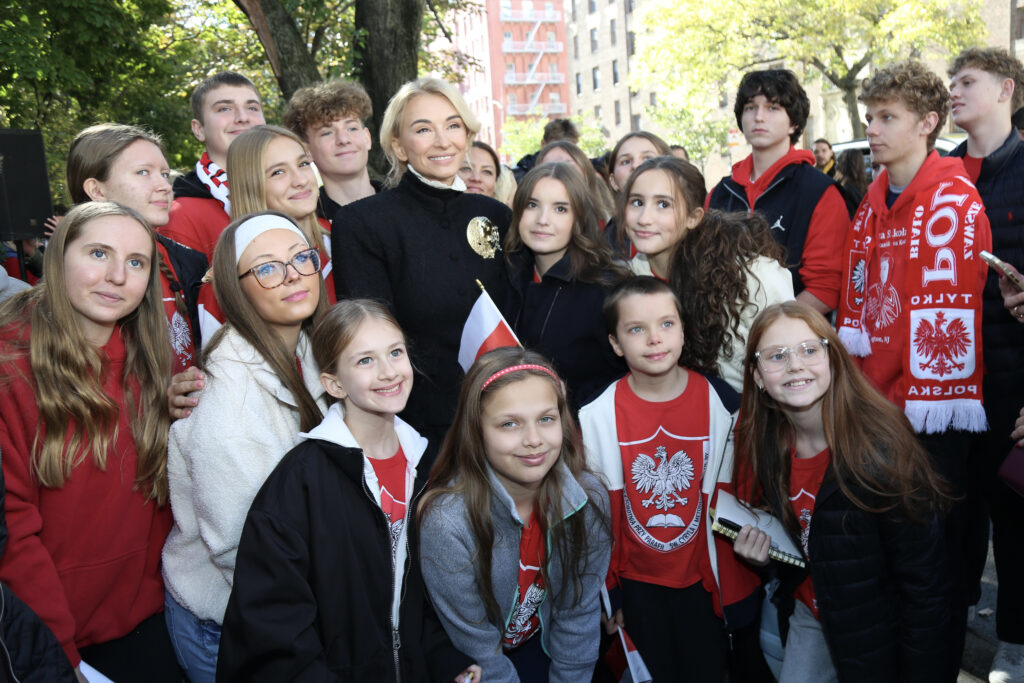
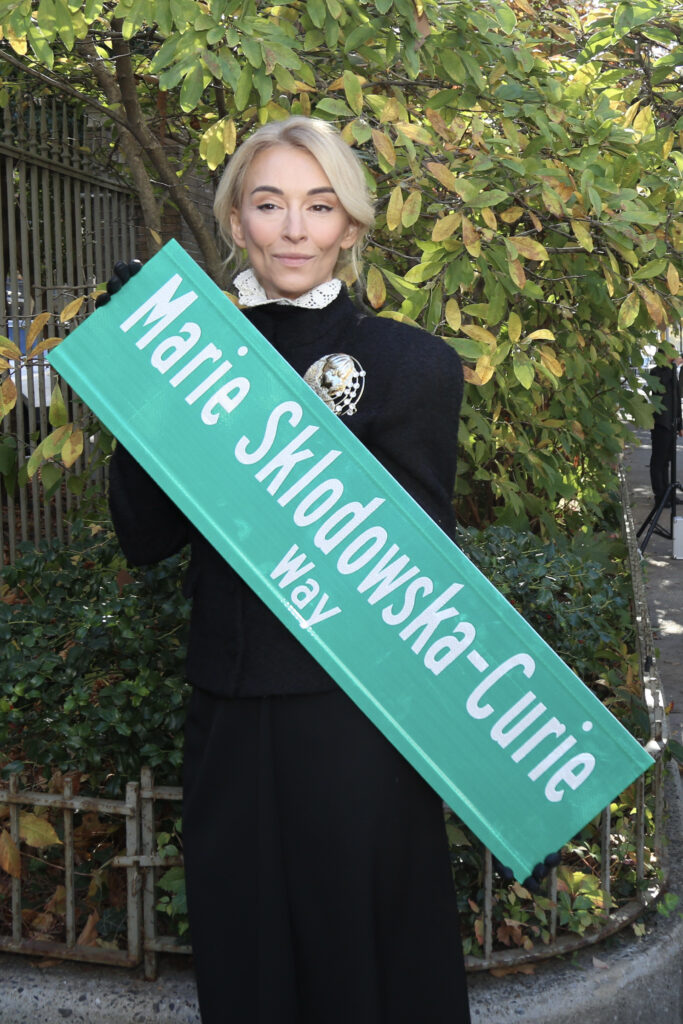
Well-known journalist and traveler Martyna Wojciechowska spoke in a similar vein. Together with Consul General Mateusz Sakowicz and New York City Council Speaker Julie Menin, she unveiled the sign reading “Marie Sklodowska-Curie Way.”
“I am very moved to have become the godmother of a street bearing the name of our wonderful Nobel laureate, a woman who is an inspiration for many generations of Poles, especially for girls and women who until now did not think they could succeed in science,” Wojciechowska stressed. She added that all Poles should be glad that every day thousands of people will pass the sign bearing the name of our two-time Nobel laureate, see it and learn about her. She also said that if Maria Skłodowska-Curie were alive today, she would surely be a subject of her program “Kobieta na krańcu świata” (“Woman at the End of the World”).
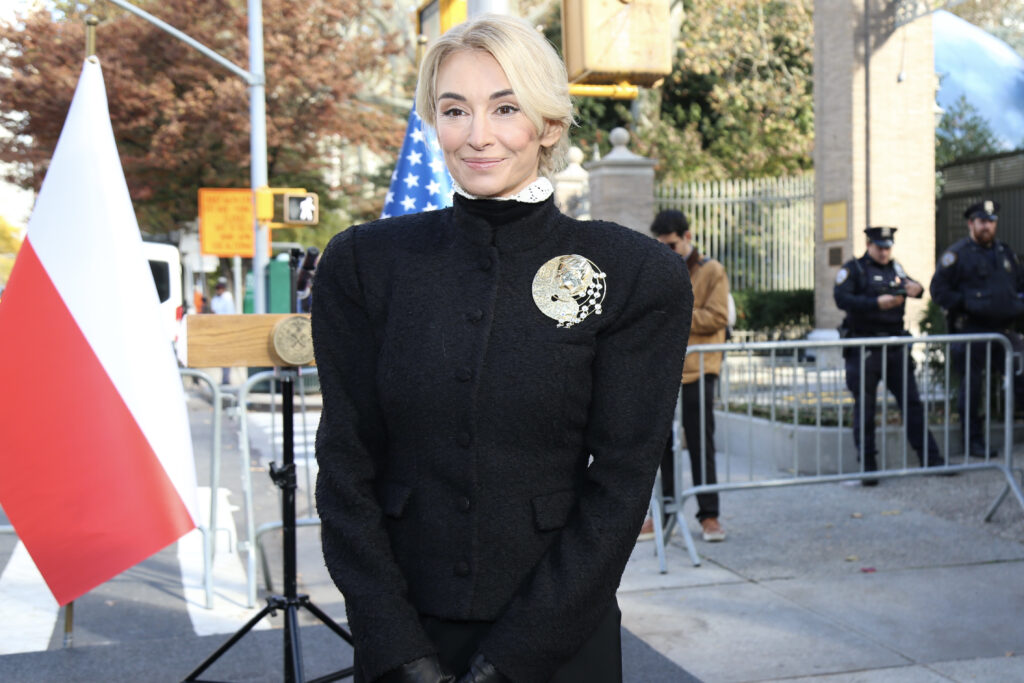
“It moves me very much that she put so much work into cultivating her Polish roots and Polish tradition, that she used her Polish surname, Skłodowska, that she taught her children to speak our native language, and above all that one of the elements she discovered she named polonium, in honor of our homeland. This is a beautiful, moving moment not only for Poles but for everyone who respects science, and who today can carry the name Skłodowska further into the world,” Wojciechowska said.
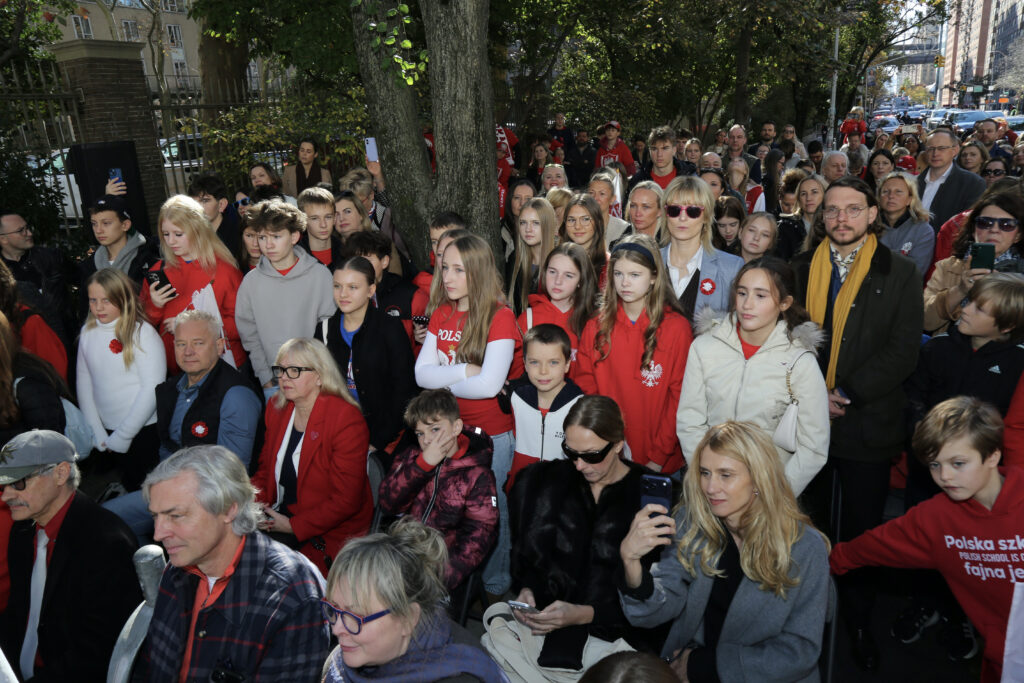
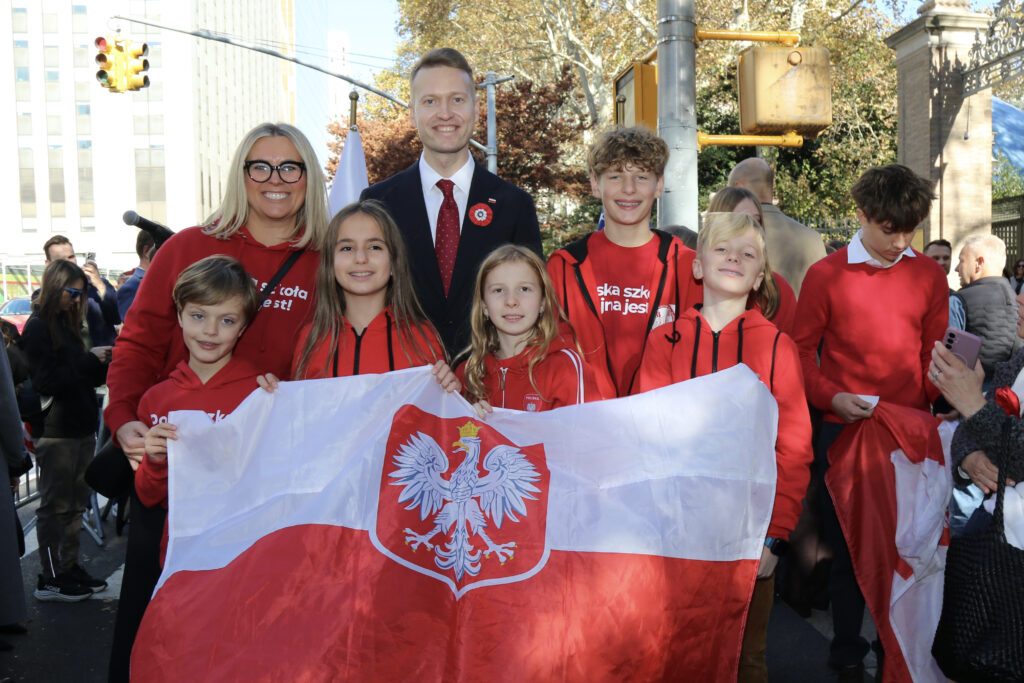
The unveiling of the “Marie Sklodowska-Curie Way” sign took place on Nov. 10 and was part of this year’s observances of Poland’s National Independence Day. Also attending the ceremony were, among others, city Commissioner for International Affairs Ana Maria Archila, Prof. Agata Smołodzewska of Rockefeller University, Polish lawmakers Agnieszka Pomaska and Krzysztof Truskolaski, staff of the Consulate General of Poland, representatives of Polish-American organizations and students from Polish supplementary schools. During the ceremony, thanks to the Polish company ElevenLabs, participants could hear a short speech delivered by Maria Skłodowska-Curie in an artificial-intelligence-generated voice, created from a sample of one of her original recordings made years ago. “Scientific research has its great beauty and reward in itself,” the Polish Nobel laureate said in Washington in 1929. “An additional and unexpected happiness was the awareness that my work could serve to relieve human suffering,” Maria Skłodowska-Curie continued. She ended the remarks with the words: “I love you all very much, my American friends.”
SPEECHES AND REMARKS
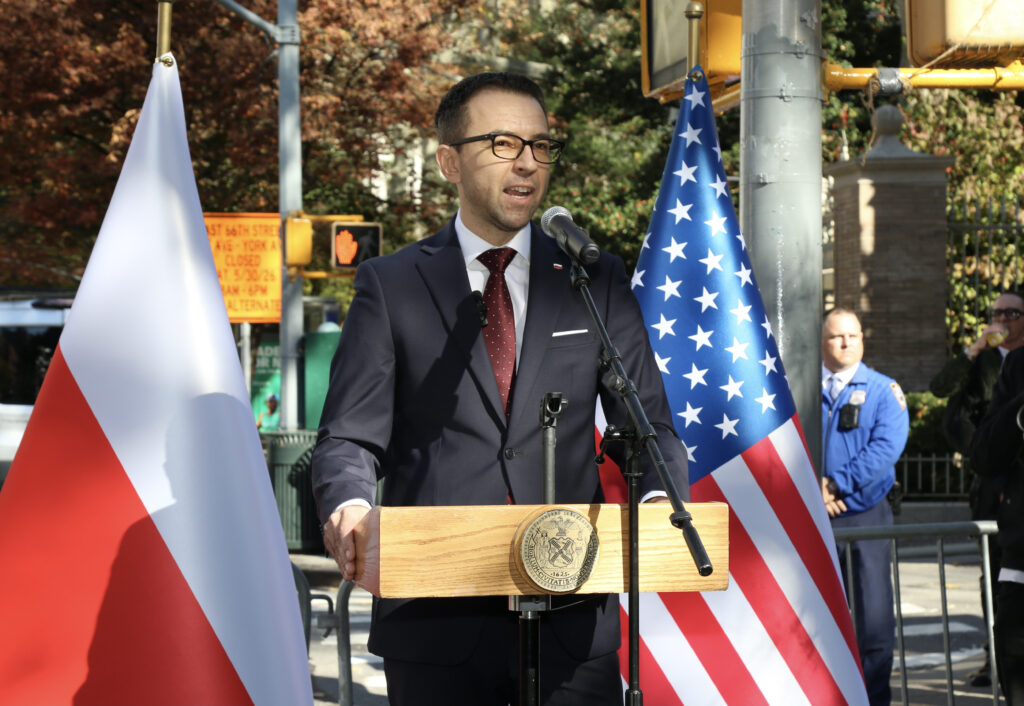
“Long live the memory of Maria Skłodowska!” With those words, Consul General Mateusz Sakowicz ended his speech. He was the first to speak in the official portion that opened the unveiling of the street sign reading Marie Sklodowska-Curie Way. In his remarks, he stressed that the Polish Nobel laureate broke down barriers, challenged stereotypes and became a role model for women around the world. He also noted the uniqueness of the site chosen to commemorate her: nearby are Rockefeller University and Memorial Sloan Kettering Cancer Center (formerly Memorial Hospital), which Maria Skłodowska-Curie visited in 1921, where she met with doctors and patients and discussed new methods of treating cancer. He also recalled that in the 1930s there was a Marie Curie Avenue in that area, which was later absorbed by the expressway then under construction, FDR Drive. “But it lacked part of her name, ‘Skłodowska.’ Now we are fixing that,” the diplomat stressed.
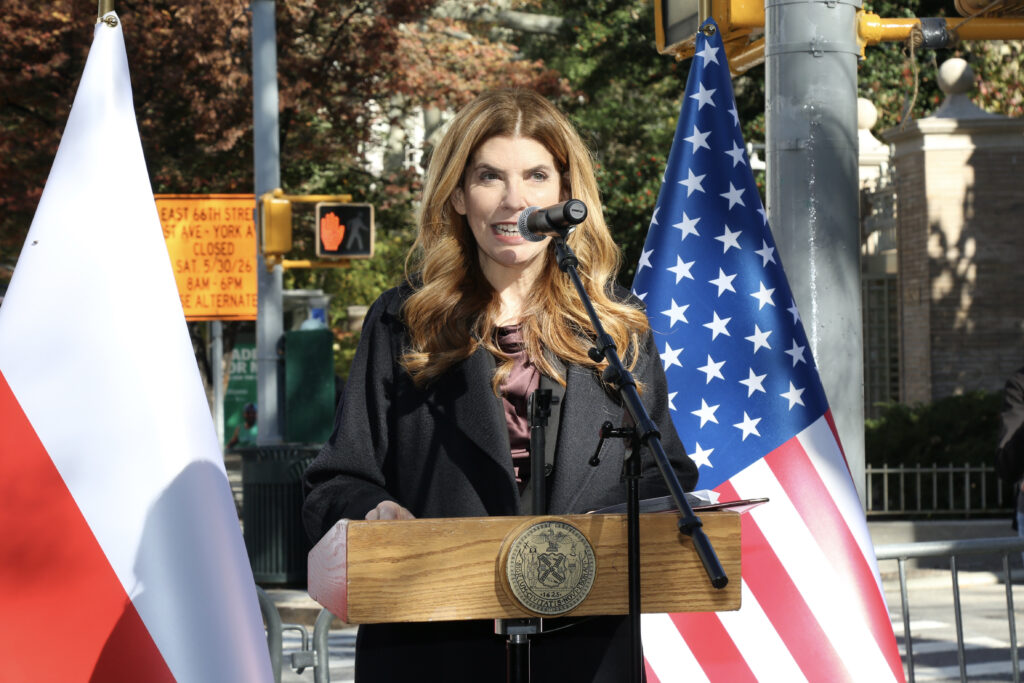
Next to speak was New York City Council Speaker Julie Menin, in whose district the intersection commemorating the Polish Nobel laureate is located. Like the consul general, she recalled that years ago there was a Marie Curie Avenue, which after a few years was absorbed by FDR Drive. “Today we are correcting that mistake and once again dedicating a street to her. This time we are doing it with her correct, full name,” the council member noted. She added that then-Mayor Fiorello La Guardia called Skłodowska-Curie “a distinguished scientist and a great heroine of peace” in 1935. She also stressed that her name is returning permanently to the map of Manhattan. “Perhaps it is not a third Nobel Prize, but it is a distinction of the same rank. No number of honors, however, could match the significance of her achievements,” Menin said. She added that honoring her is also a nod to the more than 200,000 Americans of Polish descent “who call New York their home.” She noted that the Polish two-time Nobel laureate was and is a role model not only for scientists but above all for women, for whom she blazed various trails. “Maria Skłodowska-Curie was a true icon, a heroine and a role model. When universities in Poland did not admit women, she pursued her studies at a clandestine university. When the Nobel Committee nominated only her husband, Pierre, for the prize in physics, he firmly demanded that she be included as well. Seeing that other women in science were being overlooked, Maria herself surrounded them with support and mentoring,” the speaker of the New York City Council recalled. “Looking at this sign, let us feel a spark of determination and remember that there are no obstacles that cannot be overcome. May this wonderful moment become a source of inspiration for us. Let us remember how many challenges still await solutions, how many discoveries lie ahead of us, and how much perseverance lies within each of us,” Menin added in closing.
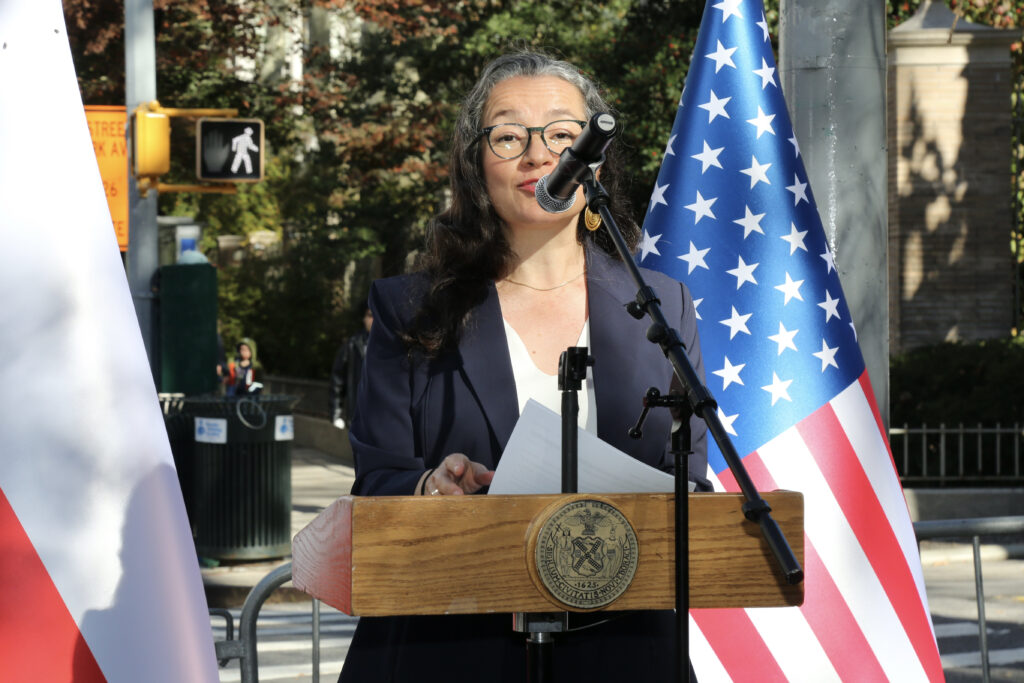
City Commissioner for International Affairs Ana Maria Archila, who represented Mayor Zohran Mamdani, also gave a speech. She conveyed “words of respect and thanks” from the mayor of the Big Apple. She recalled the achievements of Maria Skłodowska-Curie, the significance of her work and discoveries, the commemoration of her achievements with the name of the avenue that existed in the 1930s, and its disappearance. “Today we are correcting the mistake that was the removal of the street commemorating her legacy. We are restoring this distinction by naming the street Marie Skłodowska-Curie Way. It is also a celebration of the Polish-American experience and of Poles’ contribution to the life of our society,” Archila stressed. Prof. Agata Smogorzewska of Rockefeller University also spoke in the official portion, discussing the merits of the Polish two-time Nobel laureate and her significance and inspiration for women. Martyna Wojciechowska, the guest of honor at the ceremony, spoke in a similar vein. “I always say that the impossible doesn’t exist. Maria Skłodowska-Curie proved that more than 100 years ago,” the journalist stressed. “I travel to the ends of the earth and meet extraordinary women who have the courage to move the horizon, but one of the most inspiring women in history was born in my hometown, Warsaw. Maria Skłodowska-Curie was the first woman to win a Nobel Prize, and later the first and only person in history to receive that prize in two different fields of science. But being first is not only about breaking records. It’s about opening doors for the next generations and showing them that the impossible doesn’t exist,” the traveler said. She also drew attention to the Nobel laureate’s patriotism. “At a time when Poland did not even exist on the map of the world, she kept her maiden name and proudly nurtured her Polish identity,” Wojciechowska explained.
AVENUE OF THE POLISH NOBEL LAUREATE
The history of commemorating Maria Skłodowska-Curie with a street bearing her name goes back to June 8, 1935, when Marie Curie Avenue was unveiled in Manhattan. The avenue replaced the earlier Exterior Street, located on the East River waterfront and running parallel to the river from 61st Street to 79th Street. Interestingly, it was originally meant to include the Polish laureate’s maiden name as well. Unfortunately, although the City Council of the day unanimously approved a proposal by Marie Mattingly Meloney, a journalist also known as Mrs. William B. Meloney, to establish Marie Sklodowska-Curie Avenue, at the last moment before the vote one of the council members, William C. Flood, who represented the 14th District, where the renamed street was located, worried that the name would not fit on the signs or would be illegible. As a result, it was decided to shorten the name of the street to Marie Curie Avenue. The avenue existed for about five years: at the turn of 1939 and 1940, like other nearby streets, it was absorbed by the Franklin D. Roosevelt East River Drive, then under construction, an expressway known for short as FDR.
Many years later, attempts were made to restore an avenue honoring the Polish scientist. One of them came close to success in 2016, when, at the request and through the efforts of Polish-American activist Krystyna Piórkowska, the necessary permits were obtained along with the approval of Rockefeller University’s leadership. The avenue was to be located on the grounds of the university’s new campus, then under construction, and unveiled with its opening in 2019. Then-Consul Mateusz Stąsiek and Fr. Tadeusz Lizińczyk, pastor of the St. Stanislaus Bishop and Martyr parish in Manhattan, also took part in the talks related to these negotiations. Dr. Marc Tessier-Lavigne, then president of the university, responded positively to the idea of creating a Marie Skłodowska-Curie Avenue on campus. Unfortunately, his successor abandoned the effort and did not carry out his predecessor’s decision, so the idea was never finalized. We described this in great detail in the June 21, 2016, edition of Nowy Dziennik, in the article “Aleja Marii Skłodowskiej-Curie powróci na Manhattan” (“Marie Skłodowska-Curie Avenue Will Return to Manhattan”).
The Marie Skłodowska-Curie Professional Women’s Association applied to the New York City Council several times for the restoration of an avenue commemorating the Polish two-time Nobel laureate, unfortunately without success. In the end, the Consulate General of Poland in New York achieved it, and as a result, since Nov. 10 of this year Maria Skłodowska-Curie once again has her own street in Manhattan.
NEW YORK TRIBUTES TO THE POLISH NOBEL LAUREATE
Marie Sklodowska-Curie Way is another Manhattan honor for the Polish scientist. Since Nov. 7, 1934, the 67th anniversary of the two-time Nobel laureate’s birth, a small granite pedestal with a brass plate has stood in City Hall Park, inscribed: “Marie Sklodowska Curie from the Polish American Children of New York City. November 7th 1934 on the sixty seventh anniversary of her birth.” A tree dedicated to Skłodowska-Curie was also planted at that time. Unfortunately, after the attacks of Sept. 11, 2001, City Hall Park was redesigned, and the Polish Nobel laureate’s tree was removed because it did not meet new park requirements. There are also other American sites in the Big Apple that bear her name. In Queens there are the Marie Curie Playground and Marie Curie Middle School 158Q. In the Bronx, there is The Marie Curie School for Medicine, Nursing, and Health Professions. Everywhere, however, the naming uses only the second (French) part of the Polish Nobel laureate’s surname. Moreover, only on the website of the New York City Parks Department can one find information that the namesake of the playground in Bayside is the double Nobel laureate born in Poland, in Warsaw, but unfortunately her maiden name, Skłodowska, is misspelled there as Skolodowska. An attempt to correct the spelling, made several years ago by the author of this article, was unsuccessful, and the error remains. Besides these American tributes to the Polish scientist, an association of Polish-American professional women, the Marie Skłodowska-Curie Professional Women’s Association, Inc., has operated in the New York metropolitan area for 30 years. And since October of this year, Maria Skłodowska-Curie has also been the namesake of the Polish School at the Consulate General of Poland in New York.
Text and photos: Wojtek Maślanka
Source: Nowy Dziennik