


Chicago’s O’Hare and Midway airports are working to return to normal operations. On Friday, the Federal Aviation Administration (FAA) halted air traffic across the United States.
Nearly 15,000 flights were canceled. Airlines are working intensively to clear the backlog, and disruptions may still be felt Sunday. The situation has improved somewhat since Saturday. As of 5:47 a.m., 117 flights had been canceled at O’Hare and 43 at Midway. In total, more than 400 flights were canceled in Chicago on Saturday morning. FAA officials said the worst is probably behind us.
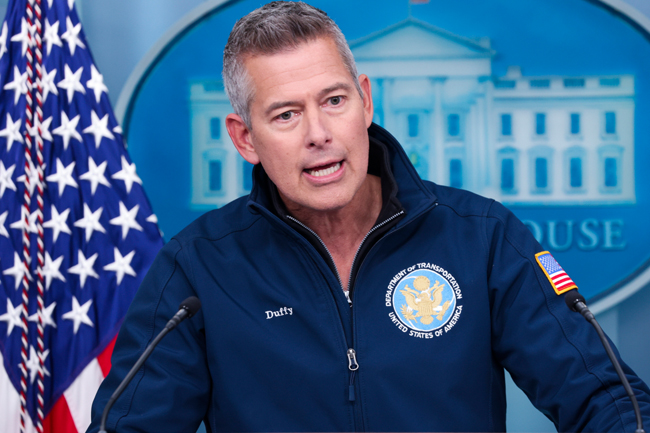
In a statement issued Saturday, U.S. Secretary of Transportation Sean Duffy said the outage was caused by an overload of the air traffic control system during an update. On Friday afternoon, the FAA ordered a ground stop at airports nationwide. Many passengers were stranded at airports in various parts of the United States. Duffy said preliminary findings point to work being done at an FAA facility, where the contractor L3Harris was replacing outdated copper telecommunications lines with fiber optic cables.
Duffy said one of the routers involved in that work began sending other devices more than a thousand connection attempts every four to five seconds, which disrupted communications with aircraft and the transmission of data from some radars. Officials are still determining whether the problem was caused by a faulty router or an installation error. Duffy stressed that, according to authorities, the incident was not the result of a cyberattack. “Once we were able to isolate the work being done at that remote facility, all of our systems started working again,” the transportation secretary said.
In a statement Saturday, L3Harris said it is working closely with the FAA on replacing the old copper infrastructure with a fiber optic system, adding that the project is already 70 percent complete. “We are supporting the FAA’s investigation to clarify the circumstances that led to the nationwide halt in air traffic on November 13,” the statement said.
The union representing FAA technicians, Professional Aviation Safety Specialists, said the agency typically consults its technicians to assess the risks of an upgrade or repair, but that did not happen in this case. Duffy praised the air traffic controllers and pilots who made sure aircraft landed safely, and thanked passengers for their patience during the disruption. He also urged the U.S. Congress to provide additional funding to modernize the air traffic control system.
Duffy said that as part of the modernization effort, backed by $12.5 billion already provided by Congress, the FAA has replaced 69% of its copper communication lines with a high-speed fiber optic network. “Americans want fewer delays. They want fewer canceled flights,” Duffy said.
BK
Source: Polski.FM
